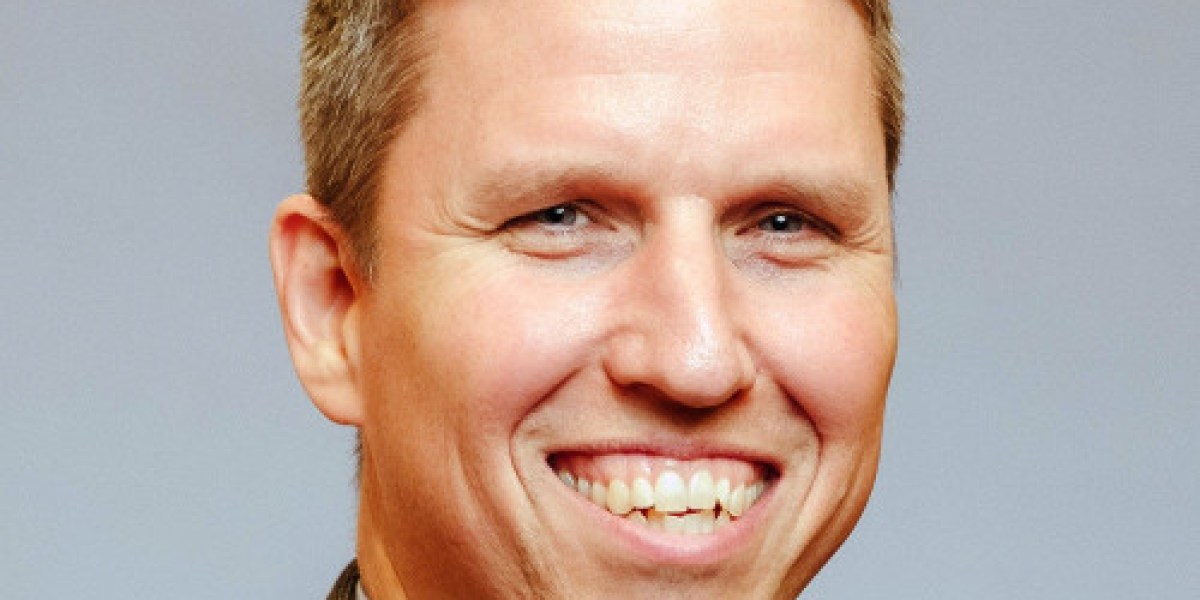
For Hiromi Yamaji, the clubhouse is not what it used to be. The former Nomura banker and head of the Japan Exchange Group (JPX) still plays golf with many of Japan’s most senior corporate leaders. But, he says, these days they are often furious with him.
As many of the executives see it, an old friend has turned both on them and the corporate establishment he was once part of. The 68-year-old’s late career drive to get Japanese companies to achieve higher valuations and call out those failing to address the issue represents a form of disruption that nobody expected — especially from one of their own.
Yamaji’s stock response to Japan’s corporate elite is characteristically succinct: “We didn’t target you, we target everybody.”
It is rare, anywhere in the world, that the head of an exchange would so openly try to reform the behaviour and complacencies of companies listed on it. That such an assault should be happening in Japan, where the exchange has traditionally been passive and some former chief executives have generally used the role as a low-stress precursor to retirement, is extraordinary.
“To have a regulator exerting this much influence on Japanese corporate management is completely unprecedented,” said Bruce Kirk, chief Japan equity strategist at Goldman Sachs. “This really is a game-changer for corporate governance in Japan”.
Early in his term as head of JPX, which controls the Tokyo Stock Exchange (TSE), Yamaji pointed out that roughly half the companies listed in the top tier of the TSE have undervalued stocks, with price-to-book ratios below 1.0. The P/B ratio measures the market value relative to its book value.
He has made it his mission to significantly reduce the proportion of companies with languishing P/B ratios, to bring the TSE to levels closer to those in the US (5 per cent of S&P 500 companies) and Europe (19 per cent of Stoxx Europe 600). But he will not stop there: once companies have got their P/B ratios above the low hurdle of one, he says, they must keep pushing for higher valuations.
And what makes Yamaji’s appetite for disruption all the more formidable is that he has real conviction in what he is doing, says a friend who has known him for many years.
“Yamaji-san is the biggest activist in Tokyo at the moment,” said one banker in the capital city.
For the majority of his career, Yamaji was a high-flyer at Nomura, Japan’s biggest investment bank. Having entered the new millennium as its head of global investment banking, he continued to rise though further international posts as Nomura made its disastrous acquisition of post-collapse Lehman Brothers.
Ultimately, he hit a wall of tradition: Nomura at the time did not select its presidents from the investment banking stream. Yamaji left in 2013 to run the Osaka Securities Exchange. He then went on to head the Tokyo Commodity Exchange and later the Tokyo Stock Exchange. He arrived in April 2023 as chief executive of JPX with a decade of running markets.

Executives in Tokyo are starting to wonder whether Yamaji could eventually target a bigger issue: that there are probably a good many companies on the TSE that just should not be listed at all.
For now, Yamaji seems sanguine about the pushback he faces. The question is, can his push to unlock corporate value in Japan can grow and sustain its momentum beyond his tenure as JPX chief executive, which is expected to be at least four years.
Yamaji believes corporate Japan has historically been allowed far too much latitude and that management has not been sufficiently focused on either good governance, efficient use of capital or raising their corporate value. Foreign investors have always baulked at those shortcomings, but now with a quarter of Japanese above pensionable age and assets under pressure to work harder, even domestic funds are pushing for improvement.
Speaking privately, asset managers and financial executives in Tokyo, say that although the focus on price-to-book ratios might be simplistic — and the exchange, with its own P/B ratio of 3.4, has said it is targeting corporate valuations more widely — Yamaji’s push is working.
Some companies are responding by launching share buybacks, selling non-core assets and appointing independent board directors. Those changes are expected to pull in the kind of foreign capital needed to supercharge Japanese equities. The Topix, Japan’s main stock index, is up 20 per cent so far this year.
The sum of buybacks and dividends in Japan is running at close to an all time annualised high of ¥25tn, according to Morgan Stanley. And the bank expects Japanese P/B ratios to hit an average of 1.8 by 2025, versus 1.4 at the moment and just 0.95 in late 2012.
But with 2,200 companies listed on the Prime section and 3,800 on the TSE as a whole, a marketwide conversion remains a gargantuan task.
Yamaji’s plan, which he explained to the Financial Times in a recent interview, is to actively exploit the size of that huge bloc and use two aspects of Japanese business culture to do so.
First, he will establish a so-called ‘name and shame’ regime by creating a rolling list of companies that have made stated commitments to improvement, in the hope of embarrassing those that have not reformed. Second, he hopes that corporate Japan’s tendency to fly in formation means that once his push achieves critical mass, all the companies will fall in line.
“The decision by the TSE to [in effect] single out companies not taking measures to lift their price to book values is a big shame that means companies have to do something,” said Kenneth Bessho, head of the M&A advisory group at Mitsubishi UFJ Morgan Stanley.
The crude mechanics of the name and shame regime, which will be launched on January 15, are currently referred to across corporate Japan as “the list”. Everyone can guess whether they will or won’t be on it, but the mere threat of the list is already having an impact.
Yamaji said some of Japan’s top business leaders use their time with him at the golf course to mutter a pre-emptive apology if their P/B ratio is below one.
“Whenever I go golfing . . . there are very many cross friends among the top executives, guys saying [sorry] my company is below one price to book, I’m sorry,” he said with a smile.
Credit: Source link