Unlock the US Election Countdown newsletter for free
The stories that matter on money and politics in the race for the White House
Corporate leaders don’t usually carve days out of their busy schedules to discuss the future of democracy. But these aren’t ordinary times. Last week, I attended a retreat with roughly 40 global business leaders and had a chance to take their pulse in a new age of anxiety. Below are my top three takeaways.
Lesson one: politics is a top board-level concern these days. Previously at such conferences you’d hear much more talk about business itself, as well as technology and management. But this time leader conversation revolved around the meaning of crucial 2024 election results, particularly in the US and Europe.
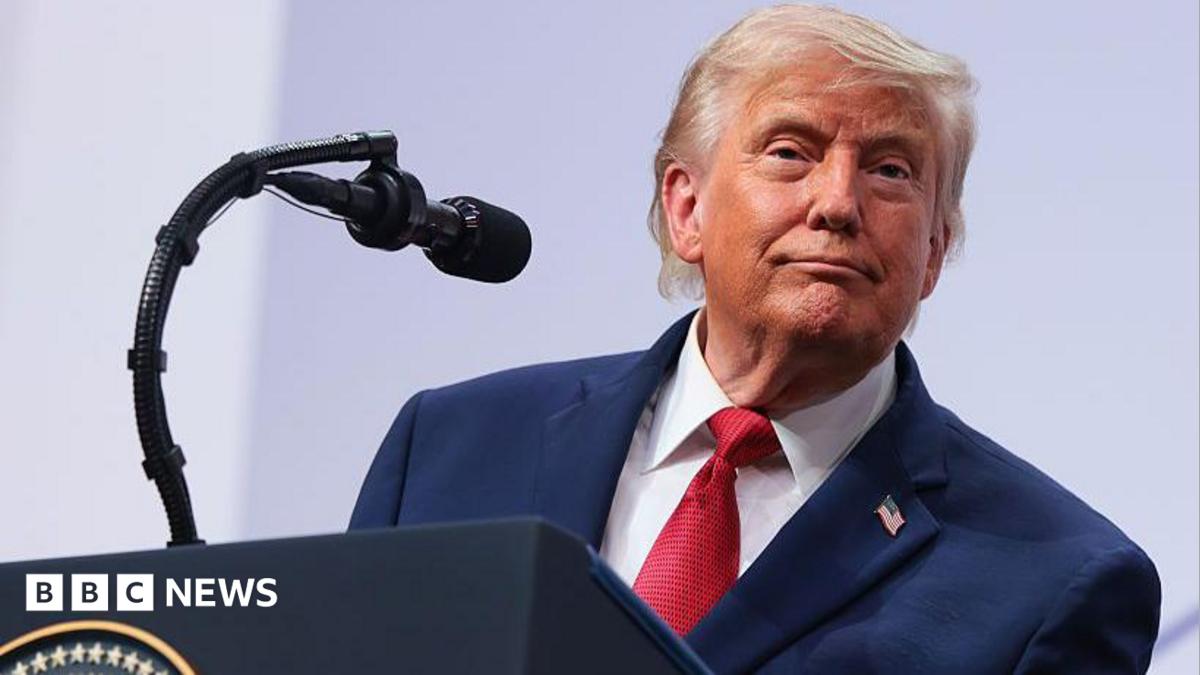
There was no clear consensus around whether Joe Biden (assuming he remains the Democratic nominee) or Donald Trump was best for business, which reflects worries about the fiscal impact of Biden’s spending plans (although there was far less worry about the effects of any Trump tax cuts). But this also seemed to reflect a rather naive belief that business could successfully manage up Trump in a second term. I doubt that would be the case.
Most participants (who spoke under Chatham House rules) believed the EU was in danger of falling apart, given unstable politics in both France and Germany, and that post-Brexit Britain had ironically become the least ugly house on the block that is Europe.
There was also a lot of hand-wringing about the increasingly aggressive moves around Taiwan by China’s President Xi Jinping, and the potential for a hot conflict — or at least transport chokepoints — in the South China Sea. While one Chinese participant argued for a return to the “just in time” status quo of the 1990s, in which large multinationals outsourced production to China based on scale and low labour costs, most participants doubted this was possible.
That leads to lesson two: chief executives are hedging their bets, big time. Business may complain vehemently in public about tariffs, populism and the risks of industrial policy, but in private leaders know that in future government will play a much bigger role in how companies are run.
Between the rise of Chinese nationalism, US re-industrialisation, the resurgence of the far right in Europe and the election of pro-labour leaders in places such as Mexico (and quite probably Britain later this week), the push and pull of national concerns has replaced a single global “efficiency” paradigm for business.
That means a burst of far more sophisticated strategies for regionalisation and de-risking. These aren’t only about politics, of course. The cost and time of long-distance transport across long supply chains, the need to reduce carbon emissions, rising labour demands and impatient consumers who want what they want right now are pushing many companies towards multiple local hubs of production and consumption.
Technology is what makes this trend towards “clusterisation” possible, and even desirable. As Mike Wilson, founder of the Parc Institute for Manufacturing, Logistics and Inventory at Cardiff University, notes, about $800bn of the $2.5tn in inventory held in the US at the end of 2023 came from carrying costs, depreciation, taxes and obsolescence. To cut that, companies are using sensors to track individual products and create detailed supply chain maps, which can then be run through artificial intelligence-driven predictive analytic systems to reduce lead times and waste.
Likewise, additive manufacturing is being used to further bridge the gap in inventories from unexpected supply and demand shocks. The lessons learnt from the pandemic — during which time companies used 3D printing to quickly produce things such as respirator parts or auto components on site — are being applied to consumer electronics and other industries.
While this doesn’t necessarily argue for the nearshoring of production, it was obvious to me that companies no longer want all their eggs in one basket. Just-in-time really is shifting to just-in-case, which will have broad ramifications for how global businesses operate.
Finally, point three: I have a strong sense that some multinationals are beginning to find opportunity in all the crises of the moment. Back in 2008, after the great financial crisis, banks moved some risk off their balance sheets, but they didn’t fundamentally rethink their business models. Indeed, too-big-to-fail banks only got bigger, as concentration within the industry increased, along with private debt levels. One of the reasons for that is that government didn’t change its operating model either — low rates and quantitative easing solved the problem of debt with more debt.
But this time around, there is a clear sense of a real political economy pendulum shift around the world. That is in turn forcing business to truly change how it thinks and operates at the ground level. To the extent that companies become more productive, sustainable, efficient and market sensitive as a result of this, it will be a good thing for both Wall Street and Main Street.
The fly in the ointment is the global/local disconnect that still exists between CEOs and their average customers and workers. There was a fascinating session on how countries that are able to avert decline do so by finding common purpose among their citizenry. But the elites and the average person must share that purpose. In the US, as in so many countries, a shared definition of the public good remains out of reach.
rana.foroohar@ft.com
Credit: Source link