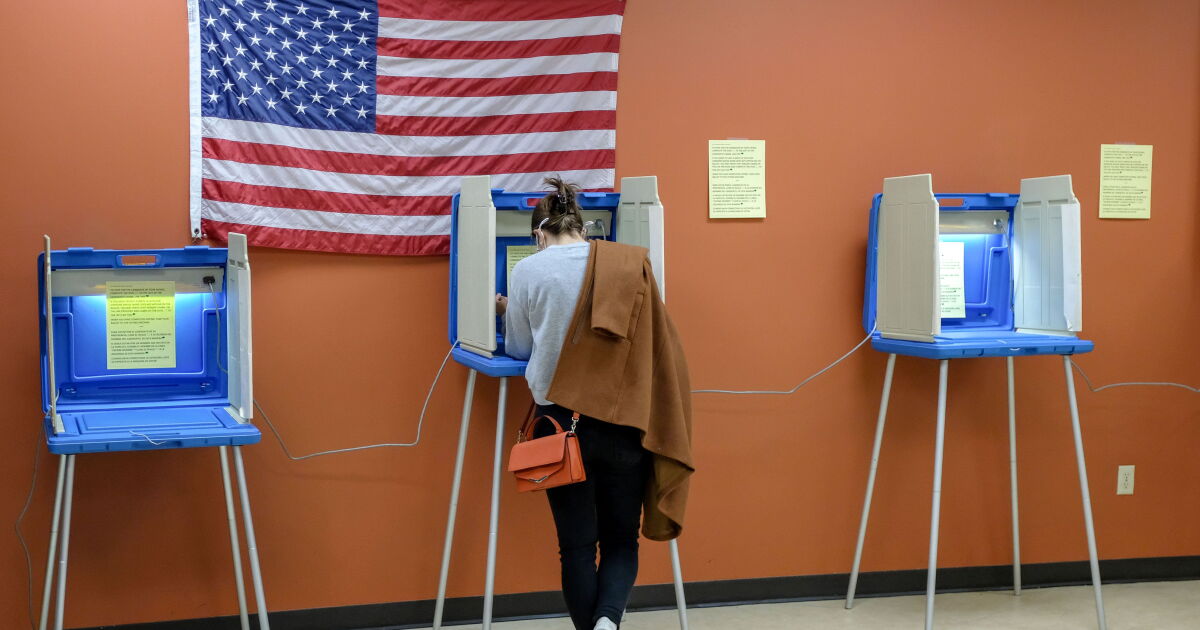
In less than 30 days, Americans will elect the politicians who will set policy for the next two years in Congress and four years at the White House.
Between now and then, aside from campaign banter about eliminating taxes on tips or raising the corporate tax rate, tax policy likely won’t command much attention from the candidates. Nonetheless, it will be one of the single most important challenges facing those taking office in January. For American business leaders, the operative emotions around the coming tax policy debate might include the word fear.
In 2017, Congress passed the Tax Cuts and Jobs Act, a massive tax bill that broadened the tax base for both businesses and individuals, fundamentally changed how the U.S. taxes multinational companies, and lowered the corporate tax rate while temporarily providing a host of individual tax cuts, including doubling the Child Tax Credit, providing a larger standard deduction, lowering individual taxes and providing AMT relief.
Generally speaking, the TCJA’s international and corporate base broadening offset the cost of the international tax changes and a substantial reduction in the corporate tax rate, while the individual base broadening, plus some deficit financing, paid for lower individual taxes. And herein lies the problem for corporate America.
While the tax changes affecting corporations were generally permanent to avoid distortions in business decision-making, the rules for individuals were made mostly temporary.
They are set to expire next year.
Those looking ahead have dubbed 2025 the year of “Tax Armageddon” for the sheer importance of how much is at stake. In fact, Deloitte recently released “
According to
To be clear, it is not even remotely probable that Congress will identify more than $4 trillion in spending cuts to pay for extending tax relief. For a sense of scope, federal spending on discretionary programs, including defense, will total about $1.7 trillion in fiscal year 2024. There is simply no way Congress could find more than $4 trillion in spending cuts over a decade without changes to Social Security and Medicare, programs that are generally seen as off-limits by many members of Congress.
Similarly, Congress is highly unlikely to scour the Tax Code and identify over $4 trillion in politically acceptable tax increases on families to offset the looming tax cliff they face. Increasing the deficit no longer goes without notice, and doing nothing is also not a viable option, as it would result in higher taxes for the vast majority of American families in 2026.
The reality is that if Congress decides to pay for some or all of the TCJA extensions, which seems likely in almost any alignment of power next year, the fundamental architecture of the 2017 law is very much at risk.
House Ways and Means Committee Chairman Jason Smith, R-Missouri, noted that some of his GOP colleagues think the corporate rate came down too much in 2017 and could be increased. The question that is going to be asked often next year may not be whether taxes on corporate America will increase, but whether Congress will raise the corporate rate or generate revenue by broadening the corporate tax base.
And the answer very well could be: “Why not both?”
Compounding this risk for businesses are two stark realities.
First, there has been tremendous turnover in Congress generally and on the tax-writing panels in particular. Many lawmakers with institutional knowledge about the flaws in the pre-2017 Tax Code and the reasons for the changes made that year — especially the rationale for the international reforms and for the 21% corporate rate — have left Washington.
Second, an increasing number of Republicans in the House and Senate, who once were reliable opponents of tax increases on businesses, now belong to what has become a far more populist political party and are more apt to listen to small-business owners than corporate CEOs. It is difficult, though not impossible, to envision a political alignment next year that would support fully deficit-financing extensions of the current law.
In 2017, business leaders played offense and defense. They pushed hard for a lower corporate tax rate and fought to minimize the impact of the base broadeners on their specific companies. However, 2025 promises to be a much more defensive exercise for corporate leaders.
Accordingly, the time is now for business executives to identify the real-world impact of some of the options that may have surface political appeal. Similarly, finance function leaders would be well advised to make sure all internal stakeholders understand and educate themselves about the stakes in next year’s tax fight and the potential impact to the company’s bottom line.
Amid the many pressing issues as we head into the final stretch of this campaign season, tax policy may not be top of mind, but it should be. The stakes for the 2025 tax debate are high and the impacts will be far-reaching.
Credit: Source link