
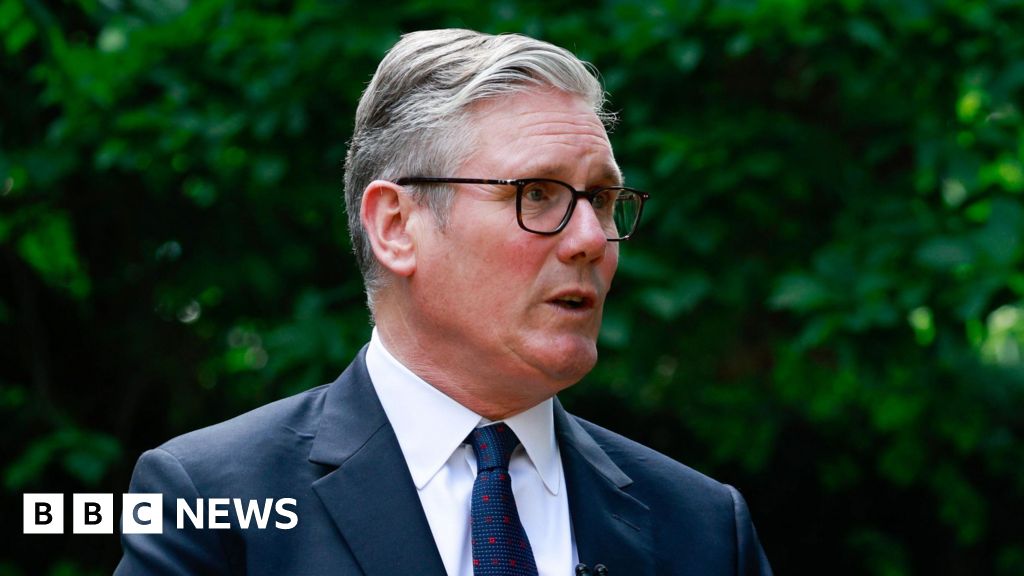
Prime Minister Sir Keir Starmer has pledged to meet a new Nato target to spend 5% of the UK’s GDP on national security by 2035.
At a Nato summit in the Netherlands, 32 member countries including the UK are expected to agree the 5% goal, with 3.5% to go on core defence and the remaining 1.5% on defence-related areas such as resilience and security.
The split target is aimed at placating US President Donald Trump, who has urged Nato allies to spend more, while giving cash-strapped EU countries flexibility over how they meet the target.
Downing Street has argued measures on energy and tackling smuggling gangs could be classified as security spending.
Conservative shadow foreign secretary Dame Priti Patel accused ministers of announcing the target with “no new money” to fund it.
Dame Priti said the government should raise funding sooner because of the dangerous “state of geopolitics”.
Speaking to BBC Breakfast, she added: “I don’t think they can go to a meeting of Nato and speak about funding that could come in 10 years’ time, when there’s a real and present threat to us now.”
Both the Conservatives and the Liberal Democrats have supported increasing defence spending.
Liberal Democrat defence spokesperson Helen Maguire said it was “absolutely right” the government matched the 5% Nato spending target, “especially after the damage done to our defence by the Conservatives”.
“The threat of Putin’s Russia – combined with the unpredictability of the Trump White House – demands a once-in-a-generation commitment,” she said.
Speaking ahead of the two-day summit, Sir Keir said the UK had to “navigate this era of radical uncertainty with agility, speed and a clear-eyed sense of the national interest”.
“After all, economic security is national security, and through this strategy we will bring the whole of society with us, creating jobs, growth and wages for working people.”
Nato (the North Atlantic Treaty Organisation) is made up of 32 member countries who agree to defend each other if attacked.
Since Russia’s invasion of Ukraine in 2022 and Trump’s re-election as US president last year, members of the organisation have faced increased pressure to boost their defence spending.
Countries had been expected to spend at least 2% of their national income – or GDP – on defence, although last year, only 23 hit that target – an increase from three in 2014.
In January, Trump said 2% was “not enough” and that Nato allies should be spending 5%.
And speaking last year before his re-election, he said he would “encourage” aggressors to “do whatever the hell they want” to European allies who don’t pay their way.
In February, Sir Keir set out plans to increase the UK’s defence spending, as opposed to national security spending, to 2.5% by April 2027 and expressed a “clear ambition” to reach 3% by 2034 if economic conditions allowed.
On Monday, the government said it expected to reach the target of spending 4.1% of GDP on national security by 2027.
The 1.5% element of the 5% Nato target is for what is described as “resilience”, such as border security and protection against cyber attacks.
For the UK, this latter element is expected to be met by the year after next, with core defence spending reaching 2.6% by then.
Getting core defence spending to 3.5% is not expected until 2035 – two general elections away – and Downing Street hasn’t said how it will be paid for.
Based on the current size of the economy, the Institute for Fiscal Studies (IFS) estimates that delivering the 3.5% pledge would cost an extra £30bn a year in today’s terms, putting “considerable additional pressure on the public finances”.
Alongside the spending commitment, the government published its National Security Strategy which said the UK needed to be more “competitive and robust” in science, education, trade and frontier technology.
It also sought to stress that investment in defence would be felt “directly in the pockets of working people” pointing to new jobs that would be created.
The summit will be Mark Rutte’s first as secretary general of Nato. Speaking at a press conference on Monday, the former Dutch prime minister said the 5% spending commitment was “a quantum leap that is ambitious, historic and fundamental to securing our future”.
However, it is unclear how nations will meet the target or whether they will at all.
On Sunday evening, Spain claimed it had secured an opt-out, something later denied by Rutte.
Ukraine is not a member of Nato and although President Volodymyr Zelensky has been invited to the summit dinner he will not be taking part in discussions of the North Atlantic Council.
Last week, Ed Arnold from the defence think tank Rusi told the BBC contentious issues – including a new Russia strategy – had been removed from the summit’s agenda.
Credit: Source link




