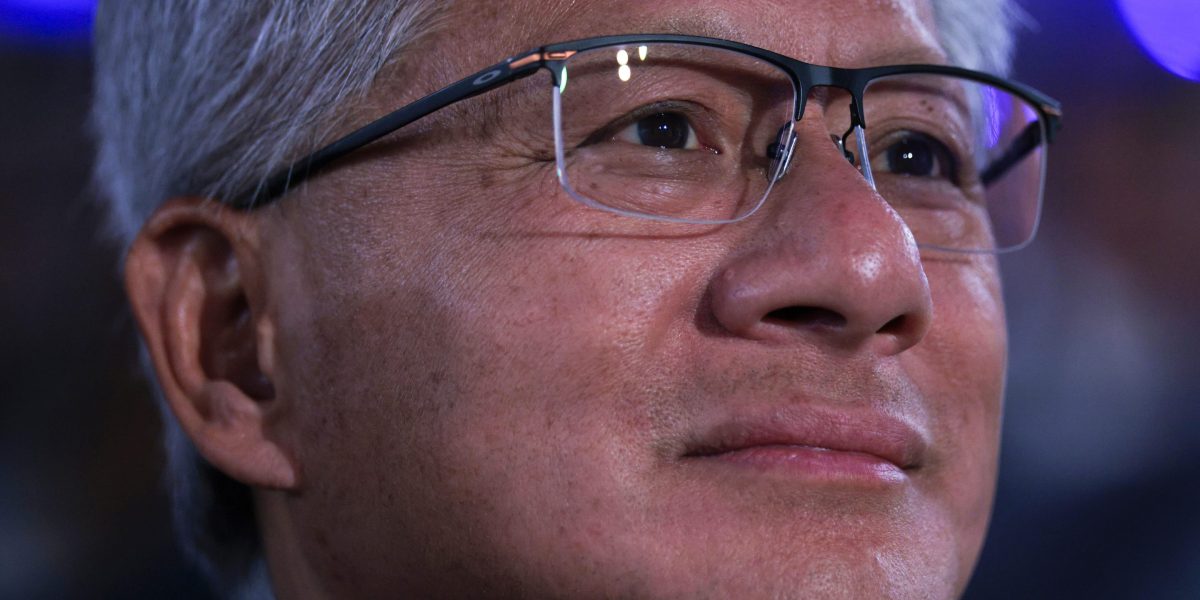
Just as Open AI CEO Sam Altman and Meta leader Mark Zuckerberg begin acknowledging that there may be truth to the warnings of an AI bubble, Jensen Huang is doubling down on his bullishness.
In a recent podcast appearance with Bill Gurley and Brad Gerstner, the Nvidia CEO brushed aside the growing caution and instead zeroed in on the company he sees as the next dominant force: OpenAI.
“OpenAI is very likely going to be the world’s next multitrillion-dollar hyperscale company,” Huang said.
That bold prediction comes at a moment when even AI’s loudest evangelists are warning of overvaluation and overbuilding. Altman himself has cautioned that too much money is flooding into unproven AI ventures, while Zuckerberg has compared today’s infrastructure frenzy to past bubbles. Yet Huang insists the skeptics are missing the deeper forces reshaping the economy. In his telling, the story comes down to basic physics, not hype.
“General-purpose computing is over,” Huang said, describing what he sees as a generational shift in how all industries will run. “The future is accelerated computing and AI.”
He outlined what he calls the “three scaling laws” of AI—pretraining, post-training, and inference—each of which exponentially increases demand for compute. While training workloads have already been well-documented, Huang stressed that inference—the real-time reasoning that underpins everything from chatbots to recommendation algorithms—is only just beginning.
“The longer you think, the better the answer you get—and thinking requires more compute,” he explained.
That framing matters because inference is where AI collides with day-to-day usage. Training runs happen in bursts, but inference happens constantly: Every chatbot prompt, every AI video render, every background algorithmic tweak consumes processing power. If Huang is right, that relentless demand means AI won’t follow the boom-and-bust cycles of earlier technologies but will instead drive a compounding need, one that will also boost Nvidia.
$100 billion bet on OpenAI
Huang’s comments came just days after Nvidia announced its most audacious deal yet: a $100 billion investment in OpenAI to help fund the company’s massive data center build-out. It’s the largest example of what analysts call Nvidia’s “circular financing” strategy, in which it invests in, or lends to, customers who in turn spend billions on Nvidia’s GPUs.
To Huang, it’s a smart way to align incentives with a once-in-a-generation partner scaling faster than any company in history. “If that’s the case, the opportunity to invest before they get there is one of the smartest investments we can imagine,” he said.
But to markets, the sheer size of the commitment was jarring.
Deutsche Bank had previously warned that 2025 could be remembered as “the summer AI turned ugly,” pointing to the risk that circular revenue-recognition games could inflate demand.
Deutsche Bank analysts said Nvidia’s way of helping fund its own customers reminds them of past bubbles, when companies juiced sales by essentially paying buyers to buy their products.
They warned that even if these deals are only a small slice of revenue right now, Nvidia is so big that any slipup could shake the whole stock market.
As they put it, the stock is “priced for perfection,” which means there’s not much room for mistakes if AI growth cools off.
That tension helps explain why Altman, despite running Nvidia’s most important customer, has been publicly warning of “a frenzy of cash chasing anything labeled AI.”
And Zuckerberg, while still pouring billions into Meta’s own AI ambitions, has likewise admitted the infrastructure build-out carries “bubble-like” characteristics reminiscent of railroads and the dotcom era. Even Federal Reserve Chair Jerome Powell has taken note, pointing to the “unusually large amounts of economic activity” flowing into AI, a rare signal that the froth is on the Fed’s radar.
Huang remains unmoved. To him, these warnings miss the forest for the trees. He insists that Nvidia and OpenAI’s growth is propelled by scaling laws and performance per watt—fundamentals that make his company the only rational choice for hyperscalers.
“This is the industrial revolution,” he told Gurley and Gerstner, a common refrain from Huang on the subject of AI.
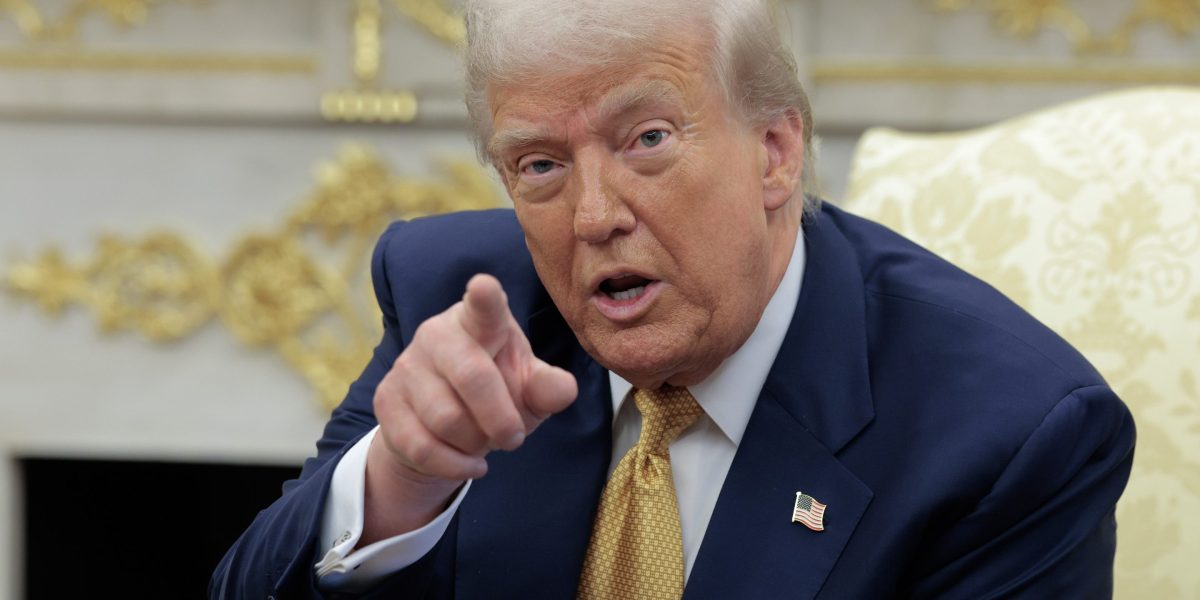
Huang also seemed to flip his stance on President Donald Trump’s recent $100,000 H-1B visa fee. He called the policy “a great start” for cracking down on visa abuse and illegal immigration, but cautioned that the steep price tag “probably sets the bar a little too high.”
For Huang, himself an immigrant, Trump’s fee may be a useful first step, but only if it’s paired with broader reforms that keep America attractive to top talent.
Credit: Source link