Like leaders at most companies right now, leaders at ServiceNow—the Silicon Valley-based cloud-computing software firm—are spending a lot of time and energy thinking about how the rapid growth of artificial intelligence is changing the very nature of work.
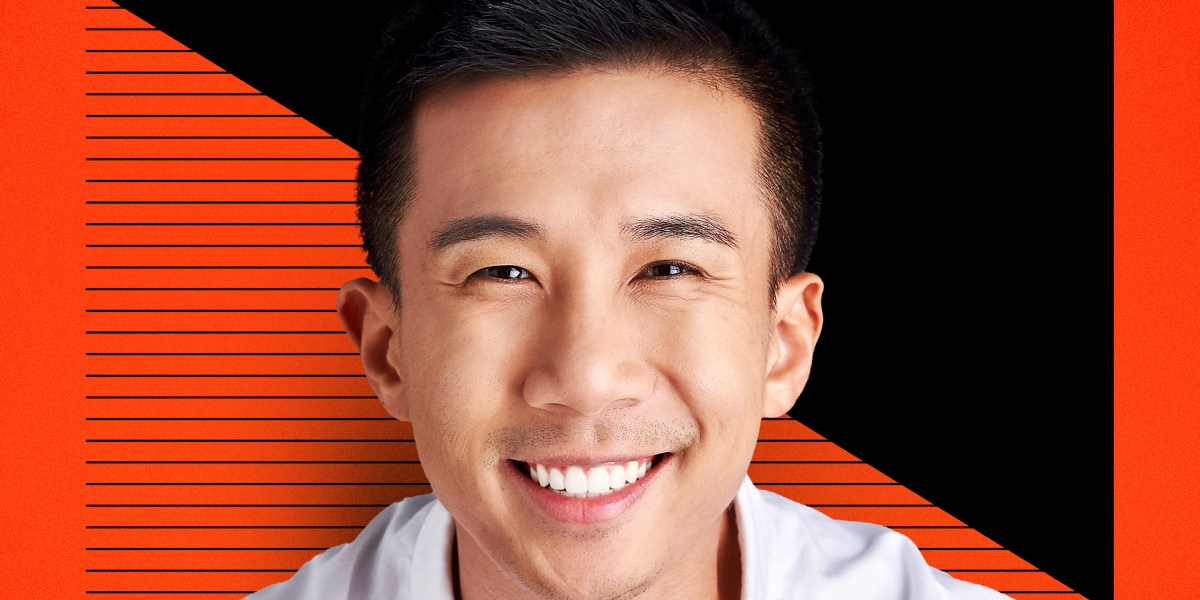
Sarah Tilley, senior vice president for global talent at ServiceNow and one of HR Executive’s 2025 HR’s Rising Stars, says one implication is that some firms have cut back on entry-level hiring in 2025. That seems to be, in part, because of the expectation that rapidly advancing technologies like AI and large-language models can perform tasks, such as computer coding or writing copy, that were once done by workers at the bottom of the career ladder. But she and her colleagues decided that using AI as an excuse to reduce hiring would harm ServiceNow in the long run.
“I think companies are facing a choice right now, and especially in the next couple of years, as the productivity gains are realized with AI, which is, ‘OK, do we cut jobs in the name of cost saving and get that short-term gain, or do we take a more human-first approach?’ ” Tilley says.
She argues that the real edge from programs such as OpenAI’s ChatGPT is that AI can take on “repetitive tasks,” empowering employees to unleash “uniquely human skills” to drive innovation, strategy, creativity and growth. She explains that ServiceNow wants to hire critical thinkers to make the most of AI, not use it to reduce headcount.
Other top people managers echo this approach.
Duolingo, the language-learning education technology company, has made headlines for the firm’s early and aggressive embrace of artificial intelligence. But Liz Talley-King, vice president of talent acquisition at the Pittsburgh-based company, says Duolingo’s summer hiring—including 77 interns and 42 full-time new college grads—was similar to past years. Like at ServiceNow, the focus is on how AI can improve workflow for the best young talent.
“AI allows us to focus more on critical and creative thinking, and as a smaller company, it’s an amazing tool to help us do more,” Talley-King says. She adds that “what matters most [for entry-level hiring] are qualities like curiosity, adaptability and collaboration.”
What do the numbers say about entry-level hiring?
Despite that, one of the top business stories of the summer was a noticeable drop in corporate entry-level hiring that fell hardest on newly minted college graduates. This has triggered a broader conversation about how much of the slowdown is the result of AI’s impact and how much is caused by economic uncertainty.
In August, an exhaustive study by three Stanford University researchers analyzing payroll records from ADP, which tracks millions of U.S. workers, found a 13% drop in employment since 2022 among 22-to-25-year-olds in the fields most sensitive to AI—such as software development, customer service and accounting. This comes as other job categories were booming. The report found “early, large-scale evidence consistent with the hypothesis that the AI revolution is beginning to have a significant and disproportionate impact on entry-level workers in the American labor market.”
Related: Stanford researchers tracked millions of jobs. Here’s who is losing to AI
Zanele Munyikwa, an economist at Revelio Labs who monitors the growth of artificial intelligence, says her firm’s research found comparable numbers. These include an 11% drop in entry-level hiring over the last 18 months, while demand for more senior positions rose by 7%, as companies seek workers with both experience and skill in using AI tools. Munyikwa says some employers “clearly are not trusting entry-level employees with these tools.”
Looking beyond the tech
But other HR experts point out that hiring decisions are usually about more than just the latest technology. The 2025 job picture for college grads has been clouded by business uncertainty around President Trump’s often-changing tariff policies, concerns about a possible recession and an inevitable slowdown after a post-pandemic hiring surge.

Veteran industry analyst Josh Bersin published an essay at the start of the summer criticizing suggestions that AI technology has killed the entry-level job as “complete nonsense.” Bersin noted that most hiring executives he speaks with understand the need to avoid throttling a steady pipeline of young talent. He advised HR executives “to remember that a culture of multi-generational work creates growth, innovation and new ideas.”
Indeed, at least at high-tech companies like ServiceNow, company leaders still believe that the current AI revolution will echo past technology upheavals—like the rise of the internet—and ultimately create more positions than are eliminated. The firm recently analyzed data, finding that U.S. technology companies will need 2.4 million new workers by 2030, in part to adapt to a world based heavily on AI.
A productivity multiplier
To be sure, there’s a growing body of statistics as well as anecdotal news stories—in which frustrated May college grads recount their paltry responses to hundreds of online job applications—that make clear that some employers have curbed entry-level hiring in 2025. But the situation looks a lot different to the top HR executives willing to elaborate on their perspective. They tend to agree with Bersin that, if anything, a flow of talented and adaptable young, new hires is even more critical in this time of transition.

“We’re strongly committed to our ‘people-first’ culture, and we don’t view AI as a way to reduce headcount,” says Kim Hiler, the chief people officer at Intradiem, which specializes in software for back-office and contact centers. “We see it as a tool to help make our teams more productive and to make their work easier and more satisfying.”
Hiler adds that Intradiem prefers new hires who are willing and able to work with AI, but the new technology isn’t driving its hiring decisions.
Tech + soft skills = entry-level hiring success
Yet, one consensus among the HR executives interviewed for this piece is that the rapid advances in AI’s ability to perform basic skills such as computer coding are sparking a reevaluation of the hiring process. They emphasize that so-called soft skills—the ability to think creatively and adapt to rapid changes in technology—have become the top priority.
ServiceNow’s Tilley says that hires from Gen Z often arrive with an intuitive knack for engaging with new technologies. “So, you’re looking for that, of course, but you’re also looking for creative agility,” she says. “Are they curious? Can they thrive in a fast-paced environment?”
Duolingo’s King agrees that growing companies need the energy and sense of renewal that younger hires bring to a workplace.
“Entry-level roles aren’t disappearing, but expectations are shifting toward adaptability and creative problem solving,” she says. “New grads often bring exactly that, along with fresh ideas and a collaborative spirit.”
Credit: Source link