Stay informed with free updates
Simply sign up to the US inflation myFT Digest — delivered directly to your inbox.
The writer is an FT contributing editor and director of economic policy studies at the American Enterprise Institute
Oil prices have swung wildly since the US launched its war against Iran. The threat of a sustained energy supply shock is real. If it does occur, most economists would argue that the Federal Reserve should ignore any resulting inflation. But that assumes that American households and businesses have sturdy inflation psychology, an assumption that is looking increasingly fragile.
Actual inflation is heavily influenced by the way the public thinks about future inflation. If workers expect to face rising prices in the future, then they are more likely to knock on their boss’s door today and demand a raise. If businesses worry about rising costs next quarter or next year, then they are more likely to raise prices right now.
Psychology is crucial. The Fed’s ability to keep inflation low and stable depends on the degree to which the public believes that it can and will do exactly that. Nothing succeeds like success. The stability of inflation expectations prior to the pandemic was likely heavily driven by the fact that actual inflation had been low and stable for three decades. Similarly, households today expect higher inflation over the next few years in large part because prices have been high and inflation rapid during the past five years.
High prices are front of mind. A January Pew survey found that 92 per cent of Americans were concerned about the cost of food and consumer goods. The level of consumer prices has increased by a whopping 24 per cent since March 2021, when President Joe Biden signed the American Rescue Plan into law. This, along with other factors pushing up demand and constraining supply, led inflation to accelerate. Since then, the Fed has failed to return inflation to its 2 per cent target. Moreover, in my view, the Fed made no progress on inflation over the past year.
The fact that officials keep misreading the situation, repeatedly telling people that fast-rising prices will be temporary, is also not doing inflation psychology any good. Despite the inflation rate climbing month after month, the Biden administration repeatedly argued it was “transitory”. The same must be said about Fed chair Jay Powell, who was arguing this as late as summer 2021. The Fed finally raised its policy interest rate above zero per cent in March 2022, when CPI inflation was 8.6 per cent.
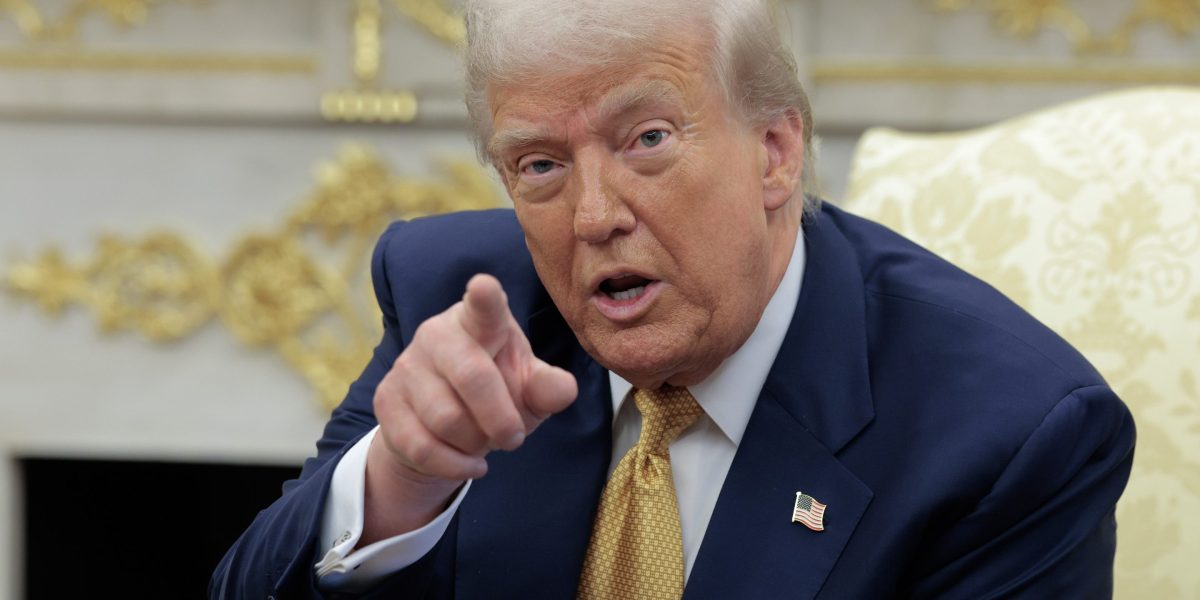
Remarkably, President Donald Trump is now making the same mistake, repeatedly dismissing concerns about affordability and arguing, most recently, that energy price increases from his war in Iran will be shortlived. But the public knows that gas prices are already higher, further reducing the credibility of what officials say about inflation.
Nor is business immune to increasingly fragile inflation psychology. After a decade in which inflation was arguably too slow, the 2021 demand boom and supply crunch left businesses no choice but to hike prices. This built muscle memory. My conversations with business leaders suggest that raising prices to absorb higher costs is front of mind in a way it wasn’t before the pandemic.
Finally, Trump’s public hostility to Fed independence and repeated attacks on Powell — going so far as to use the threat of criminal prosecution to bend the Fed to his preference for low interest rates — almost seems designed to convince households, businesses and markets that the central bank cannot credibly commit to low and stable inflation.
Consumers may be increasingly worried that inflation will stay higher for longer. Just look at the troubling pattern in the University of Michigan’s consumer survey. In 2021 and 2022, consumers correctly expected a large increase in one-year-ahead inflation. But even though CPI inflation reached 9 per cent in summer 2022, consumers expected it would be stable, around 3 per cent on average over the next five years. The 2025 story was different. In April, after the “liberation day” tariff announcements, the Michigan survey showed consumers’ expectations for inflation in the year ahead had spiked. But their expectations for five years ahead had risen as well, to 4.4 per cent.
To be sure, there are reasons for optimism. The bond market indicates that investors’ inflation expectations remain well anchored to the Fed’s target. Professional forecasters are similarly confident. And household measures are increasingly influenced by partisan politics — in 2025, Democrats and independents had much higher inflation expectations than Republicans.
Still, the Fed should treat inflation psychology as fragile — which makes the current situation in the Middle East even more precarious. If an energy price shock caused by the Iran war leads the public to worry that inflation is accelerating, then that concern could itself cause inflation to accelerate. And the public seems primed to worry about exactly that. A self-reinforcing inflationary spiral is a real concern.
What should the Fed do? On the one hand, increasing interest rates in a weakening economy could be damaging. At the same time, it is imperative — after five long years — for the Fed to succeed in returning inflation to its target. Only that can durably strengthen inflation psychology again — and with it a crucial foundation of long-term American prosperity.
Credit: Source link