Unlock the White House Watch newsletter for free
Your guide to what Trump’s second term means for Washington, business and the world
The writer was deputy national security adviser for strategy in the first Trump administration and is a senior fellow at the Hudson Institute and visiting fellow at the Hoover Institution
For many European and other leaders, the past year of the Trump administration has been exhausting, a relentless stream of tweets and exaggerations followed by familiar cycles of outrage and frustration. Much of this plays out in private, but European publics have also grown more sceptical of the US as an ally. The US-Israeli strikes on Iran set off the latest, and perhaps most consequential, backlash.
But outrage misses the point. The real question is not what President Donald Trump says next, but what the transatlantic divides are really about. The Iran war reveals that the US and Europe operate from fundamentally different assumptions about risk, responsibility and results — about what makes the international system work, or not. Recognising these differences is the first step towards rebalancing the alliance.
The US and Europe have long had different appetites for risk. Trump ultimately judged that the risk of acting against Iran was worth taking. Europe, by contrast, has tended to view Iran through the prism of stability, assuming that preserving a tenuous status quo (uninterrupted energy flows, managed tensions and diplomatic agreements, regardless of their effectiveness) is the paramount objective.
From the US perspective the goal has been to weaken Iran decisively, accepting short-term disruption in exchange for reducing its capacity to threaten the US, Israel and Gulf states long-term. Europe, by contrast, fears that a weakened Iran will lash out and create more chaos in the near term.
But from Trump’s perspective the problem had been building for years. Since the July 2015 Joint Comprehensive Plan of Action (JCPOA), Iran has steadily built the largest ballistic missile arsenal in the Middle East. Just months after the agreement was signed, Tehran tested its first precision-guided ballistic missile. Many analysts assessed that such systems could eventually be paired with nuclear warheads. Over the following decade, Iran expanded its stockpile of medium-range missiles, placing Israel, the Gulf states and US bases across the region within range.
Iran also continued to support militant groups across the region, while benefiting from what critics saw as a weak inspection regime under the JCPOA. These trends led to Trump’s decision to withdraw from the deal in 2018. There was little evidence in Iran’s behaviour or rhetoric that the JCPOA would ultimately constrain Tehran. Iran continued to escalate: it hardened and dispersed its ballistic missile infrastructure and, according to the International Atomic Energy Agency, had enriched uranium to near weapons-grade levels. Trump concluded that the risks of action were preferable to the risks of inaction.
The Trump administration and Europe also diverge over how they interpret international law and, more fundamentally, in their willingness to operate beyond the confines of multilateral institutions. Trump has repeatedly expressed scepticism towards institutions such as the UN. European leaders, by contrast, are often frustrated by what they see as a challenge to a system of rules and institutions they regard as central to legitimate international action. This difference is not incidental. For Europe, multilateralism is not just a tool: consensus is the organising logic of the EU.
European leaders, as well as previous US presidents, have argued that sustained diplomacy can moderate Iran or at least constrain its nuclear ambitions. This reflects a broader faith in multilateral institutions, built on the premise that dialogue can shape outcomes and behaviour over time. As European Commission president Ursula von der Leyen put it, “the negotiating table is the only place to end this crisis”. By contrast, Trump believed that a theocratic regime that brutally represses and kills its own citizens is difficult to engage and even harder to persuade.
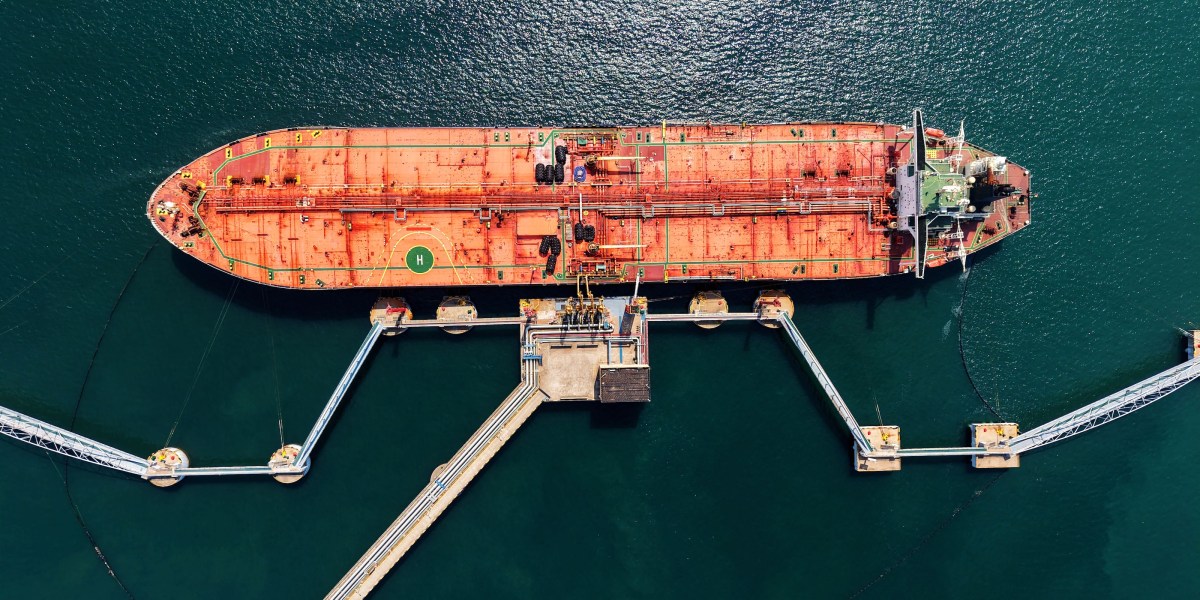
Trump has also been far less sympathetic to Europe’s vulnerability in the Strait of Hormuz. In his view, Europe spent years deepening its dependence on external suppliers while ignoring clear strategic weaknesses and chokepoints. The current crisis, in many ways, reinforces that criticism. Trump has repeatedly argued that projects such as Nord Stream 2 were geopolitical mistakes — warnings that were often dismissed. He has also long resented the expectation that the US should underwrite European (and Asian) energy security.
The US has taken a significant risk over Iran. But inaction carries risks as well. The deeper problem is that the US and Europe are operating from different assumptions about how the world works. Bridging that gap will require less outrage and more clarity about those differences.
Credit: Source link