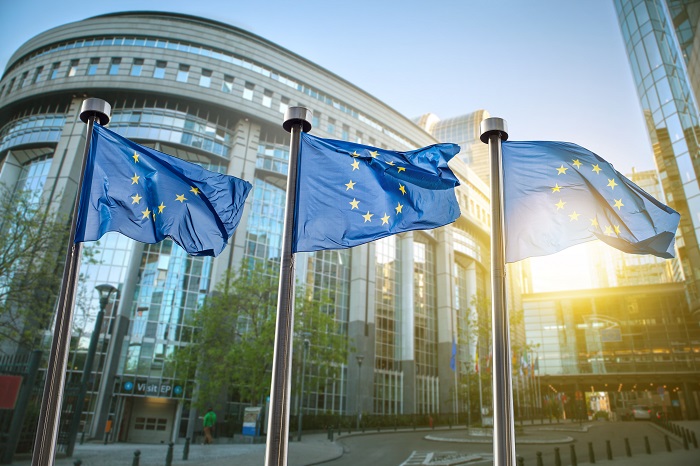
The EU Artificial Intelligence Act is rolling in a landscape where AI hiring tools are already generating lawsuits, congressional scrutiny and growing unease among HR leaders about using the tools to help make talent decisions.
The law, which places new requirements on AI systems used in hiring, demands transparency and human oversight from companies operating in Europe. Its reach extends to employers around the world that use AI tools on EU-based employees or job candidates who may also fall under its rules.
Dimitri Boylan, CEO of Avature, an AI-powered platform for recruiting and talent management, has worked with clients including Deloitte, Home Depot, IBM and Walmart. He told HR Executive that the law clarifies who is accountable when AI-driven hiring goes sideways.
The lawsuits came first
Two current class action suits against HR tech companies allege violations of existing laws, not AI-specific ones. “The EU AI Act does get ahead of part of the problem, but it is not solving a brand-new issue by itself,” Boylan says. “You do not need an AI-specific regulation to break the law with AI.”
He says the real exposure is in how a system was built, tested, governed and explained to end users. Companies that rushed AI to market or assembled multiple smaller tools and asked customers to trust the whole chain are particularly vulnerable. “The EU AI Act is useful because it forces the conversation back to evidence, governance and accountability,” Boylan says. “That is exactly where the conversation should be.”
Read more: Congress hears split testimony on AI regulation and the workplace
What human oversight requires
The law mandates human leadership on all hiring decisions. In practice, Boylan says most companies are falling short in this aspect. “Meaningful human oversight cannot mean a person rubber-stamping an output they don’t understand,” he says. “It has to start much earlier, with the people creating and deploying the AI.” That means HR teams must comprehend how a system is designed, what data it uses, how it’s tested and whether they, as the customer, can inspect how decisions are being made. In HR, where tools influence access to jobs and opportunity, any missteps could deliver serious consequences.
“If a vendor combines multiple AI tools and the enterprise customer can’t inspect how decisions are being made end to end, oversight breaks down,” Boylan says. “The policy may look good, but the actual control is missing.” In order for this to take place, HR teams need transparency and configurability, as well as the ability to understand the system, adjust parameters, set guardrails and intervene when results are wrong.
‘Clarity reduces risk’
Boylan’s firm tracks more than 60 U.S. federal laws and at least 100 state laws that touch AI and create risk for large employers trying to build consistent global practices. The EU AI Act, he argues, offers a clearer path forward than this quilt of regulation moves.
“For large enterprises, I think the EU AI Act is more likely to change how AI is deployed than become another checkbox,” Boylan says. “Our customers are large organizations with major brands. They are heavily scrutinized by regulators, the media, candidates, employees and the public. For them, clarity reduces risk.”
He recalls a similar search for the regulatory sweet spot with data privacy. “The goal is to protect citizens without freezing innovation,” he says. “With AI, the stakes are much higher. Jobs will change, some jobs will disappear, and there will be social backlash.”
The post How the EU AI Act impacts global standards for AI in hiring: Expert insights appeared first on HR Executive.
Credit: Source link