We’ve now got the full text of the “Memorandum of Understanding” that ended the war between the U.S. and Iran. Read the full text here. The BBC has a good summary here. And the WSJ has a useful annotated version here. The main points:
- An end to the fighting, followed by an extendable 60-day negotiation period aiming for a more detailed pact that will include a compliance-monitoring mechanism.
- Iran is banned from obtaining nuclear weapons but “will maintain the current status quo of its nuclear program,” it says.
- The blockades of the Strait of Hormuz will be ended, allowing “passage of commercial vessels with no charge for 60 days.” After that period, the “future administration and maritime services” of the Strait will go to Iran and Oman—language which seems to leave open a backdoor for tolls.
- Iran will receive $300 billion in an investment package coming mainly from international partners.
- $100 billion in Iranian assets will be unfrozen.
Conspicuous by its absence: There is no mention of Iran curbing its proxy terror group, Hezbollah. In fact, Israel continued to pound southern Lebanon over the last 24 hours. That conflict isn’t done.
Reaction: Most countries are glad the war is over and that trade will flow through the Strait again. However, the U.S.’s allies are fuming that the deal cements Iran’s dominance of the Gulf region, leaves its nuclear power program in place, and does nothing to stop Hezbollah’s attacks on Israel.
Israel’s Netanyahu regards the deal as a strategic disaster. It leaves Israel to fight Iran alone. Former vice president Mike Pence called it “appeasement.” Louisiana Republican Senator Bill Cassidy said, “this is the worst foreign policy blunder in decades.”
THE MARKETS
Warsh to Wall Street: “Two” means two—and traders hated hearing it
The U.S. Federal Reserve’s latest policy statement was glib but definitive: “We will meet our price stability objective,” new chairman Kevin Warsh wrote—and then repeated again and again at his press conference. Inflation has been running above the Fed’s 2% target for five years. Warsh called that unacceptable and kept saying so. “The ‘two’ is the left of the decimal point,” he told reporters. “For now, ‘zero’ is to the right.”
The Fed held its benchmark interest rate at 3.5% to 3.75%, as expected, but now nine out of 18 officials pencil in at least one hike this year, and the new statement stripped out the old easing bias. Markets threw a fit over it. The Dow fell 507 points after touching a record intraday high. The S&P 500 lost 1.2%, the Nasdaq 1.3%. By the close, money markets had moved an October hike to slightly better than a coin flip, when before almost nobody would’ve bet on it, Fortune’s Eva Roytburg reports.
- S&P 500 futures were up 0.93% this morning. The index lost 1.21% yesterday.
- In Europe, the Stoxx 600 was down 0.4% in early trading and the U.K.’s FTSE 100 was down 0.91% before lunch.
- Asia: South Korea’s KOSPI was up 2.25%. Japan’s Nikkei 225 was up 1.65%. India’s Nifty 50 was up 0.34%. China’s CSI 300 was up 21%.
- Brent crude was under $78 per barrel this morning.
- Bitcoin was $64.1K.
EUROPE’S MOST INNOVATIVE COMPANIES
The definitive list of organizations driving the continent forward
Now in its second year, Fortune Europe’s Most Innovative Companies spans 300 companies across 18 countries and 21 industries, highlighting organizations that are pushing boundaries in fields ranging from healthcare and manufacturing to telecommunications, retail, and financial services. Each was evaluated across three dimensions of innovation: product, process, and culture.
POLITICS
Elon Musk may have accidentally chosen the future prime minister of Britain
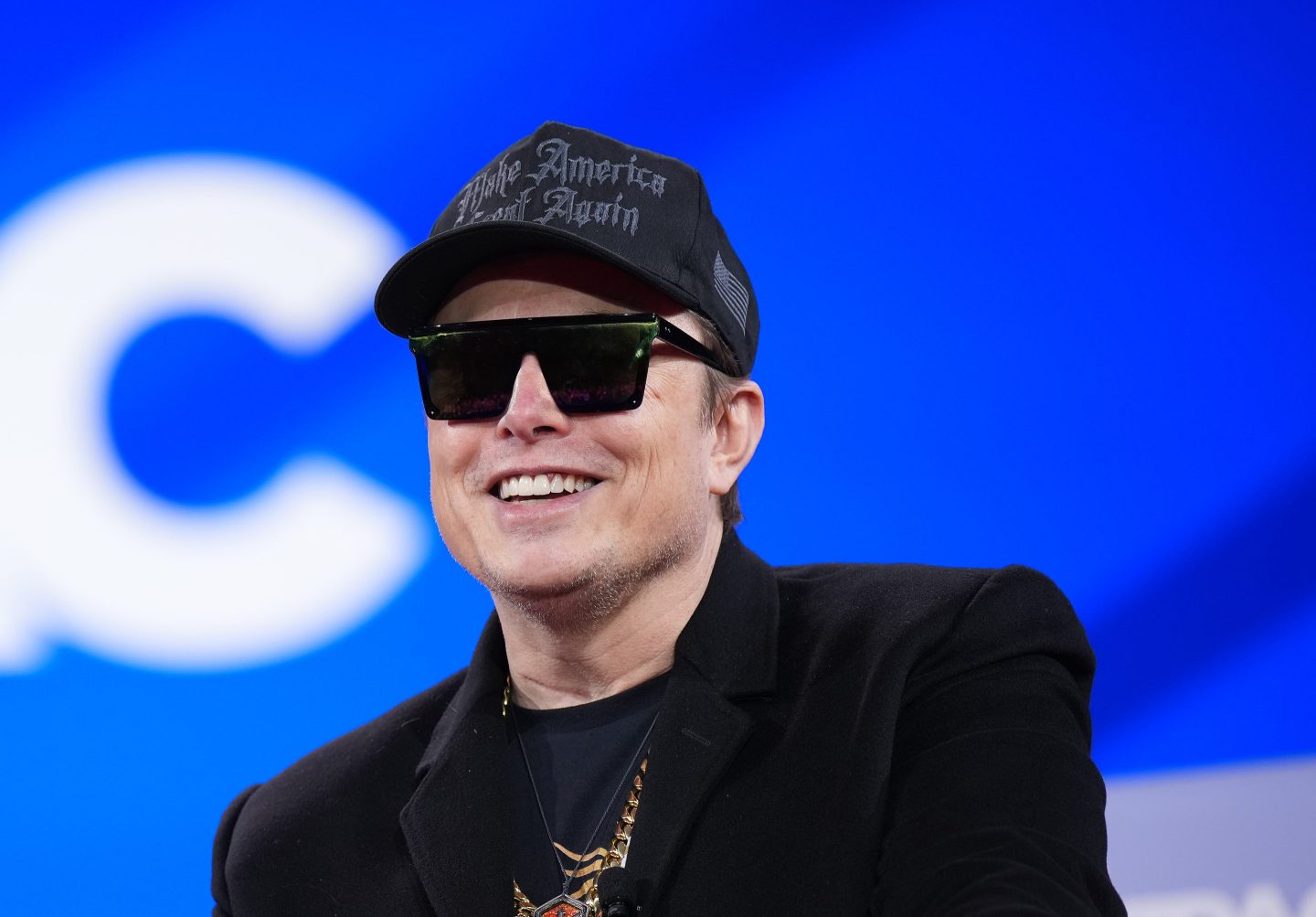
Today is election day in Makerfield, a small constituency in Northwest England, which may be about to choose a future prime minister for Britain—a decision that Elon Musk has unwittingly had a hand in. The vote is happening because the previous member of parliament tactically resigned to trigger a by-election, allowing the Labour party’s mayor of Manchester, Andy Burnham, to stand for the seat. Burnham promised that if he wins he will challenge Keir Starmer, the U.K.’s current prime minister, for the party leadership, and thus the premiership of Britain. Normally, this is a safe seat for Labour, and Burnham thus has a plausible path to becoming Britain’s next PM by the end of the year. Starmer’s personal polling numbers have collapsed and many Labour MPs would like to see him replaced with a fresh face.
There’s just one wrinkle: Musk.
For years, Musk has been using X to boost his anti-immigrant messages, frequently castigating Britain for being too generous to migrants. At one point, he predicted that “Civil war in Britain is inevitable.” Musk has repeatedly retweeted posts by Rupert Lowe, the leader of the U.K.’s far-right Restore Britain party. As a result, Lowe—a relatively obscure figure in Britain until Musk started boosting him—now has 836,000 followers on X. Restore is currently expected to take about 6.5% of the vote.
Unfortunately for Musk, that’s a big enough slice of the vote to deny victory to Burnham’s main opponent, Nigel Farage’s Reform UK party, which is also anti-immigration. In other words, by boosting a tiny party that cannot win, Musk may have carved a path for Burnham and his soft-left faction in Labour to take control of No.10 Downing Street.
- Expect the result of the vote count to become official in the small hours of Friday morning.
MORE FROM FORTUNE
Anne Hathaway says she was spammed with ChatGPT-written thank you notes after hiring a recent role: ‘Nobody on that list gets that job’ – Orianna Rosa Royle
Meet the CEO of US Polo Assn: He grew up in one of America’s poorest regions and now hosts Prince William and runs a $2.7 billion brand – Orianna Rosa Royle
The G7 just pledged to break China’s rare earth grip — there’s a lot of work to do – Mia Osmonbekov
Vanguard’s alarming state of retirement in 2026: The average American has $167,970 in their account—or they have $44,115 – Nick Lichtenberg
CHART OF THE DAY
The stock market doesn’t care who the new Fed chair is
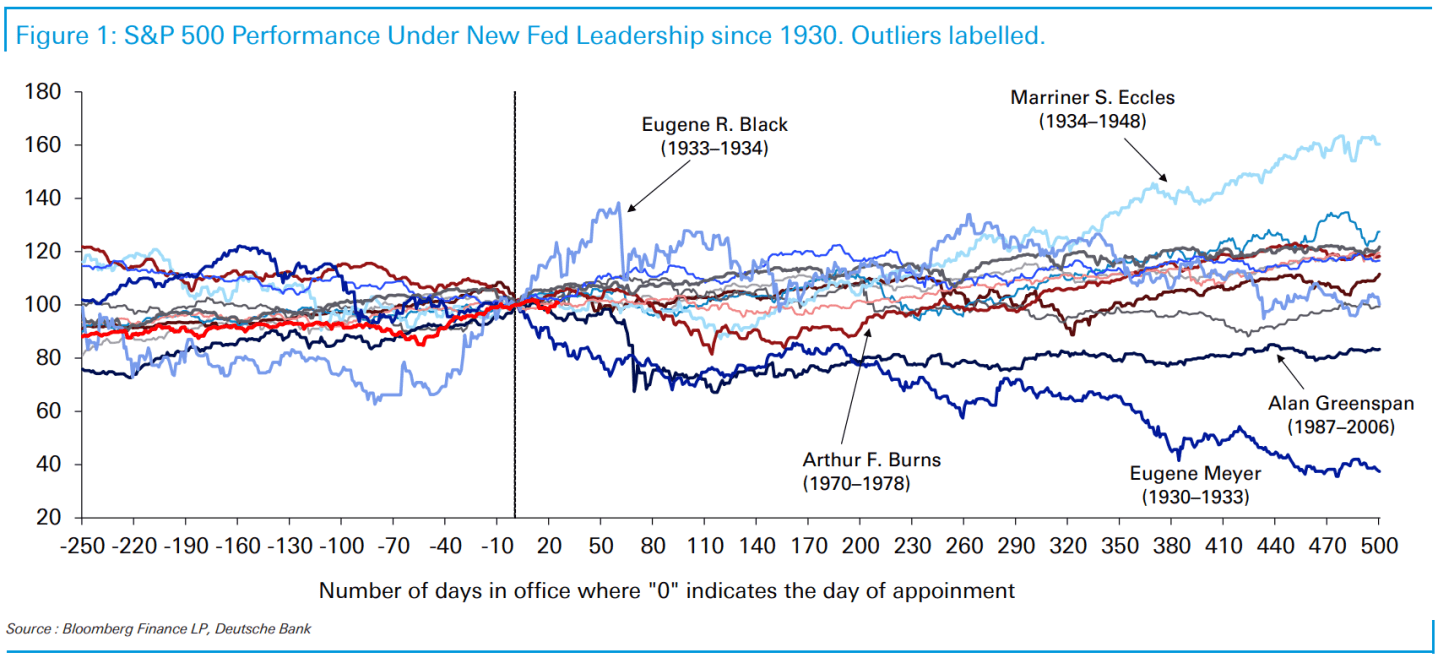
If you’re looking for a pattern in the stock markets related to the arrival of a new boss at the U.S. Federal Reserve, stop. There isn’t one. “While there’s always chatter about new Fed Chairs being ‘tested’ by markets, the truth is, a buoyant or rocky start often has more to do with external forces than the individual at the helm,” Deutsche Bank’s Jim Reid said in an email. “The data suggest a consistent theme: a new Fed Chair rarely dictates the market narrative. Instead, they often find themselves hostages to broader economic currents, whether positive or negative.”
NUMBER OF THE DAY
13.1%
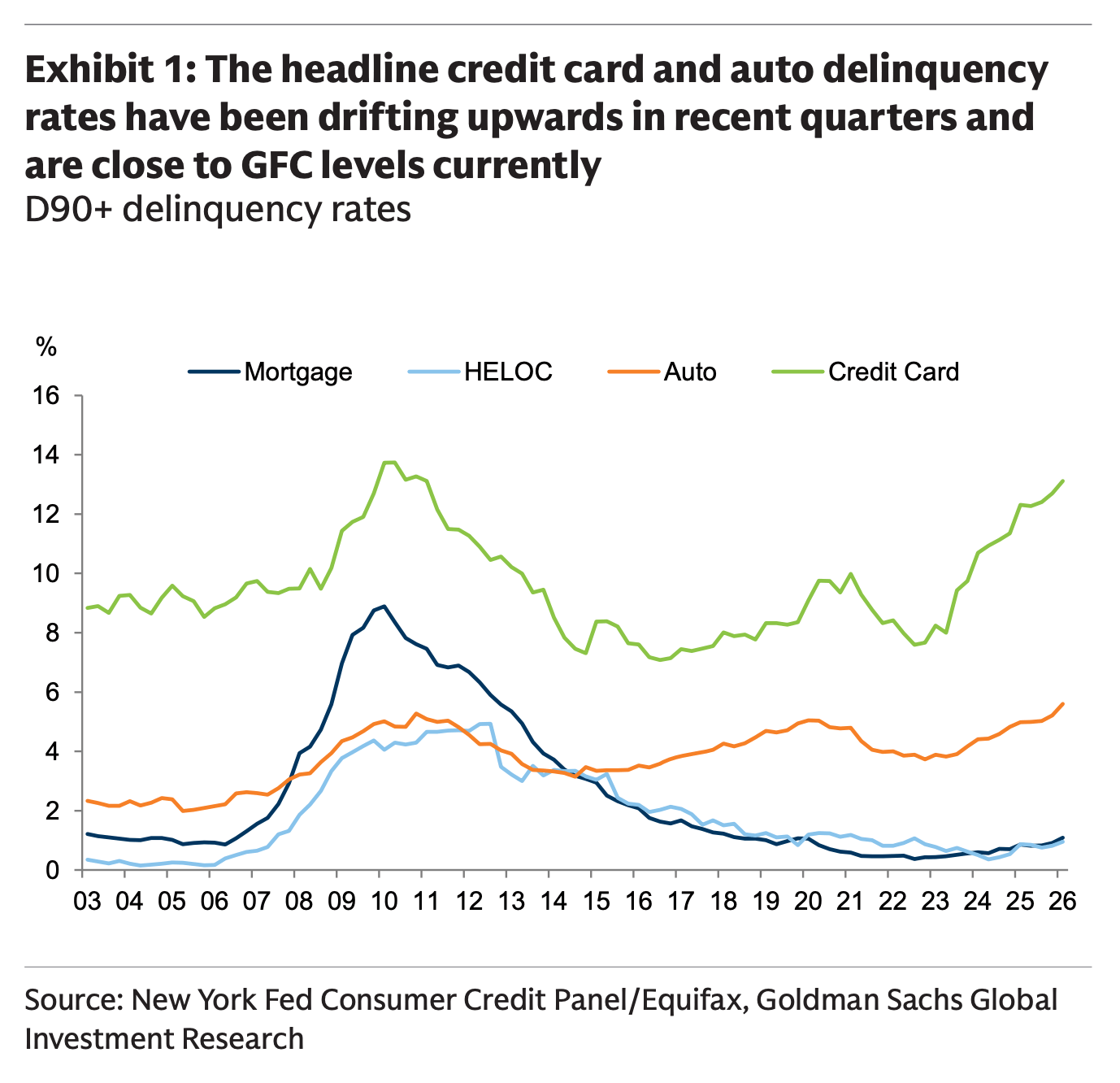
The share of U.S. credit card loans that are 90 days or more past due, according to Goldman Sachs. That’s “back in line with the Global Financial Crisis peak,” according to analyst Arun Manohar, and the rate is rising. “There remains meaningful stress among lower-income and lower-credit-score (‘subprime’) borrowers.”
THE FRONT PAGES TODAY
Trump and AI CEOs discuss global AI rules – Axios
Wall Street Hiring Dilemma: AI Can Model—but Can’t Make—the Next Rainmaker – WSJ
Apple prepares second-generation iPhone Air for spring 2027 – Bloomberg
JPMorgan Chase cuts off Anthropic access for its Hong Kong staff – FT
Oil falls as International Energy Agency forecasts supply glut next year after U.S.-Iran deal – CNBC
We Liked Remote Work. Then We Looked at the Data. – NYT
ONE MORE THING
Why Hollywood is full of British people
Have you ever wondered why Tom Cruise’s “Mission: Impossible” crew always seems to be gathering in London? Or why the space aliens of the “Star Wars” franchise have British accents? And why is it that the Oscars seem to feature a disproportionate number of Brits, given that most English-language movies are made by American companies?
Fortune has the answer. It’s because the U.K. government pays for them to be there. That’s right. The U.K. has a longstanding policy offering foreign filmmakers a 25.5% refund on their movie-making costs if they film in Britain, use British actors, or otherwise anglicize their films.
This provides a staggering discount on costs for U.S. studios. Universal Studios spent $658.8 million to create “Jurassic World: Dominion,” setting a new record for the most expensive movie ever made. British taxpayers refunded Universal $127.8 million of that, our analysis shows.
The macro result is that spending on feature film production in the U.K. rose 31% to a record $3.8 billion last year.
Credit: Source link