Unlock the White House Watch newsletter for free
Your guide to what Trump’s second term means for Washington, business and the world
The Trump administration will allow Iran to access $6bn of its oil money held in Qatar to buy humanitarian and non-sanctioned goods from the US under an interim deal between Tehran and Washington.
The move forms part of the billions of dollars in financial incentives that the administration is dangling to ensure the Islamic republic commits to the memorandum of understanding it signed with the US on Wednesday, and to follow-up nuclear talks.
The funds would be released in phases starting within the 60-day extended ceasefire set out in the deal, depending on the reopening of the Strait of Hormuz and the progress of talks towards a final settlement.
They would only be used to buy American products, said a diplomat briefed on the deal.
The White House did not comment on the specifics of the FT’s reporting when contacted, but a US official said Washington would release some frozen assets during the final negotiations provided Iran engaged in “good behaviour,” such as handing over its enriched uranium.
The Trump administration will also grant a waiver to allow Iran to export oil for the duration of the 60-day period and will lift its naval blockade on Iranian ports.
Tens of billions of dollars of Iran’s oil money are estimated to be frozen in central banks overseas because of US sanctions, including in India, Iraq, China and Japan.
Iranian state-affiliated media has reported that Tehran expects $12bn to be released during the 60-day interim period.
The $6bn was previously held in South Korea but was transferred to an account in Doha after the Biden administration agreed a prisoner-swap deal with Tehran in September 2023.
At the time, that deal was viewed as a confidence-building measure that the US hoped would lead Tehran to cap its nuclear enrichment programme. It was reached after nuclear talks between the Biden administration and Iran had collapsed the previous year.
But hopes of broader progress were upended after Hamas’s October 7, 2023 attack on Israel triggered a wave of regional hostilities, intensifying tensions between Iran and the west. That meant Tehran was not able to access the funds.
“Trump took a bad Biden deal, restricted the sales to humanitarian non-sanctioned goods and ensured that it’s used on American products, creating a win-win situation,” the diplomat said.
“Iranians get humanitarian goods for their people, and the Iranian money is used to support American farmers.”
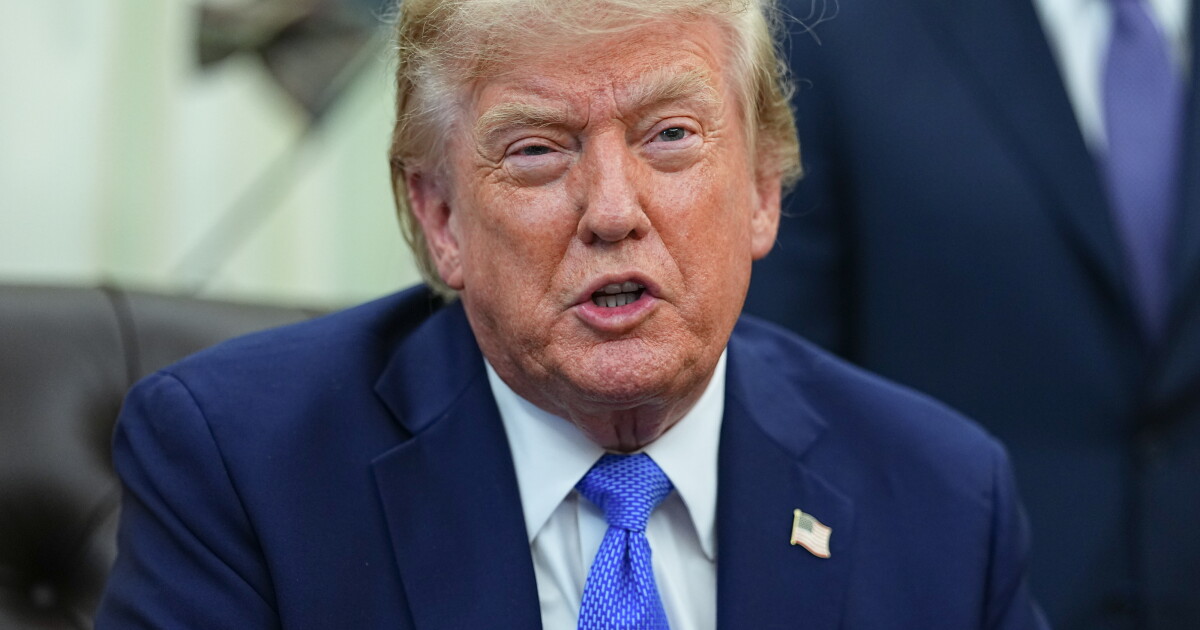
As he defended the interim deal, US President Donald Trump told reporters on Wednesday that his administration would release frozen Iranian funds and lift sanctions “as soon as they behave”.
“We have taken their money, it’s their money,” he said. “If we didn’t give it back, nobody would ever invest in the dollar again.”
The agreement states that the US would “terminate all types of sanctions against” the Islamic republic, including UN Security Council resolutions, “in an agreed-upon schedule as part of the final deal”.
Iran and the US have also committed “to resolve the disposition” of the republic’s stockpile of enriched uranium “pursuant to a mechanism that will be mutually agreed upon”. At a minimum, Tehran would dilute its stockpile “on site” under the supervision of the International Atomic Energy Agency, according to the deal.
Iran has more than 9,000kg of the material, including 440kg at levels close to weapons-grade that Trump previously demanded Tehran hand over to the US.
The deal has sparked a backlash among some Republicans and Trump’s critics in the US, who say it offers too many concessions to Tehran as the US president seeks to drive down oil prices ahead of November’s midterm elections.
Iran’s closure of the Strait of Hormuz, through which about a fifth of the world’s oil and liquefied natural gas previously passed, has triggered the worst global energy crisis in decades.
Additional reporting by Amy Mackinnon
Credit: Source link