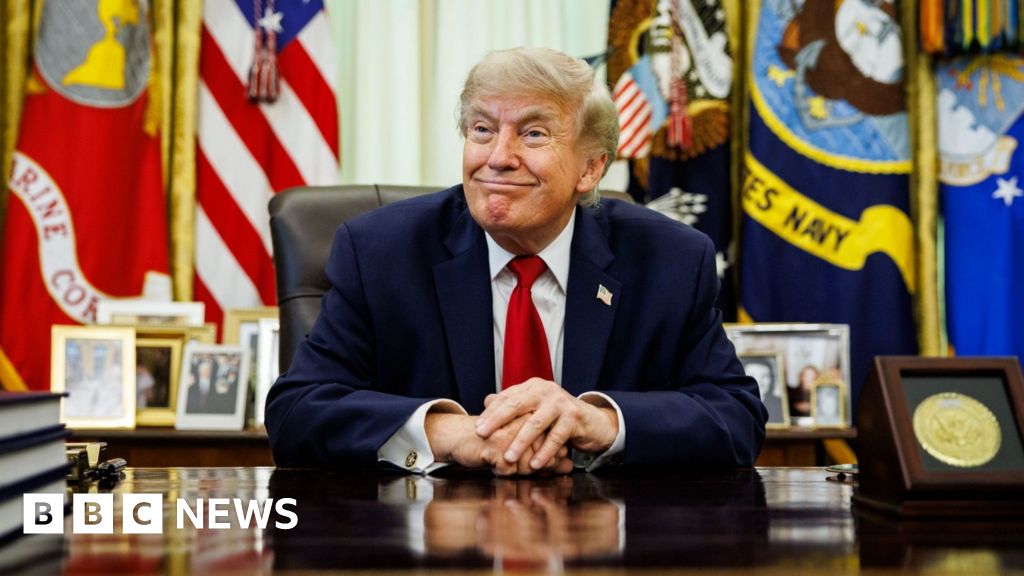
President Trump announced Monday on his TruthSocial page that he will nominate acting U.S. Secretary of Labor Keith Sonderling to the position in a permanent capacity. Sonderling has served in the interim role since April, when Trump pick Lori Chavez-DeRemer abruptly stepped down amid misconduct accusations.
“Throughout his career, Keith has proven his dedication to delivering strong results for the hardworking people of our country, and I know he will do an incredible job in his new role,” Trump wrote. Sonderling’s nomination now moves to the Senate for confirmation.
Before Sonderling took over the DOL on an interim basis, he was Deputy Secretary of Labor, a role for which the Senate confirmed him in a 53-46 vote.
“I am deeply grateful to President Trump for his trust and confidence, for nominating me as the next United States Secretary of Labor,” Sonderling wrote Monday on his LinkedIn page. “Serving in both of President Trump’s administrations has been one of the greatest privileges of my life.”
If confirmed, he writes, he looks forward to “continuing that service … and advancing the president’s agenda on behalf of America’s workers, families, unions and job creators.”
Keith Sonderling’s HR connections
Before the Deputy Commissioner nod, Sonderling served as a commissioner with the Equal Employment Opportunity Commission, a role that made him a known entity within HR tech communities, as he weighed in frequently—including through involvement in the HR Tech Conference—on AI risk. He has publicly criticized the growing patchwork of state AI laws and emphasized employer liability alongside vendor responsibility in AI-driven discrimination.
“Whether it’s designed improperly or used improperly, employers are going to be 100% liable for whatever decisions these tools are making,” Sonderling told the audience at HR Tech in 2024.
He has also made moves to create more uniform support for workers amid AI disruption, including through the creation of the AI Literacy Framework and accompanying text-based AI training for American workers.
When Sonderling was nominated to the Deputy Secretary position, Bradford J. Kelley and Lorenzo Riboni at labor and employment law firm Littler wrote that he had exhibited a preference for deregulation and compliance assistance, both of which could shape the coming priorities for the DOL on AI and other issues.
During his time at the helm of the Wage and Hour Division at DOL, Sonderling authored an opinion letter classifying gig workers as employees for purposes of the FLSA. The accompanying rule was overturned when President Biden took office, but has since been revised under Trump. In his WHD time, Sonderling was also credited with the creation of the Payroll Audit Independent Determination Program as a means of driving self-audit compliance with FLSA among employers, which he again rolled out over the last year.
Credit: Source link