DP World is planning to build a new port and a container terminal on the United Arab Emirates’ east coast that would reduce Dubai’s dependence on its flagship Jebel Ali hub and bypass the Strait of Hormuz.
The Dubai-based port operator is in talks to develop a brand new multipurpose port in the coastal area of Fujairah and a new terminal at the existing harbour in the same emirate, people familiar with the matter said.
Over the past two decades, DP World has become one of the UAE’s most internationally prolific entities, building a ports and logistics empire across the globe, but Jebel Ali remains the group’s and its owner Dubai’s crown jewel.
Shifting some of the port’s capacity outside Dubai marks a seismic change for the emirate, which has established itself as a global trade and finance hub partly off the back of Jebel Ali’s growth.
But DP World’s plans align with a broader UAE government initiative to attempt to bulletproof its economy against future hostilities with Iran by reducing its dependence on the strait, where shipping has been disrupted by Iranian drones and missile strikes since the US-Israeli attack.
The new project would deepen DP World’s presence on the Gulf of Oman, allowing containers to enter and leave the country without having to pass through the strait, before moving them on trucks overland to Dubai, Abu Dhabi and neighbouring Gulf countries.
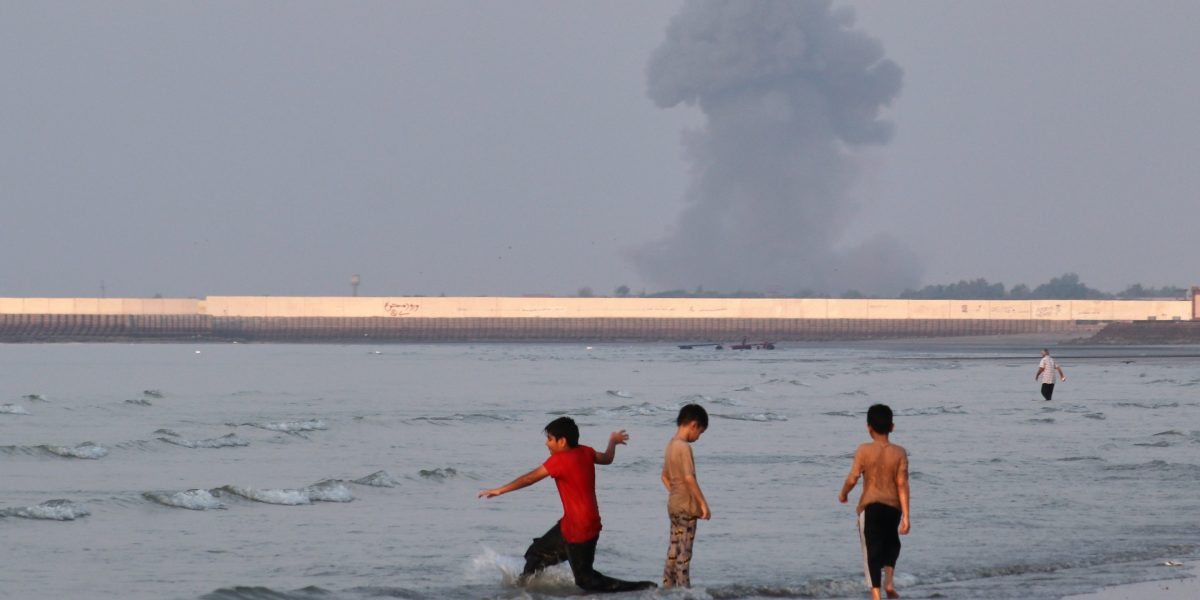
Since the war began at the end of February, Iran has fired nearly 3,000 drones or missiles at the UAE — more than any other country. Early on in the conflict, a fire erupted at Jebel Ali, which authorities attributed to falling debris after a missile interception.
The Iran war marked another difficult chapter for the group, which had just weeks before the conflict erupted removed its longstanding group chair and chief executive, Sultan Ahmed bin Sulayem, from his position over his ties to child sex offender Jeffrey Epstein.
Activity at Jebel Ali, the region’s largest container port, fell between 90 and 95 per cent after Iran closed the strait in response to US-Israeli attacks, galvanising the port operator to seek out alternatives to the waterway, the people said.
DP World was now discussing a term sheet with government officials, with the new project’s structure and financing yet to be finalised, the people said. The new port could be completed as soon as within a year and a half, a senior company official said.
DP World declined to confirm details of any east coast projects but said that “there are plans in the works around diversification to get through this disruption”.

Gulf officials said the move eastward did not mean Jebel Ali would be fully replaced. Built and expanded over decades, the hub consists of a vast economic free-zone, warehouses alongside heavy industry facilities.
“Jebel Ali will continue to be Jebel Ali,” a senior official at the company told the FT. “It will never be downsized.”
DP World would initially invest hundreds of millions of dollars to develop the new facilities but that could rise over time depending on how much additional capacity was required, the people said.
“We do have our own plan, and we’ve been very active in terms of looking at the eastern coast as far as DP World is concerned,” the senior official said. “It’s defensive in case things go wrong,” he said.
DP World’s plans underline how the Iran war has forced governments and companies in the region to reconsider infrastructure and economic corridors developed on the premise that there would be uninterrupted passage through the strait.
Before the war traffic through the strait amounted to about 135 vessels per day, but has barely risen above 40 daily transits since the waterway was briefly declared open again after the US and Iran signed an interim ceasefire.
The tenuous state of the diplomatic process has been underlined by an escalation of tit-for-tat strikes and Iranian attacks on shipping in the narrow waterway over the past week. The latest hostilities have once again caused traffic to fall to a trickle.

Jebel Ali’s port, which handled 15.6mn 20ft containers last year, played a central role in establishing Dubai as a global logistics and re-export hub, particularly between China and Africa. But its location means it is dependent on the narrow waterway between Iran and Oman.
“The impact on Jebel Ali is likely going to be significant and permanent,” said Lars Jensen, chief executive of the consultancy Vespucci Maritime.
Moody’s, the rating agency, said it estimated that DP World’s overall earnings would fall from $6.6bn in 2025 to about $5.9bn this year as a result of the conflict.
Since the beginning of the war, the company has already leaned on the country’s east coast facilities, diverting cargo shipments from Jebel Ali to the Fujairah and nearby Khor Fakkan ports, which are heavily congested as a result of the crisis.
The new plans come as Sharjah-based Gulftainer pursues its own expansion at nearby Khor Fakkan, a major container terminal also located on the UAE east coast. The company earlier this month announced a $2bn investment plan to increase capacity at Khor Fakkan.
Fujairah, one of seven emirates that make up the UAE, already plays a strategic role in the UAE’s energy infrastructure, with Abu Dhabi exporting some of its crude through there with plans to raise volumes to bypass Hormuz.
Credit: Source link