The global AI debate often fixates on models: Which ones are faster, which ones can do more, which ones are cheaper. The prominence of low-cost systems from China, like those from DeepSeek, z.ai, and Moonshot, has sharpened this focus, suggesting a narrowing gap with U.S. leaders.
The rise of these brilliant, cheap AI models diverts attention away from a fundamental truth: So long as the U.S. controls the underlying infrastructure that enables AI ecosystems, it will stay dominant.
It’s tempting to see the AI race as a competition between different models, such as Anthropic’s Fable or OpenAI’s GPT, pitted against DeepSeek V4 or Moonshot’s Kimi K3. Or, from a hardware perspective, we focus on the AI chips used to train and run these models.
But frontier AI depends on a far broader, capital-intensive system: Hyperscale data centers, cloud computing infrastructure, AI servers, and the underwater fiber-optic cables that connect them. Today, these layers of enabling hardware are themselves highly susceptible to American export controls, extraterritorial data extraction laws, and the spillover effects from a massive commercial-military symbiosis.
Nvidia’s AI ecosystem and American tech hegemony
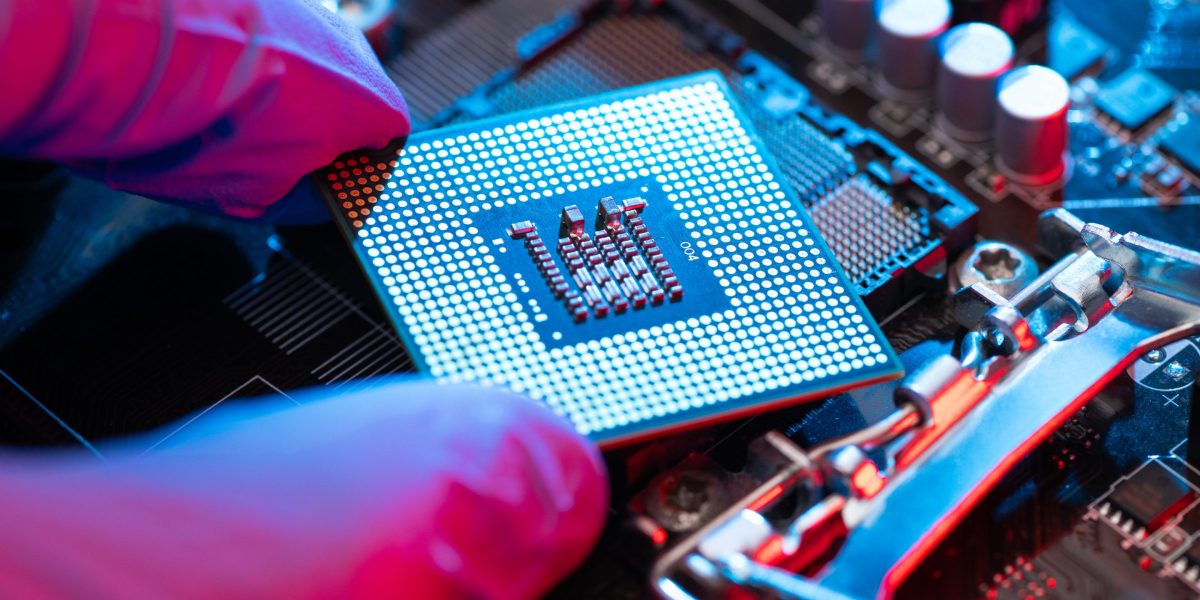
If you want to understand how the U.S. dominates the AI ecosystem, look at Nvidia’s business model. The world’s most valuable company owes its strength to its graphics processing units, the chips required to train frontier AI models, of which it controls roughly 85% of the global market.
Nvidia’s ecosystem stretches to include hardware manufacturers like Broadcom, and cloud hyperscalers—Amazon Web Services, Google Cloud, and Microsoft Azure—which provide the infrastructure that powers foundational AI developers such as Anthropic, OpenAI, Meta, and Alphabet.
It’s Nvidia’s software layer, known as CUDA, that binds everything together. CUDA has become the default environment for AI development, creating high switching costs for anyone that wants to shift to a competitor.
This mishmash of tech giants is, in fact, the heart of a new U.S. AI industrial complex. They boast extensive ties to America’s defense and intelligence establishment through large binding contracts. The Department of Defense has signed standard operational agreements tapping major providers—including Google, OpenAI, Microsoft, Amazon Web Services, Oracle, and Nvidia—to deploy their frontier AI tools onto classified military networks.
The Pentagon’s FY2027 budget earmarks more than $54 billion for autonomous warfare and drone systems, funding a newly formed Defense Autonomous Warfare Group (DAWG). Despite early objections about how their technologies should be used, OpenAI, xAI, and Google have signed binding contracts that allow the Pentagon ‘all lawful use’ for defense-related purposes—including for autonomous weapons and mass surveillance.
Even as Anthropic continues litigation against the U.S. government regarding its objections to how its AI models may be used, it reportedly has embedded its engineers inside the National Security Agency to adapt its Mythos model for offensive cyber operations, possibly aimed at networks in China and Iran.
The scale of the commercial-military symbiosis between Washington and Silicon Valley is almost incomprehensible. Ten of the world’s largest companies by market cap are the very tech firms that make up this ecosystem, nearly all American, representing a commercial concentration in the trillions of dollars. Washington is racing to spend more money on AI, with a $90.7 billion surge in federal AI contracting in 2026 alone, according to the Brookings Institution.
AI hyperscalers and hard infrastructure
As American cloud hyperscalers expand capacity at data centers around the world, they are increasingly building their own privately owned subsea fiber optic networks. Meta plans to build an around-the-world fiber-optic subsea cable, covering 40,000 kilometers, with a projected cost of $10 billion. Google, through its Pacific Connect Initiative, will spend over $1 billion to further connect Japan to the South Pacific.
These vital data pipelines, owned and operated by Silicon Valley tech giants, account for 70 % of usable undersea cables in 2026, yet Washington retains the right to restrict where these networks go and who has access. In 2020, U.S. regulators blocked the Hong Kong segment of the Pacific Light Cable Network—a project backed by Google and Meta—forcing the companies to abandon the direct U.S.-Hong Kong link over Chinese espionage concerns. Some 13,000 kilometers of already laid cable was abandoned, left unused on the ocean floor.
Even China’s frontier labs, training on domestically-hosted infrastructure, remain dependent on American undersea cables wherever their models touch the global internet — sourcing training data scraped from it, or serving users and running APIs outside China.
China is rushing to build its own parallel undersea fiber optic networks, along its so-called digital silk road, as it aims to avoid reliance and prolonged exposure to American dominance of the numerous layers of hard infrastructure that supports the global AI landscape.
AI hyperscalers are also vulnerable to a host of U.S. data-related extraterritorial laws. The U.S. CLOUD Act, for example, requires U.S.-headquartered cloud providers to produce data within their possession, custody or control, even when stored outside the United States.
Subject to legal processes, U.S. authorities may obtain not only stored data but also a detailed digital trail of AI activity—including users’ prompts, models’ responses, who used a system, when and where it was accessed, and technical records revealing behavioral patterns. Such power, should Washington choose to use, exerts incredible leverage on the AI ecosystem.
Limitations of the U.S.’s AI ecosystem dominance
It’s true that the U.S.’s dominance of the AI stack isn’t absolute. Manufacturers in Asia produce the semiconductors, AI servers, and other essential components for AI. Nvidia’s supply chain, for instance, runs through TSMC, SK Hynix, and Samsung, alongside system integrators such as Foxconn, Quanta, and Wistron.
Last month, Nvidia CEO Jensen Huang announced billions of dollars in new investments and contracts in Taiwan and South Korea. In Taiwan, Nvidia ordered advanced chips and packaging from TSMC, along with servers and networking hardware from Quanta Computer and others. In Korea, Nvidia signed billion-dollar deals with memory-chip makers SK Hynix and Samsung, together with new tie-ups with LG, Hyundai Motor Group and Doosan Robotics.
Yet Taiwan and South Korea are unlikely to weaponize their position in the AI value chain. They will want to maintain their earnings in what amounts to a friend-shored U.S. tech stack.
We may end up with competing AI ecosystems: A U.S.-led one, and a China-led one. That may mean different standards, infrastructures, and governance.
But until that alternative emerges, it’ll be the U.S. that keeps a firm grip on the wider AI ecosystem.
The opinions expressed in Fortune.com commentary pieces are solely the views of their authors and do not necessarily reflect the opinions and beliefs of Fortune.
Credit: Source link