Nicolás Maduro is set to face charges in a US court on Monday that he led a cocaine conspiracy spanning more than a quarter of a century, in a case that could raise questions about the strong-arm tactics used to bring him to justice.
Maduro was being held at the Metropolitan Detention Centre in Brooklyn, a notorious facility known for its poor conditions, and will stand trial at the US courthouse across the East River in lower Manhattan.
He arrived at the facility late on Saturday after being extracted by US forces from his Caracas compound in the early morning hours. His case has been assigned to New York federal judge Alvin Hellerstein, an appointee of former president Bill Clinton.
The former Venezuelan president, who was initially indicted in 2020, is accused of using his position to run an organisation that dispatched thousands of tonnes of cocaine to the US, personally providing diplomatic cover to drug traffickers and money launderers, ordering kidnappings and murders and enabling corruption that enriched his family and members of his regime.
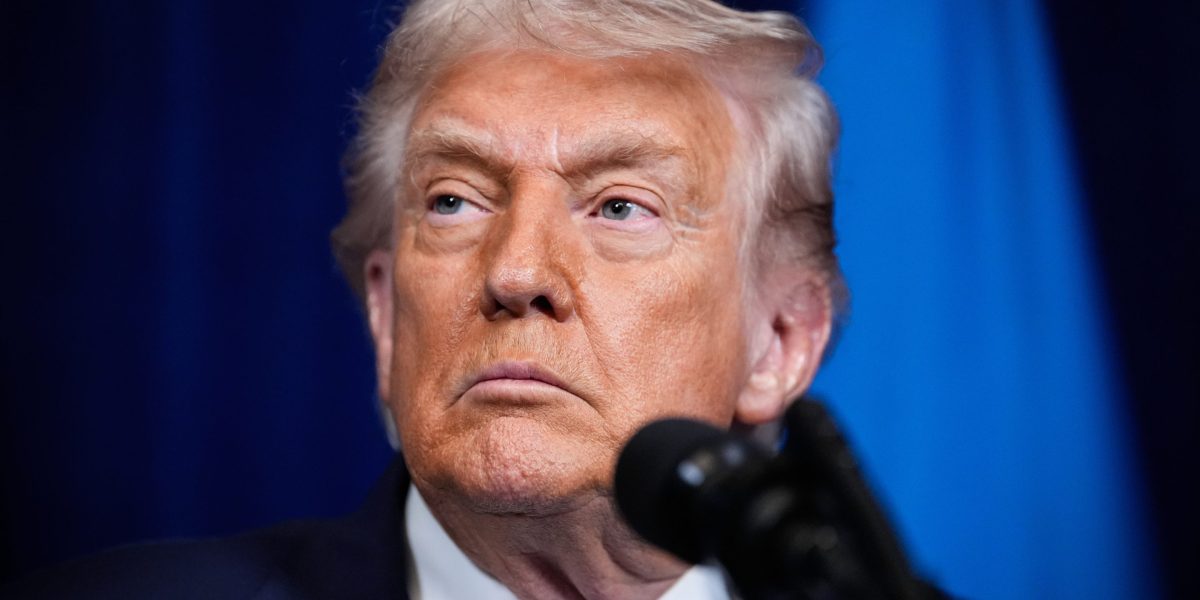
The case could raise fundamental questions beyond Maduro’s alleged drug offences: whether a federal indictment helped depose the leader of a foreign nation that US President Donald Trump now plans to “run” until a transition of power.
“Trump has baldly violated the UN charter, with no valid claim of self-defence, and engaged in an illegal extraterritorial arrest that will be vigorously contested in a US court,” said Harold Hongju Koh, professor of international law at Yale Law School. “All on the pretext of stopping drugs, when his transparent goal is profiting from oil.”
Maduro’s case echoes a prior prosecution of Panamanian dictator Manuel Noriega, who was similarly removed from his country in a 1989 US military operation. He was tried and convicted and served 17 years in a US prison before his extradition to France and later Panama. He died in a Panamanian prison in 2017.
Maduro has been under scrutiny by US law enforcement for years. During Trump’s first presidency, the justice department charged Maduro and others with acting as leaders of the “Cartel of the Suns”, in reference to insignia on the uniforms of high-ranking Venezuelan military officials.
Prosecutors say he enabled a wide range of cocaine producers and traffickers, from Colombia’s Farc guerrilla rebels to Mexico’s Sinaloa, Zeta and Tren de Aragua cartels, to use Venezuela as a safe haven for protection and logistics as they shipped cocaine to the US and Europe.
His wife, Cilia Adela Flores de Maduro, is accused of accepting hundreds of thousands of dollars in bribes to facilitate a meeting between a trafficker and the director of Venezuela’s anti-drug office.
US officials said the military operation to seize Maduro and his wife was targeted at “fugitives of American justice”. But Maduro’s defence lawyers could seek to challenge the manner in which he was seized.
“I can’t see that that is anything other than kidnapping, unlawful rendition,” said Mary Ellen O’Connell, law professor at the University of Notre-Dame, who noted formal extradition requests are required to remove criminal suspects from foreign countries.
Some legal experts also said the US attack violated the UN charter, which bars the use of force with few exceptions, and has for decades set core principles for engagement on a global scale.
“The actions appear to be flagrant violations of international law, including the UN charter’s prohibition on the use of force, head of state immunity for criminal prosecutions, and potentially the war crime of ‘pillage’ in terms of President Trump’s stated intentions for the Venezuelan oil industry,” said Ryan Goodman, a law professor at NYU School of Law.
Others said it flies in the face of the US constitution, which gives Congress the power to declare war or allow the use of armed force for smaller conflicts.
But John Yoo, professor at the University of California Berkeley Law, said the “constitution does not require Congress to declare war before the president initiates hostilities”.
“Congress has the check, before war, of funding to reduce the size and shape of the military available to the president,” he said, adding that Congress has the power of impeachment to challenge a president’s actions.
The administration may assert that the illicit drug trade justified its action against Maduro as self-defence — the one exception in the UN charter allowing the use of military force, alongside action authorised by the UN Security Council. But this argument has been disputed by lawyers.
“That would be a new claim in international law, but international law does not outright prohibit it,” Yoo said.
It could also point to a contentious 1989 Department of Justice memo that argues the FBI may investigate and arrest individuals violating US law even if it flouts international law.
O’Connell said the Venezuela action will reverberate beyond US borders.
“We will not be seen as the leader on the rule of law,” O’Connell said. “We give permission to those leaders willing to take this kind of violent action into their own hands,” she added. “We have created a more lawless world.”
Credit: Source link