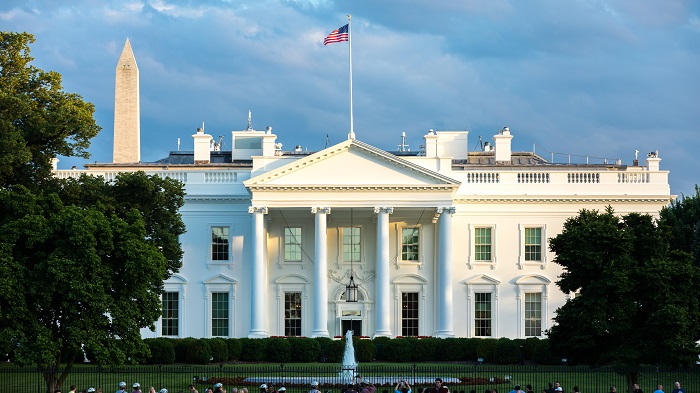
The White House on Friday issued proposed recommendations for how Congress can guide ethical development and implementation of AI, including in the workplace.
The National AI Policy Framework is an effort to steer toward “one federal AI policy, not a 50-state patchwork,” wrote Keith Sonderling, U.S. Deputy Secretary of Labor on LinkedIn.
What does the framework advocate for? Here are the seven focus areas:
- Protecting children: The proposal emphasizes that Congress should prioritize efforts to protect both children and adults from deepfake scams and ensure guardians have access to “robust tools” to manage children’s exposure to AI. The framework suggests Congress mandate that AI platforms implement child-safety features and affirm that current child-protection regulations extend to AI systems.
- Safeguarding economic growth: The document wades into the debate over the growing number of AI data centers with guidance that Congress “streamline federal permitting for AI infrastructure construction” to develop “behind-the-meter power generation.” It also urges Congress to provide grants, tax incentives and tech assistance programs to enable small businesses to deploy AI tools.
- Protecting intellectual property rights: The framework does not advocate for extensive Congressional intervention on this issue, arguing that the administration “believes that training of AI models on copyrighted material does not violate copyright laws,” while acknowledging “arguments to the contrary,” and ultimately proposing such issues belong in the courts. It does urge Congress to establish a “federal framework” to protect the unauthorized use of AI-generated digital replicas of identifiable attributes.
- Defending free speech: Congress should authorize the federal government to protect the First Amendment, the framework says, while also instating protections that prevent AI from “being used to silence or censor lawful political expression or dissent.”
- Ensuring ‘American AI dominance’: For the U.S. to “lead the world in AI,” the document states, Congress must create “regulatory sandboxes for AI application” and accessible federal datasets for training AI.
- Developing an AI-ready workforce: The framework advocates for the inclusion of AI training in existing education programs and workforce training; the expansion of federal analysis of “task-level workforce realignment driven by AI”; and the creation of new opportunities at public educational institutions for AI training programs.
- Establishing a federal policy: Congress should “preempt” state AI laws, according to the framework, that “impose undue burdens” to establish a national standard on AI implementation. “The federal government must establish a federal AI policy framework to protect American rights, support innovation and prevent a fragmented patchwork of state regulations,” according to the document, “that would hinder our national competitiveness, while respecting federalism and state rights.”
Credit: Source link