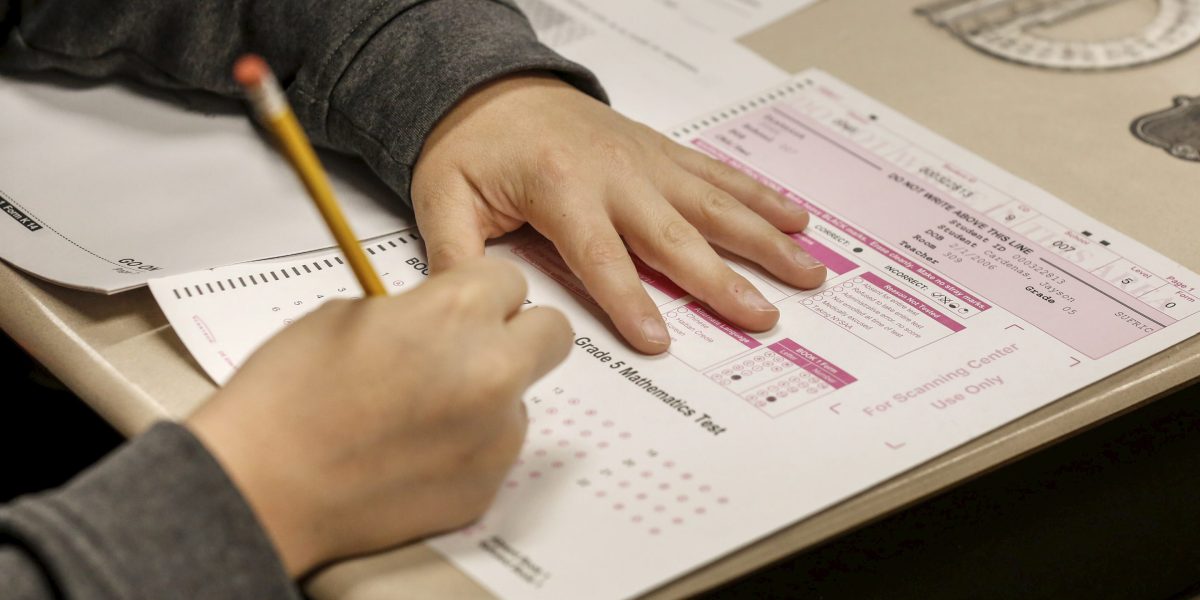
Straight‑A report cards have never been more common for America’s teens—but the payoff is not what parents think. A new National Bureau of Economic Research study finds that when teachers hand out “easy A” grades, their students are more likely to skip class, score worse on future tests, and earn less money years later. For a typical high school class, the researchers estimate grade inflation can shave about $213,000 off the group’s future earnings, or roughly $150 a year for each letter grade quietly nudged up.
The findings arrive as President Donald Trump pushes a crackdown on grade inflation on college campuses, tying federal funding to whether universities hold the line on grading. Gen Z is already the first generation to score lower than their parents on some measures of cognitive performance, as reading habits erode and schools lean harder on grades instead of learning.
The study, entitled “Easy A’s, Less Pay: The Long-Term Effects of Grade Inflation,” found that for each individual student, this dynamic chalks up to a decrease in yearly earnings of about $150 for every grade bumped up to a B+ from a B, for example.
“Average grade inflation hurts,” Nolan Pope, one of the study’s researchers and a labor economist at University of Maryland, told Fortune. “They are less likely to learn if it’s very easy to get an A. They spend less time and effort.”
The debate around grade inflation has stretched from the classroom to the Oval Office. President Donald Trump weighed in on the issue last November, establishing a higher-ed compact linking federal funding for universities to strict parameters his administration set, barring grade inflation (or deflation). The practice could be harming young people. Gen Z is the first generation less cognitively capable than their parents. Many young people are ditching books at record levels and some are even failing to complete reading assignments on par with previous expectations. From high school to college, grade inflation has offered educational institutions increasingly dubious value propositions.
The researchers analyzed administrative high school records from Los Angeles and Maryland and linked them to long-term postsecondary and earnings data. They measured grade inflation by comparing student grades to their actual performance on standardized tests.
The hidden costs: absences, suspensions, and dropping out
Whether it be with grades or money, inflation degrades value. Wealth managers are grappling with a strange problem in 21st century America: the rise of many “everyday millionaires” who are illiquid, with much of their wealth tied up in housing, often struggling to afford the things they feel entitled to by their paper worth. The straight-A students, in other words, likely have parents with straight-A portfolios, but both end up with B- or even C-level experiences in this inflated economy.
“The economy wasn’t built to handle this many people with this much money,” Nick Maggiulli, New York Times bestselling author of The Wealth Ladder, told Fortune in an interview last year. “On a relative basis in the United States, the competition for these higher-end goods is very high, so now it feels like we’re all canceling each other out with all this extra wealth,” he added. So too, in the classroom, when high scores are liberally handed out, the A loses its sought-after value.
The NBER study found that it’s not just future earnings being degraded. Grade inflation could actually have the inverse effect of their implied outcome. Students that are assigned a teacher that inflates grades are more likely to score poorly on future tests. They’re less likely to graduate high school, and even less likely to enroll in college. Most of these impacts, of course, usually happen well after the student has handed in their final exam, and that makes it harder to catch.
Teachers generously tossing out easy As also made it easier for students to skate by. The research found that higher grade inflation is linked to increased absences and suspensions, suggesting that when the academic bar is lowered, student engagement and school discipline may fall with it.
“It ends up actually being somewhat harmful for the student,” Pope said. “Nobody really is on the side of that harm because nobody sees it until much later.”
However, the study found grade inflation benefitted some students, specifically those at threat of flunking out. When teachers raised scores for students at threat of failing—from an F to a D, for example—that actually paid off, preventing those students from repeating a grade and improving their high school graduation rate.
Whatever the outcome, grade inflation has gained steam over the past decade. And despite the president’s efforts, the trend doesn’t seem to be stopping anytime soon. Pope said grade inflation remains so pervasive because all parties benefit from it, offering a perverse incentive that perpetuates the seemingly benign practice semester after semester.
“As a teacher it’s usually easier,” he said. “You get less complaints. Parents are happy. Students are happier if you give slightly higher grades. A school typically looks better if their grades are higher. It benefits everyone.”
Credit: Source link