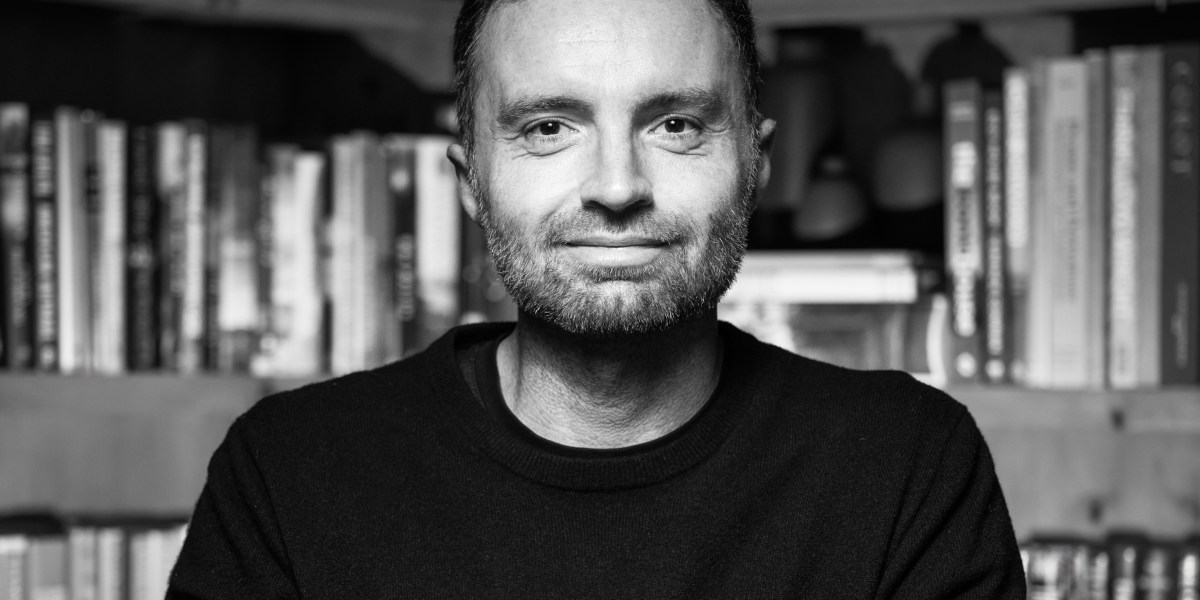
David Senra will tell you he doesn’t care if you listen to his podcast. And he means it.
For five and a half years after he launched Founders in 2016, almost nobody did listen. He read one business biography per week—hard copy, with a pen and a six-inch ruler and a stack of Post-its—photographed his annotations, recorded his thoughts alone in a room, and published the result. No audience. No income. No feedback worth mentioning.
“I told everyone, from day one, even with a single listener, that I was going to do this whether anybody listened or not,” he told me over FaceTime the first time we spoke.
The proof is in the RSS feed. Hidden inside the code for Founders is a single line still bearing the podcast’s original title: Autotelic—a word that means an activity done purely for its own sake. Senra chose the name when he launched the show and never changed it, not even after the audience arrived.
Courtesy of David Senra
Founders began in Senra’s Miami kitchen with a hundred-dollar microphone. He had been obsessed with reading since he was 4 years old—reading cereal boxes when there was nothing else. By the time he launched the show, Senra had already spent years building small businesses: detailing cars and boats; then a tech startup tracking the origins of robocalls. He was making, as he put it to the My First Million podcast in 2023, “dentist or doctor money.” None of it held his attention the way a good biography did. In 2018, unable to sleep one night, he reread Paul Graham’s essay “How to Do What You Love” and made a decision. Senra ultimately paid out of pocket for years before the show could cover its own costs.
Growing up in Florida, the son of a Cuban immigrant family that had fled communism with little more than their clothes, Senra was the first in his family to graduate college, attending the University of Central Florida at night while working full-time during the day. He had no professional mentors and no obvious path into media. He had books. “The only unbroken habit I’ve had my entire life is reading,” he says.
“If you maintain control and really care about the quality of your product, you wind up with the money anyway. It just takes a little longer.”
David Senra
The four times Senra and I spoke over FaceTime and the phone, he naturally inserted references to a vast library of texts, but he kept returning to stories about people who broke cycles. Andre Agassi’s memoir is one he mentions often, the story of someone who hated the thing that made him famous and had to find his own reasons to keep going.
He is an introvert, he says. He speaks precisely, sometimes running his hands through his hair awkwardly. I get the impression Senra is far more used to being the one asking questions, not answering them.
Senra made the show to satisfy himself. “I didn’t do this to be famous. I wouldn’t do it for five and a half years, and no one listened. I want attention for my work. I don’t want attention for me. I’m not gonna be a celebrity,” he says. He has two children and keeps his private life private.
“If the podcast is ever as big as Huberman or something like that, then I’ve done something incredibly wrong, because that means I don’t have a valuable audience anymore.”
David Senra
After more than half a decade of near-total anonymity, Founders found its audience—and what an audience. According to Senra, his listeners now include Jeff Bezos, Shopify CEO Tobi Lütke, Coinbase CEO Brian Armstrong, Michael Dell, and Spotify CEO Daniel Ek. Brad Jacobs, the serial acquirer who has launched eight separate billion-dollar companies, wrote in his book How to Make a Few More Billion Dollars that a single Founders episode in which he was interviewed directly resulted in $750 million in investments from listeners. He has called himself “addicted” to the show. He texts Senra. He invites him to his home.
Typical Founders listeners, in Senra’s framing, are builders who want game tape—or as he puts it, “people who want to study how the greats of history thought and executed and lived before.” Senra explicitly wants to keep the club exclusive. “If the podcast is ever as big as Huberman or something like that, then I’ve done something incredibly wrong, because that means I don’t have a valuable audience anymore.”
Inside the business
Founders generates, by Senra’s own description, millions of dollars a year in profit—he declines to be more specific—and he is the lone employee. He does everything: reads the books, records the audio, edits, publishes, promotes. He has turned down offers to buy it, with valuations upwards of $50 million, but those numbers, he says, are outdated. “Who knows what people would offer today?” No offer has ever tempted him; some he describes as ridiculous. “I make a great living. I’m very happy. The business is growing, the numbers keep getting bigger, and the audience keeps getting better.”
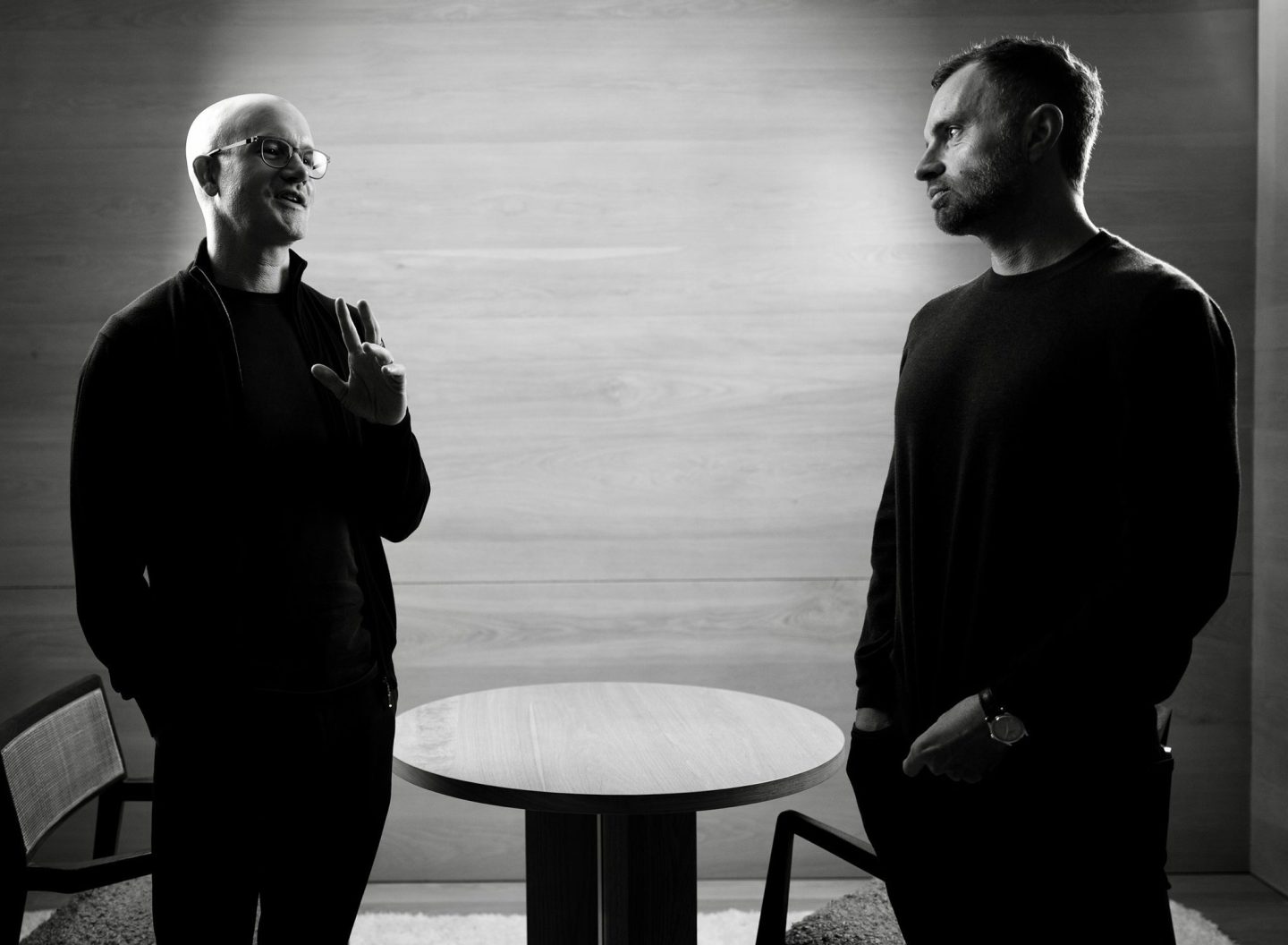
His advertising model is, by design, unlike anything else in podcasting. There is no cost per mille (CPM), a digital marketing metric that represents the cost an advertiser pays for every 1,000 impressions. There is a flat partnership rate, a minimum commitment of one year, and in most cases, a single advertiser per show. Senra chooses only companies whose products he uses himself: Founders and operators, not CMOs of consumer products, approach him. They come to him; no pitching required.
Courtesy of David Senra
The path to his largest advertiser began with a text from one of the founders of Ramp, Eric Glyman, who was also a friend. Glyman had just been at Michael Dell’s house, and Dell could not stop talking about Senra’s podcast. “He doesn’t even know we’re friends,” Senra recalls Glyman telling him, before adding, “He said, ‘I know 10 to 15 billionaires personally who listen to your show. We have to find a way to work together.’”
Ramp, the corporate card and expense management company backed by Iconiq and valued at $44 billion, is now Senra’s largest advertiser and, by co-CEO Glyman’s own description, an unconditional backer. When asked about Ramp’s podcast strategy, Senra says the company answers the question the same way every time: “We’re going to back everything David does, whether it’s Founders or the new show, and we want to be involved in every single thing he does.”
Glyman describes discovering the podcast the way you might describe a conversion. “I generally don’t listen to podcasts from start to finish, but I just kept coming back,” he told Fortune. “And I’d ask other people, ‘Had [they] heard of Founders?’ And when you encountered someone who had, it was religious.”
Glyman’s description, it turns out, was uncannily apt. When I briefly mentioned Founders at a cocktail party with several prominent founders, CEOs, media personalities, and VCs, the group pivoted our conversation entirely to shower Senra and his podcast with praise and to esoterically analyze several episodes.
Not long after Senra’s Ramp partnership began, the company asked him to audit its existing podcast advertising strategy. Senra found a small budget spread across 35 different shows with no coherent rationale for any of them. He went through the list line by line. “He told us to fire 32 shows,” Glyman recalls, “and double down on three.”
According to Senra, Ramp is “very happy with the effect” partnering with him has had on its business, a sentiment confirmed by Glyman.
Courtesy of David Senra
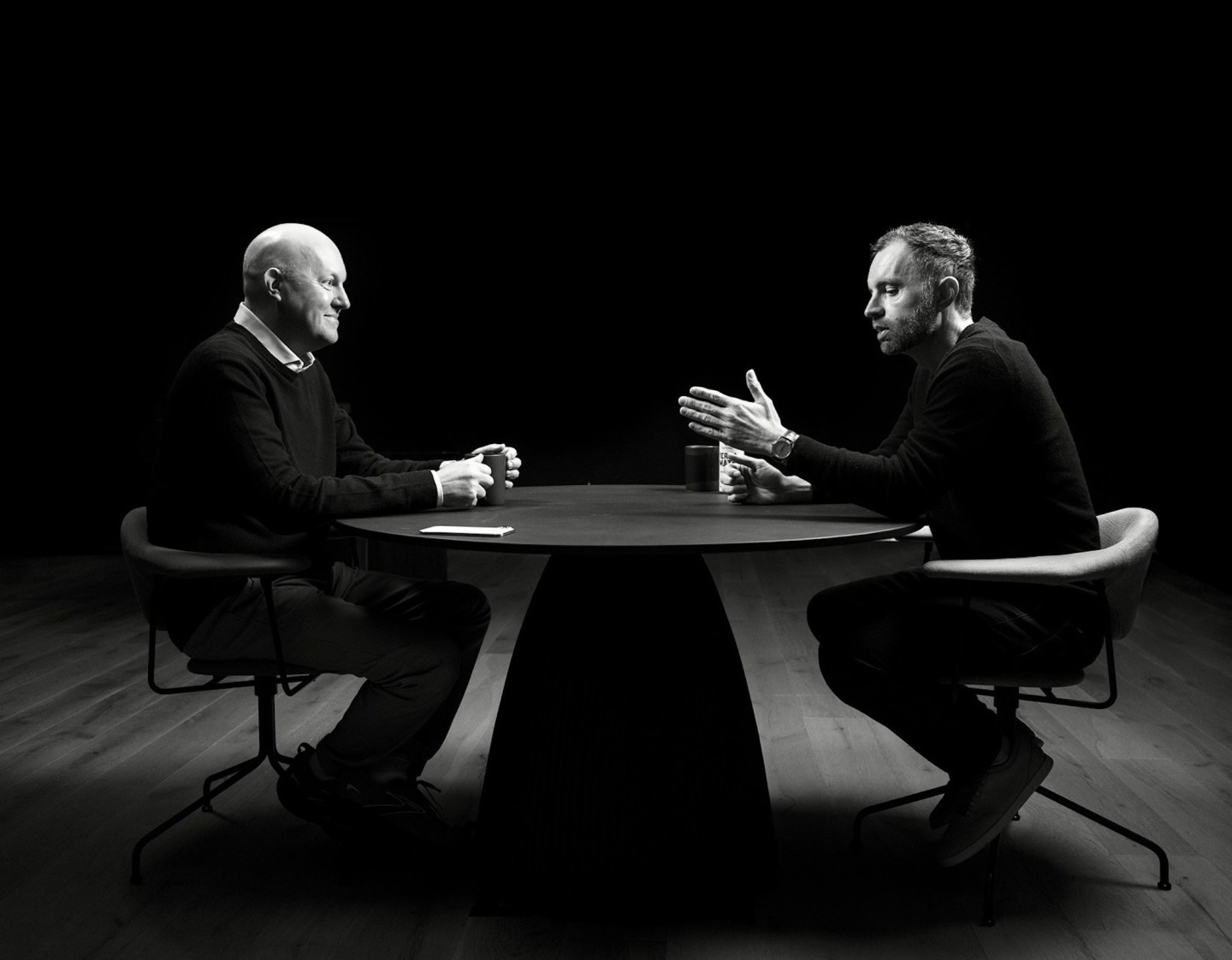
That same eye for talent led Senra to his biggest bet. He had been working with John Coogan—cohost of a small podcast called TBPN—for years before the show existed. Senra had discovered Coogan making long-form documentaries on YouTube and thought, immediately, that he was watching a once-in-a-generation media talent. He told Coogan that YouTube documentaries were “the worst use of his talents because they’re expensive, they take a long time, and there’s no real business model.” He pushed Coogan toward podcasting, worked through several show concepts with him, and when he finally saw the chemistry between Coogan and cohost Jordi Hays, he told them directly: “You have to take this 100 times more seriously than you are right now.”
Then he went back to Ramp. TBPN had fewer than 1,000 listeners at the time, and Hays wanted a significant sponsorship number. Ramp pushed back. Senra held strong: “I don’t know much about anything, but I know two things—how history’s great creators and entrepreneurs think, and podcasting. Trust me on this one.” Ramp signed on.
In early April 2026, OpenAI acquired TBPN for what has been described publicly as hundreds of millions of dollars. Senra received 50 texts that day.
Senra took no equity, no cut, nothing for any of it—out of principle: “I’d rather build wealth from the products I make, not from writing a check into someone else’s company and getting lucky with a 250x. That’s deeply unsatisfying,” he told Fortune.

Courtesy of David Senra
Having read 415 biographies of the most successful operators in history, Senra has noticed a pattern: “One thing they’re obsessed with is maintaining control. They want to maintain control because they have a hard time trusting other people with their fate, but also because control is how you control quality.” He calls the founders he most admires “anti-business billionaires”—people who overinvest in the parts of a product no one will ever see because, at the end of the day, they have to be satisfied with what they’re making. “My argument about anti-business billionaires,” Senra says, “is that if you maintain control and really care about the quality of your product, you wind up with the money anyway. It just takes a little longer.”
He has applied this logic to every decision his business has faced. The show is “part of my soul,” he said. “I couldn’t have investors or a corporate parent. I’m just not suited for that. I’m unmanageable.”
What’s next
Senra is now building a second show, under his own name, in partnership with Scicomm Media—the production team behind the Huberman Lab podcast, which generated 400 million downloads last year. The new show has a long-form conversation format featuring interviews with those he calls “extreme winners”: Daniel Ek, Jimmy Iovine, Michael Ovitz, Michael Dell. When Senra and I spoke the second time, he was preparing to record with Rick Rubin. He projects that the show will be “much bigger than Founders and much more profitable than Founders.” And in many ways, that makes his second show implicitly at odds with the Founders ethos. Senra doesn’t seem to care about the contradiction. He sees the two shows as separate entities.
“Where do elite people in the world go—especially in business—to have intelligent conversations multiple times a week? That’s what I’m trying to build.”
David Senra
The production infrastructure is unlike anything he has run before. There is a team of about five people; 12 cases of equipment; roughly 1,000 pounds of gear; a five-camera setup. When UFC CEO Dana White walked into the room for his recording session and saw all the equipment, his response, according to Senra, was, “This is like Fox or CNBC.” He was used to podcasts showing up with two microphones and one person.
The show is, in Senra’s framing, this generation’s Charlie Rose. “Where do elite people in the world go—especially in business—to have intelligent conversations multiple times a week? That’s what I’m trying to build.” He is still going over every word of every clip in airport lounges with his team. He is still dissatisfied. He called his editor Ian at seven in the morning recently to go line by line through copy before a recording. “It doesn’t have the right energy,” he said. “We need to get that back.”
He watched Spotify try the other way—recruiting celebrities to host shows, paying them well, building production infrastructure around people who did not actually care about podcasting. The audiences never came: “You can tell when somebody is doing something for the wrong reason.”
Senra’s show is still autotelic, just in practice and not in name. Whether he’s building a media empire is, he claims, beside the point. “Success is, did I make something I’m proud of?” he says. “I stole that idea from Steve Jobs.”
Credit: Source link