China’s second-quarter GDP data release this week comes at a crunch moment for the world’s second-largest economy.
Recent monthly data has signalled rising economic pressures, with retail sales falling and the return of a slump in fixed-asset investment.
Such declines raise questions over how far these indicators might be at odds with the GDP rate, which rarely deviates from an official target. This year, it is set at 4.5-5 per cent. Analysts forecast second-quarter growth on Wednesday will come in at the lower end of that range.
Unlike other major economies, GDP data in China lacks so-called expenditure breakdowns of investment, consumption and net exports on a quarterly basis, leading to a heavy reliance on monthly measures.
That monthly data has “deteriorated significantly” in the second quarter, said Logan Wright, an analyst at Rhodium Group, pointing to the impact of higher prices from the war in Iran.
Wright added that of the three components that would make up expenditure GDP, it was “hard to see growth in any one of them”, adding: “The gap between China’s actual performance and stated performance is widening at present.”
Investment
China publishes monthly year-to-date growth for fixed-asset investment, which includes real estate development and capital construction projects.
The overall figure had remained positive through a property slowdown that began in 2021, save a rare decline last year that renewed longstanding queries over its statistical accuracy.
That weakness has recurred this year, raising questions about how it will be reflected in the growth figures. As of the end of May, fixed asset investment was down 4.1 per cent compared with the same period a year earlier.
Chris Beddor, deputy China research director at Gavekal, said that local governments had a limited ability to invest given their need to use funding to tackle debt.
Lynn Song, chief China economist at ING, noted that nominal total fixed asset investment was down 7 per cent this year to May year on year, though he cautioned that data was not adjusted for inflation and subject to revisions.
He estimated China would need to report June fixed-asset investment equivalent to about 40 per cent of the combined January-to-May figure to bring the total amount in line with last year’s nominal level.
“This is obviously quite a long shot, given the scale needed and the current soft investment environment,” Song said.
Retail sales and employment
China’s retail sales, meanwhile, are also showing signs of weakness against the backdrop of the property slowdown and its impact on confidence.
The figure — which only covers goods and catering — dropped 0.6 per cent in May on a year earlier, its first decline since 2022. A month earlier, it rose just 0.2 per cent.
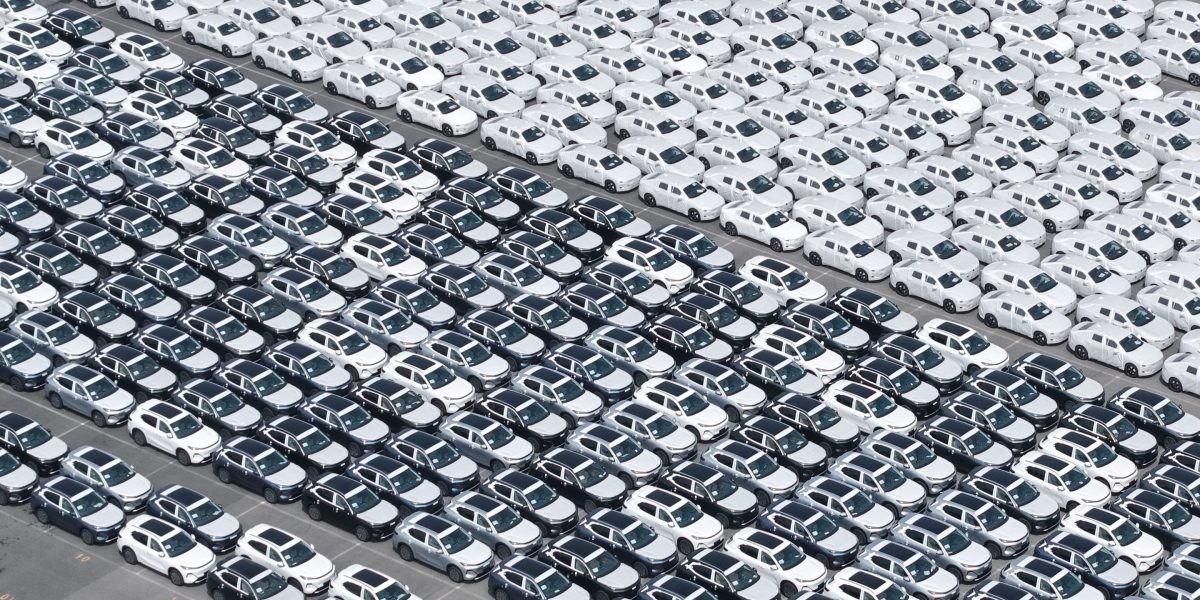
Beddor said that a boost from a subsidised trade-in programme for consumer goods had now abated, citing a 23 per cent year-on-year decline in vehicle sales in June.
He also pointed to a “cooling” in household income growth, based on National Bureau of Statistics data, as evidence of “pretty weak labour market conditions”.
China’s urban unemployment has remained within 5 to 5.5 per cent in recent years. Last week, policymakers declined to set a five-year numerical target for new urban jobs for the first time in decades, but targeted unemployment within 5.5 per cent.

Industrial production
China’s quarterly GDP is based on a production-side approach, noted Julian Evans-Pritchard, an economist at Capital Economics — a method which measures the added value across what is produced in an economy.
That method is also reflected in China’s monthly industrial production data, for which growth has remained much higher than other monthly indicators. Last year, it largely outperformed GDP growth.
The series expanded 4.1 per cent year on year in April and 4.5 per cent in May.
Carlos Casanova, senior economist at UBP, said that industrial production “has been supported by exports, but these are increasingly skewed towards high-tech, semiconductor-related products”.
Data on Tuesday showed China’s exports added 27 per cent in dollar-denominated terms in June on a year earlier, while imports grew 36 per cent.

Growth contributions
The IMF has repeatedly raised concerns about China’s lack of quarterly data on consumption, investment and net exports.
The NBS does provide figures denoting percentage-point contributions to real GDP growth of all three components.
For example, in the first quarter, when GDP expanded 5 per cent, the NBS said consumption drove 2.3 percentage points, investment contributed 1.9 percentage points and net exports 0.8 percentage points, implying some rounding.
Economists then use these contributions to try to construct GDP breakdowns.

There is also the question of how China’s monthly data relates to GDP contributions, given methodological differences. Louis Kuijs, chief economist for Asia-Pacific at S&P Global, said his understanding was that the NBS took the fixed asset investment data “as a raw input” for China’s investment GDP data and “adjusts it”.
The NBS did not respond to a request for comment.
Assessing the headline figure
The Bloomberg median forecast across 34 analysts for the second quarter is 4.5 per cent, in line with the official target.
But some economists express major doubts.

“In two decades of working on this economy I’ve never met a single Chinese official who defended the GDP data upon any level of questioning about it,” said Wright at Rhodium Group, who forecasts growth of between zero and 1 per cent for the quarter.
China has unveiled weak GDP data in the past, including an outright decline at the start of the Covid-19 pandemic in 2020.
Carsten Holz, an academic who studies China’s statistics, said that the central leadership’s “policy objectives” were “guaranteed to appear in the statistics, whether due to tangible action at the local level or to adjustments in data collection”.
“Today’s statistics mirror yesterday’s economic policy decisions,” he added.
“We are almost flying blind, we are just taking whatever they are giving us.”
Credit: Source link