When the FIFA delegation flew into Kansas City to evaluate its World Cup bid, local organizers left nothing to chance. They mapped the delegation’s routes to avoid traffic, stationed volunteers at the airport, and pulled roughly two dozen children from Kansas City’s Guadalupe Centers out of school to play a scrimmage outside the downtown Loews Kansas City Hotel at 11 a.m., where FIFA officials were staying. It was done to show them that the sport is really that serious in the heartland.
It’s so serious that Kansas City has earned the title of the Soccer Capital of America. It’s even a registered trademark owned by their soccer club, MLS’s Sporting Kansas City. Now, with the tournament underway and the world’s attention fixed on a Midwestern city that most international visitors had never considered visiting (or maybe heard of), the city is making a strong case why that title should change to the world.
The smallest of the 16 FIFA World Cup host cities, the city has a metro of roughly 2.2 million people straddling two states, and is more widely known for its Chiefs and its barbecue. But that’s not stopping how their inhabitants see the city’s role on the world’s stage.
“Kansas City, our market of the 16 that are hosting — we’re dominating the World Cup right now,” said Tim Cowden, president and CEO of the Kansas City Area Development Council. “I love that.”
In fact, Kansas City wasn’t supposed to be here at all—Chicago was. The third-largest city in the United States had hosted five World Cup matches in 1994, and had the stadium, the infrastructure, and the name recognition. But when then-Mayor Rahm Emanuel walked away from the bid—accusing FIFA of making excessive demands, including waiving taxes, absorbing all security costs, and signing contracts FIFA could amend at any time with no indemnity protections for the city—it let Kansas City make the bid.
“I’m very appreciative of Chicago for not pursuing it,” Cowden told Fortune. “When they didn’t, it opened up an opportunity for us.”
“I understand why Chicago didn’t pursue the World Cup. Chicago doesn’t need the World Cup to write another chapter of its greatness on a global scale. Kansas City—we seized it, and we’re leveraging it to the hilt.”
FIFA’s contract structure, which routes an estimated $8.9 billion to FIFA while leaving U.S. host cities facing a collective shortfall of upwards of $250 million, made the math hard to justify for cities already on the map. For Kansas City, the calculation was different from the start.
The bid process began in earnest around 2015 and 2016. Kathy Nelson—then leading the Kansas City Sports Commission, which spearheaded the effort—spent years making the case to people. “I wasn’t sure anyone would really believe me,” she told Fortune of her trips to the state capitol. It took a decade of phone calls, relationships, and pulled favors.
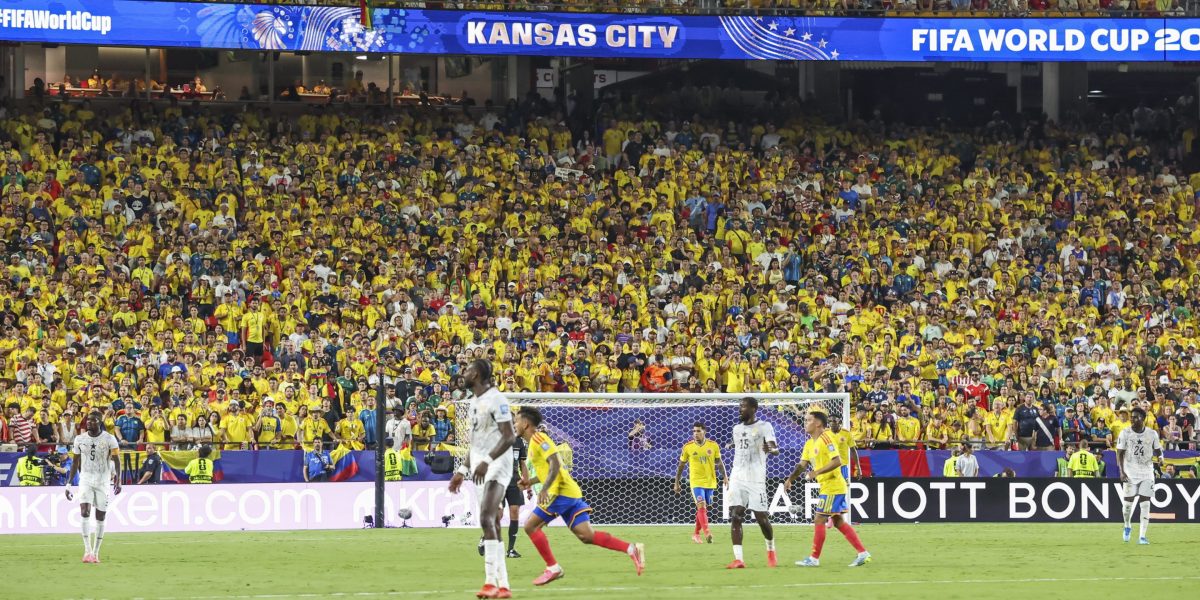
What she sees now: six matches at Arrowhead Stadium—monikered Kansas City Stadium per FIFA’s sponsorship rules—including a quarterfinal that features Lionel Messi, a game FIFA says could draw a billion viewers. Nelson estimates half a million visitors will come through Kansas City over the tournament’s roughly two months.
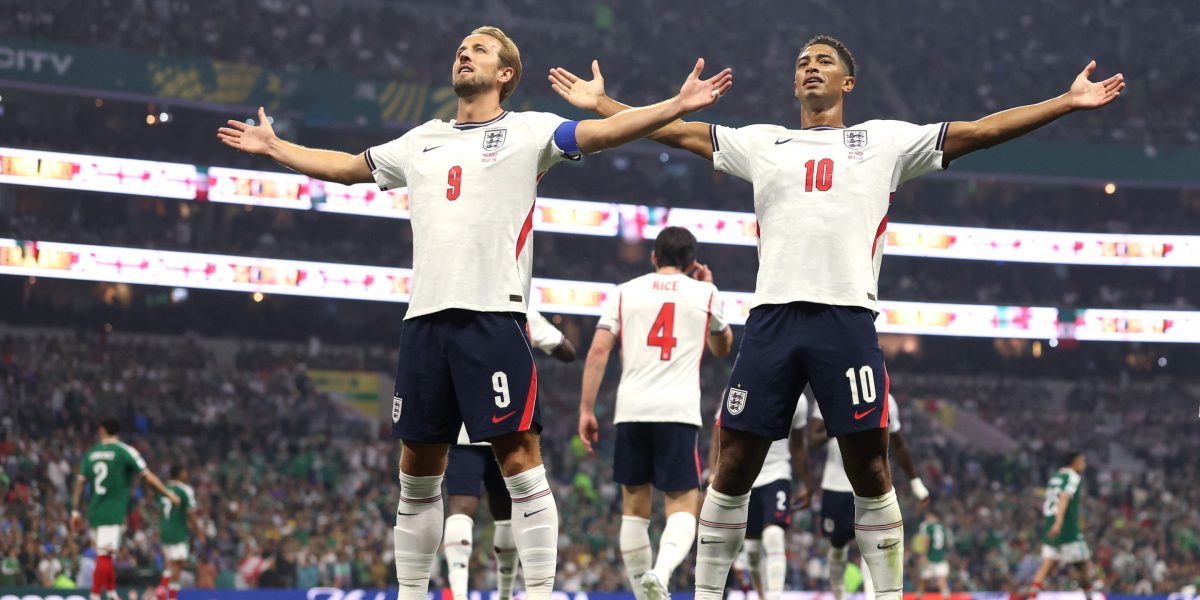
The city has hosted four national team base camps, among them defending champion Argentina and England, who chose Kansas City even though they didn’t play matches here (save for Argentina’s quarter final match against Switzerland). England went so far as to request a training site, Swope Soccer Village, that wasn’t even in FIFA’s official catalog when they visited.
A $700 million investment more than a decade in the making
The reason England picked Kansas City—over cities with more international name recognition, with bigger airports, with public transit to their stadiums—comes down to $700 million.
That’s what the region has invested in soccer infrastructure over the past 15 years, before the World Cup host title was awarded. Children’s Mercy Park, home of Sporting KC, opened in 2011 as one of the premier soccer-specific stadiums in MLS. The Kansas City Current’s CPKC Stadium, which opened in 2024, is the first purpose-built professional women’s soccer stadium in the world. When the Netherlands chose Kansas City for their base camp, the Current spent an additional $52 million to build a second facility and 2,000-seat stadium next door so their NWSL squad could keep training while the Dutch were in residence. The sports-hosting goes behind the physical pitch: 13 of the 16 World Cup stadiums in North America were designed at least in part by Populous, the Kansas City-based sports architecture firm.
Mark Jorgensen, KC2026’s board president and a former U.S. Bank executive vice president, said the England conversation was straightforward. “Your facilities are great, everybody we’ve met has been so welcoming,” he told Fortune the England delegation said. “But the number one thing they said was, ‘It feels like home.’”
Former Kansas City Federal Reserve President Esther George, who now serves as the treasurer of KC2026’s board after her 2023 retirement, said the investment goes beyond soccer. “One thing to understand about Kansas City is it’s always started with what I call infrastructure or the foundation,” she told Fortune. “That goes back to the days of railroads. One of the reasons we have a Federal Reserve here is because of Union Station.”
“After a couple of decades, you have an opportunity like this,” George said. “I think it’s been as much of an introduction to the world to Kansas City as Kansas City to the world.”
A sports-driven market
In the last decade, every major professional franchise in the city has won a championship. The Chiefs are among the most recognized brands in the NFL, especially after the Taylor Swift-Travis Kelce relationship turned the city into a global tabloid dateline for two years. Nelson has a quote taped to her monitor: Dramatic ideas get dramatic results. “Those types of big ideas get us big results,” she said, “and we’re that mid-sized market that doesn’t always appreciate the impact of what these things do.”
Former left-central defender Matt Besler, who made nearly 300 appearances for Sporting KC and is now a KC2026 ambassador, grew up in Kansas City. He fondly recalled the 1994 World Cup, the last time the U.S. was playing host, where the nearest matches were nine hours away in Dallas. He was seven years old when the tournament got to him anyway. “Soccer was just a game I played on the weekends in the local city league,” he told Fortune. “The World Cup opened my eyes to it being the World’s Game.” He now has three kids around that same age, watching their first World Cup in their own city. “Soccer is a generational thing,” he said. “You pass it down to your kids and then they pass it down to their kids, and all of a sudden it becomes part of your family and who you are.”
Besler was standing in the crowd when the Netherlands marched to the stadium before their match, their parade earning the title of the largest Oranje Fanwalk in U.S. history. “I would say half the people were from Kansas City,” he said. “They weren’t even from the Netherlands. They just wanted to come down and see what this was all about.”
A car heavy culture learns about public transportation
Running the World Cup in a city with no existing public transit to its stadium, across two states, 18 counties, and 50-plus communities, with four base camp teams generating up to 20 simultaneous vehicle escort operations per day, is a problem no other host city has faced.
So KC created the Joint Operations Center, staffed with law enforcement from multiple jurisdictions, transportation coordinators, health and medical personnel, and communications teams, as the operational center of the tournament. “We really thought it was essential that we have the alignment with safety and security, transportation, communication,” Lindsay Douglas, KC2026’s chief operations officer, told Fortune, “and just overall visibility from our organization’s perspective into what’s happening moment by moment.”
Think of the logistics: Argentina’s hotel is in Kansas City, Missouri. Their training facility is in Kansas City, Kansas. “Who does the police escort?” said Pam Kramer, KC2026’s CEO. “You want to cross the state line, and do they have authority?” The JOC resolved it through mutual aid agreements between jurisdictions. On a busy day, the JOC was tracking 20 active team and dignitary movements simultaneously, making sure no routes overlapped.
When I-70 had a traffic incident during the Dutch match, the JOC pulled up the camera feeds and rerouted the fan buses in real time. “We have the ability to pull up the cameras, make real-time decisions about rerouting those buses, and make sure that law enforcement knows,” Douglas said, “so we’re not adding to the problem.”
U.S. host cities have broadly struggled to move World Cup fans in a country built around the car—from $98 NJ Transit fares to yellow school buses ferrying fans to MetLife. “There’s no existing public transport to the stadium,” Kramer told Fortune. “I know so much more about transportation than I did before.”
For the first match, fans who had staggered bus ticket windows all showed up at once, overflowing the bus mall queue. The JOC made the call mid-operation to redirect regional buses to clear the backlog, and most fans made kickoff. “Skepticism is healthy,” Kramer said. “We had a lot of skepticism, and now people are seeing it’s real, and it’s happening, and we’re doing it, and we can do it.”
Then Kramer took the problems back to FIFA. She pushed for earlier gate access and gate modifications. FIFA agreed. “The second match was 100% better,” she said, adding host committees don’t typically move FIFA. “Once we started to prove that we were going to do things, I think we earned it,” she said. “They’re receptive to it. They see it.”
On Dutch march day—the most operationally complex day of the tournament—the system moved an estimated 22,000 to 36,000 fans while simultaneously managing I-70 incidents and a thunderstorm threat. When storms moved in, Kramer made the call at 4:30 p.m. to refund everyone who had purchased a stadium transit pass—21,000 people—so no one felt trapped waiting on a bus that might not come. “It’s about creating memories,” she said. “It’s the investment in the way that people think and feel about Kansas City.”
What KC2026 built to solve the transit problem may outlast the tournament. Connect KC 26 is a bus network that currently serves 15 destinations across the metro that previously had no direct service. A trip from downtown to the Overland Park Convention Center that used to take an hour and 20 minutes now takes 30. The daily pass is $5. A route runs to Lawrence—about 40 miles away, where Algeria base camped—and where, Kramer said, the Algerian government is now in conversations with the University of Kansas about education partnerships that “started because of the World Cup.”
Cowden believes the streetcar will expand east-west, with 39th Street already under discussion, and calls the World Cup “rocket fuel” for what is already the most successful streetcar system of its type in the country. “I have no doubt,” he said, “you’re going to see that expanded.”
The epiphany of the visit
KC2026’s FIFA Fan Fest Director Mallory Cage said the event was designed from the start to work for two audiences simultaneously: people who came from somewhere else, and the people who live here. “When we meet them out there, we ask them, what have you done?” Cage said of international visitors. “They talk about the restaurants they’ve been to, the different neighborhoods they’ve explored, and how they wouldn’t have come if Kansas City wasn’t hosting the World Cup.” And that same traffic is coming from locals going to their local haunts.
The economic development argument Kansas City is making is not about the 40 days of matches. FIFA will collect an estimated $8.9 billion from the tournament; Kansas City sees no share of ticket revenue, concessions, merchandise, or parking.
Instead, the city is using the tournament as an opportunity to drive local economic development, and show organizations what the market is capable of. Cowden’s organization brought 13 C-level executives from the animal health and biosciences sector. KC House, a private invitation-only venue modeled on the USA Houses Cowden observed at the Qatar World Cup, hosted heads of state, ambassadors, and business leaders from around the world. “When we bring people here, they look around and they experience—they feel everything about Kansas City,” he said. “You can’t do that in a digital format.”
He calls it “the epiphany of the visit.” The world’s largest fintech company Fiserv was set on Nashville before its Kansas City visit and chose it instead for a tech center that could eventually reach 2,000 employees. Panasonic put a $4 billion battery factory there after looking primarily across the South. Jorgensen described watching a Netherlands consulate official fall into conversation with Populous about potential partnerships during a KC House event. “Here’s some people we can partner with going forward,” Jorgensen said.
Plenty of doubt
The Atlanta 1996 Olympics comparison comes up constantly. “They were doubted,” Cowden said. “There were all sorts of people who were doubting Atlanta.” Three decades of ascent followed. “This is not so much a sporting event,” Cowden said. “It’s a catalyst of what Kansas City we know we can become.”
Twelve of the last 14 World Cups have generated net losses for host cities, and nearly 80% of U.S. host city hotels said bookings were tracking below initial forecasts. “Probably not,” she said when asked if there would be a measurable short-term GDP boost. But she sees the argument for Kansas City specifically. “Who doesn’t know New York and has made a decision about whether they live there, work there, invest there?” she said. “The opportunity for us was greater to begin with.”
“It’s not just about these 40-whatever days. It’s about sustained and long-term impact,” Kramer added. “How do we have conversations about trade, about foreign investment, about locating a headquarters here? How do we connect decision makers to Kansas City using the World Cup as a platform?”
“When all this is said and done,” Cowden said, “you’ll be able to count up the numbers and say, okay, this is the direct economic spinoff, and I think it’s somewhere around $650 million. That’s fine. But then what that doesn’t take into account is how we feel, and how people in our region feel. There’s a tremendous amount of pride for Kansas City that was already existing. And what the World Cup does, it just takes it that much further.”
Credit: Source link