Several years ago, I was at a business dinner in Tokyo, sitting about 30 stories above the city in a private dining room. I was the only non-Japanese person at our table of 7 or 8 diners, enjoying amazing sushi and sake, when suddenly everything started to shake. As bottles tipped over and items fell off the walls, I was paralyzed with panic. I was a novice to earthquakes and, not knowing what to do, I frantically looked to others at the table for a clue. To my surprise, every single one of them had their heads bowed, hands folded, mouths shut.
After what seemed like an eternity (but was probably only 20-30 seconds), the shaking stopped, and as heads slowly raised, no one spoke. One of my colleagues finally broke the silence:
“Oooh…big one.”
Others nodded in agreement. As the restaurant staff quickly began cleaning up, all activities and conversation returned to normal, while I was trying not to appear completely flustered.
That’s an experience I have thought a lot about ever since, and it is a vivid example of how people quickly adapt to their conditions. Earthquakes have plagued Japan for centuries, and the culture has cleverly adjusted. Traditional homes rely on flexible construction that utilized wood joinery without nails, allowing structures to flex without immediately collapsing. Cities have introduced wide streets and open spaces to stop the spread of fire, and today’s buildings rely on seismic engineering, which includes base-isolation systems, tuned mass dampers and some of the strictest building codes in the world.
As humans, we are usually pretty good at adapting, although I know many HR professionals felt the constant disruption of this past year pushed their limits. If you felt 2025 rattled your structure to the core, 2026 is the year adaptation begins.
See also: NFL lessons for HR? How to drive tech adoption with digital twins
AI isn’t a tool anymore. It’s quickly becoming the infrastructure
As the latest i4cp 2026 Priorities & Predictions report makes clear, the forces reshaping organizations—AI, shifting skill requirements, talent fluidity, political and economic uncertainty—are no longer episodic disruptions. Instead, they will be a consistent aspect of our environment and, as a result, require that the architecture of work itself be redesigned.
And in this new reality, strategic HR professionals are helping companies anticipate disruption, not just respond to it.
Over the last two years, AI has moved from pilot programs to the center of business strategy. For many executives, it’s no longer a matter of if AI will transform their workforce, but how…and how quickly.
This is why i4cp expects a rise in AI-driven workforce redesign in 2026. Some organizations will use AI to automate clusters of routine tasks. Others will restructure entire functions. But the biggest mistake companies make is assuming AI will deliver instant productivity. History tells us otherwise.
Transformative technologies rarely scale as fast as predicted. The early Internet era followed a similar pattern: a burst of centralization, a period of experimentation and years of operational integration before true enterprise-wide value emerged. AI is following the same trajectory, only faster.
The winners won’t necessarily be the first movers; it will be those who combine ambition with discipline, building governance, oversight and a strong people and culture strategy into their AI adoption plans. In 2026, companies should treat AI like a capable intern: full of potential, but in need of supervision. That mindset will keep organizations honest as they scale.
Skills become the new workforce currency
For decades, organizations were built around jobs, levels and titles. But that structure is dissolving. In its place is a more dynamic model centered on skills, tasks, capabilities and the flow of talent to business needs.
Our data shows a sharp divide emerging:
- Only 12% of organizations have a fully operational skills strategy.
- But those who do are dramatically outperforming peers in revenue growth, profitability, market share and customer satisfaction.
What’s accelerating this shift? AI. It is not only altering which skills matter, but also matching capability to demand.
The implication is clear: Workforce planning must evolve from an annual headcount exercise to continuous capability mapping. While traditional job structure won’t be eliminated anytime soon, the organizations that can identify, develop and deploy skills at speed will likely outpace those still constrained by job-based architecture.
Digital “work twins” will reshape roles—and leadership
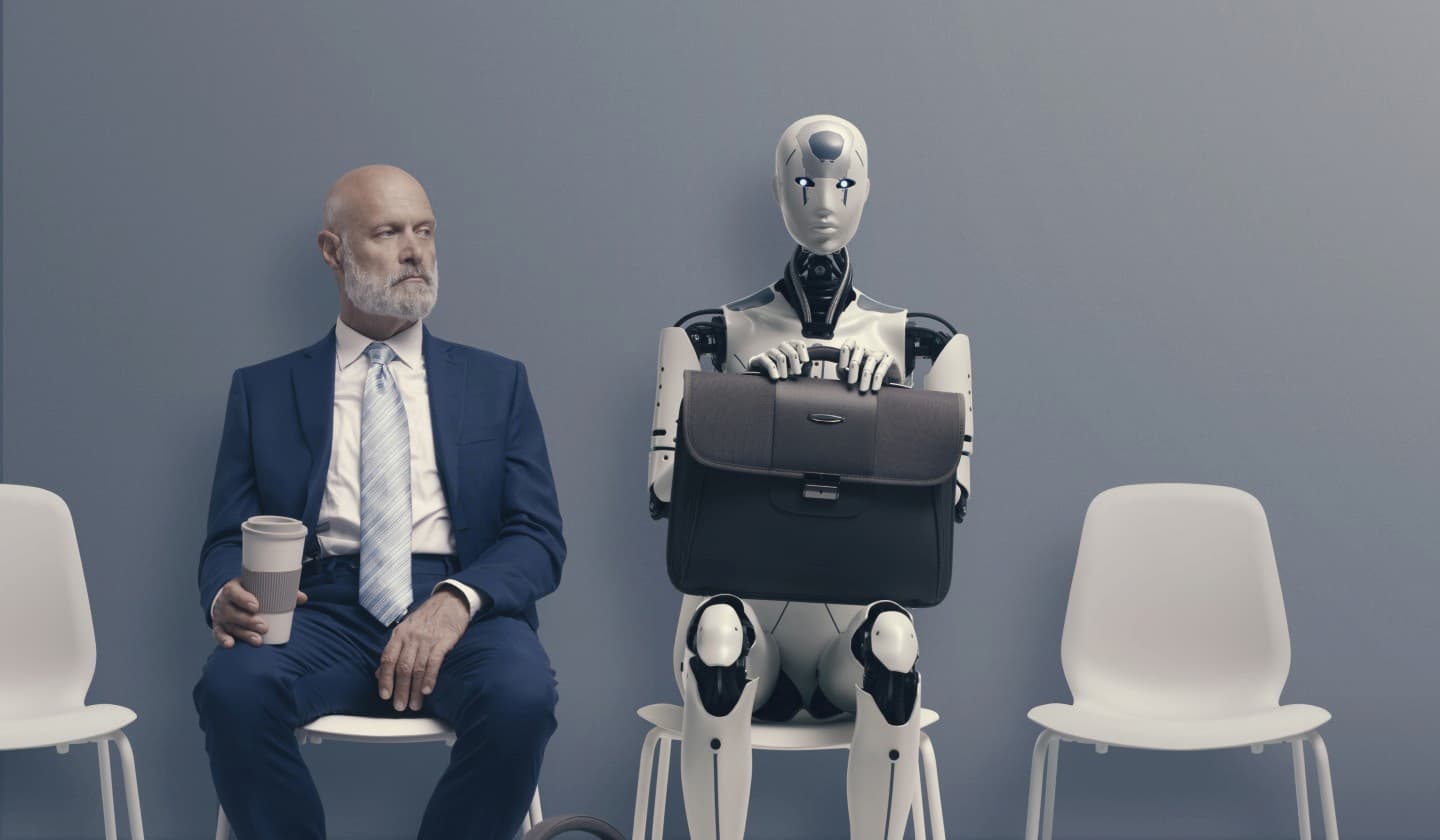
Perhaps the most transformative prediction in this year’s report is the emergence of AI work twins—digital counterparts trained on an employee’s unique expertise, communication patterns and decision logic.
These AI agents move beyond passive copilots to become proactive, semi-autonomous collaborators. Rather than issuing one-off prompts, workers will delegate ongoing responsibilities to their AI counterparts, such as scheduling meetings, drafting correspondence, surfacing insights and analyzing data in real time.
This evolution raises several critical questions for leaders:
- Who owns the output or IP of a human–AI partnership?
- How do we measure performance when part of the “team” never sleeps?
- What does accountability look like when judgment is shared between a person and a machine?
- If the human leaves, does the twin stay?
There are certainly more questions than answers at this stage, but the possibilities are incredibly intriguing. AI twins could become the biggest productivity multiplier since the personal computer, freeing people to focus on creativity, judgment and relationship-driven work.
How organizations handle this in the future will be key. High-performing organizations will treat AI not as a replacement, but as a collaborator that requires transparency, consent and governance. They will also train leaders to manage hybrid teams of humans and agents, and they will design metrics that reflect the combined productivity of both.
The workforce becomes fluid, modular and boundless
The traditional org chart, originally created in the 1800s, is a rigid, hierarchical, predictable tool that is increasingly ill-matched to a world defined by volatility. In 2026, we expect more companies to redesign work around projects, tasks and capabilities, as opposed to roles.
This shift changes the operating model in three ways:
- Talent becomes a dynamic ecosystem, blending full-time employees, contingent workers, gig contributors and AI agents.
- Internal talent marketplaces emerge as the engine of agility, matching people to work based on skills, availability and business priority.
- Managers transition from talent “owners” to talent “orchestrators,” responsible for allocating capability where it creates the most value.
Organizations that embrace this fluidity will sense and respond to change far faster than those locked into rigid structures.
Boards are paying attention—and expectations are rising
Another theme of this year’s findings is the widening gap between expectation and capability at the executive level. Boards now want evidence-based workforce strategies, not anecdotes. They want clarity on how AI will reshape operating models and they expect a realistic assessment of talent risk and metrics on the health of the culture.
In short, they expect HR to answer questions the business has rarely asked for before.
This shift reflects a broader truth: Workforce readiness is now synonymous with business readiness. HR leaders who cannot speak the language of strategy, scenario modeling and capability forecasting will struggle to maintain influence in this new environment.
Those who can—those who bring discipline, data and foresight—will become indispensable.
A final thought: Agility is the new competitive advantage
The throughline across all predictions is unmistakable: The organizations that thrive will be those that embrace continual redesign. They will treat work as a living system, skills as the operating language, and AI as a structural force. They will renovate cultures where adaptability is not a reaction, but a strategic advantage.
In essence, the companies that win in 2026 will not be the biggest or the most established.
They will be the most agile.
And HR—if we choose to fully embrace this role—is the function best positioned to architect that future.
Credit: Source link