Atlassian is hiring for a new HR role responsible for building the frameworks that tell leaders which work should go to people and which should go to AI agents. The person, a director of capacity planning, will be key to orchestrating a mix of human and machine capability.
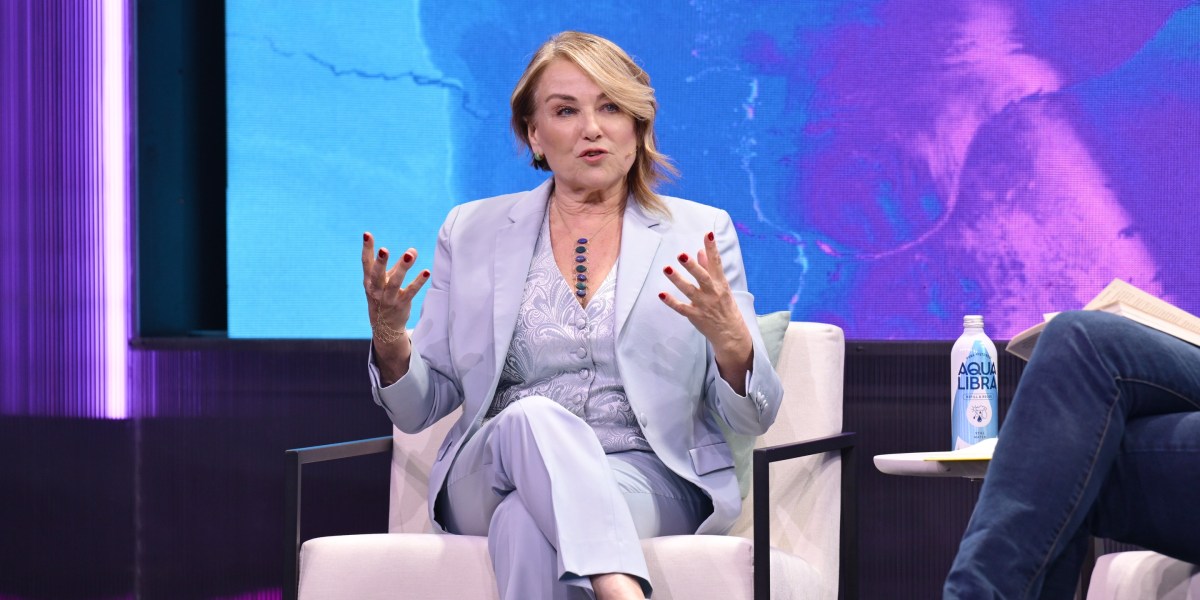
“We really think one of the shifts that’s going to happen with AI is we’re going to move away from just looking at headcount to really looking at how do you look at or architect capacity,” says Alicia Lenart, vice president of HR business partners at Atlassian, in an exclusive interview with HR Executive. “Capacity is two things, right? It’s the human folks that you have, but it’s also the agents that you have.”
Lenart co-leads the company’s objective on internal AI adoption and reports to Avani Prabhakar, Atlassian’s chief people and AI enablement officer, who in June published a set of five HR beliefs laying out the company’s 12-month bets on the function’s future, which include the capacity planning hire.
The new role is infrastructure
Lenart explains that the person who becomes the planner will set up the tools, systems and agent libraries that make capacity visible. However, choosing how teams are composed stays with the leaders who own the work. “Who knows the work best? It’s the leaders and the managers in that space,” she says. She doesn’t expect a fleet of these planners either. If the model expands, she envisions perhaps one per function, each a craft expert. “You really need to be close to the work.”
In the big picture, Atlassian combined its people team and internal IT organization under Prabhakar, on the theory that the builders of internal tooling should sit next to the people responsible for how work gets done. Lenart suggests that the executive who runs AI enablement should be a people person because the technology investment fails without the human side. “You can buy all the tools you want, you can spend all the money, but if you don’t drive the people side of the transformation, then really you’re going to be left saying, ‘Where is the value?’”

From individual adoption to team workflows
Atlassian started its internal push about 24 months ago with the goal of employees engaging in regular active AI usage. The company took an open-by-design approach, encouraging employees in every function to build agents, whether or not the results were polished. Lenart says roughly 90% of Atlassian employees now use AI daily.
The current fiscal year brings a different target aimed at team-based workflows. The company’s State of Teams 2026 research found that only 24% of executives focus their AI implementations at the team level, even though knowledge workers spend 80% of their time on collaborative work. The report puts a price on the coordination problems undercutting enterprise AI gains, an estimated $161 billion a year for the Fortune 500, a drag it labels the fragmentation tax.
Based on surveys of more than 12,000 knowledge workers and 172 Fortune 1000 executives, the study also found that just 14% of teams have put in place all three practices that separate top performers: strong data context, redesigned workflows and a culture built for experimentation.
Lenart calls the data layer the unglamorous prerequisite. “AI can’t use what it can’t see. If you don’t have open ways of working, if you don’t have things written down, then really AI is only going to be so successful,” she says. Layering AI on top of poor knowledge foundations will be ineffective or worse.
On workflows, her advice is to resist the temptation to automate everything at once. Pick a process with real friction, automate parts of it and build from there. Redesign the work rather than slapping AI on top of it. Atlassian’s people team, for example, got started with three workflows that touched every employee last year.
AI mandates on performance reviews
In a growing number of companies, leaders now talk about AI as if it were mandatory, and one report found that 86% of C‑suite executives say AI use is effectively required in their organizations. This is not the case at Atlassian.
“We do not believe in mandates about AI adoption at Atlassian because that produces a fear-based culture,” she says. “What you generally get is people opening the tool and they perform compliance, but then you look, and you’re like, where is all that value?”
Additionally, some employers have begun writing AI usage into performance expectations, and boards pressing for returns on large AI investments can make the stick approach tempting. Lenart argues it backfires because usage numbers rise while innovation and engagement fall.
The company does use AI to make the review cycle itself faster, helping employees draft self-assessments, pull context for peer feedback and prepare manager conversations. However, the judgment stays human and employees aren’t expected to use AI in the process. “We firmly believe that the manager should still make the decision around someone’s performance outcome,” she says.
Atlassian has experimented with AI days, protected calendar time for functions to work with the tools, which signals from the top that the time is legitimate. Leaders also use AI themselves, and failures are included. “They have to actually show the team that sometimes it doesn’t work. Sometimes it does,” Lenart says. Employees who only hear “use AI” from managers who never open the tools draw their own conclusions.
Read more: AI as a performance requirement? Employees, managers are divided
‘Knocking on open doors’
For HR leaders trying to demonstrate progress without inflated productivity claims, Lenart’s first recommendation is to run the transformation inside HR before preaching it elsewhere. “Going in and driving it with your team first and yourself and then showing those success stories is the way to go,” she says. Her second tip is “don’t boil the ocean.” Pick high-value use cases and go where the champions already are. She calls it knocking on the open doors.
When Atlassian’s people team moved early on the non-technical side of the company, other functions looked over the fence and asked to join. Getting non-technical employees started remains hard, adds Lenart, who studied psychology and describes herself as non-technical. She says meeting people at “this is where you click” matters, as does committing recurring time, whether 15 minutes a day or an hour a week, because the tools keep changing. Accountability buddies help, according to Lenart.
The spicy bet: Talent programs won’t survive as designed
Among the published beliefs, Lenart flags that today’s talent frameworks, from performance rubrics to hiring criteria to job architecture and compensation, are too fixed for what’s coming. She expects movement toward fluid skills, teams and pathways, and advises changing one program at a time rather than all at once.
Atlassian is starting with performance management, and compensation interests her most. Companies have long paid premiums by job family based on market scarcity, and AI is redrawing which skills are scarce. “As soon as you touch compensation, it’s a hot topic,” she says. “You’ve got to be really careful. But that’s where I’m most excited to get started.”
Credit: Source link