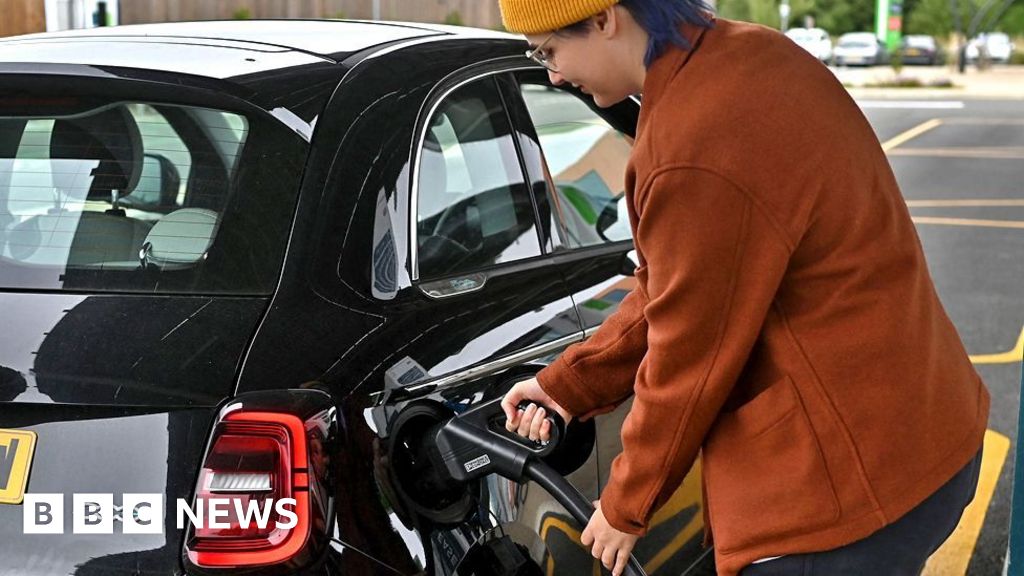
Regardless of when a ban on sales of new petrol and diesel cars is brought in, most people will not be affected immediately as the majority of drivers buy vehicles second-hand.
But people wanting to go green earlier have been met with steep costs for doing so, with the average cost to buy an electric car in the UK amounting to around £48,000., external
Mr Hawes claimed it was currently “extremely expensive to sell EVs in the because you have no incentives” which had caused an “affordability gap”.
“Consumers respond to carrots not sticks and we are seeing that at the moment,” he added.
He said three incentives would help drive up demand for EVs:
Cut VAT charged on EV sales for three years by half
Exempt EV vehicles from an expensive car supplement duty which applies to cars valued more than £40,000
Bring public charging costs for EVs in line with rates paid for home-charging
In response to the calls, a the Department for Transport said the government would “set out further details” on the ban “in due course”, but confirmed it intends to restore the 2030 phase-out date.
“This government is committed to delivering greener transport by supporting the transition to electric vehicles,” it added.
The government said the UK already had a “range of measures” in place to encourage drivers to buy electric, including “plug in grants for vans, trucks, taxis and wheelchair accessible vehicles”, and “beneficial taxation rates”.
Phasing out fossil-fuel-powered cars is central to the UK government’s plan to meet its climate goals and reaching net zero by 2050, which if achieved would be the point at which the country is no longer adding to the overall amount of harmful greenhouse gases in the atmosphere.
But after years of soaring sales, growth appears to have stalled.
In the first six months of this year, electric car production declined 7.6% compared to the same period last year. Overall vehicle manufacturing also dropped.
The SMMT, which released the data, said the fall was “expected” as car makers overhaul lines to make electrified models.
The European Union continued to take the majority of car exports (55.4%).
Following talks between the EU and China over electric car tariffs, the UK’s position is still not known on the potential cheaper imports.
Mr Hawes said the UK car industry had “always been open to new entrants”, highlighting Japanese car firms Nissan, Honda and Toyota who had invested in plants.
“There is a lot of economic benefits to be gained from investment,” he added.
Credit: Source link