For more than 50 years, OneUnited Bank has operated on the belief that financial empowerment in Black communities requires more than products and services—it requires confronting the systems that keep wealth out of reach. Now, the nation’s largest Black-owned bank is extending that mission into addressing how to close the racial wealth gap.
On May 7, OneUnited launches Who’s Your Ma Honey?, a 10-episode podcast and video series that the Boston-based bank frames as both a cultural reckoning and a direct extension of its community development work. The show streams on YouTube, Apple Podcasts, Spotify, and Audible, and invites high-profile guests to surface buried experiences of shame—then reframe them as the origin story of their resilience and success.
The concept lands with particular weight coming from OneUnited. The bank, a designated Community Development Financial Institution (CDFI), has financed nearly $1 billion in loans—the majority in low-to-moderate income communities like South Central, Compton, Liberty City, and Roxbury. Its mission has always been explicit: close the racial wealth gap, one transaction at a time. Who’s Your Ma Honey? argues that closing it also means addressing what happens in people’s heads before they ever walk into a bank.
“Undeserved shame is the silent barrier that impedes personal growth and financial empowerment,” the bank said in announcing the show, a framing that ties the psychological directly to the economic.
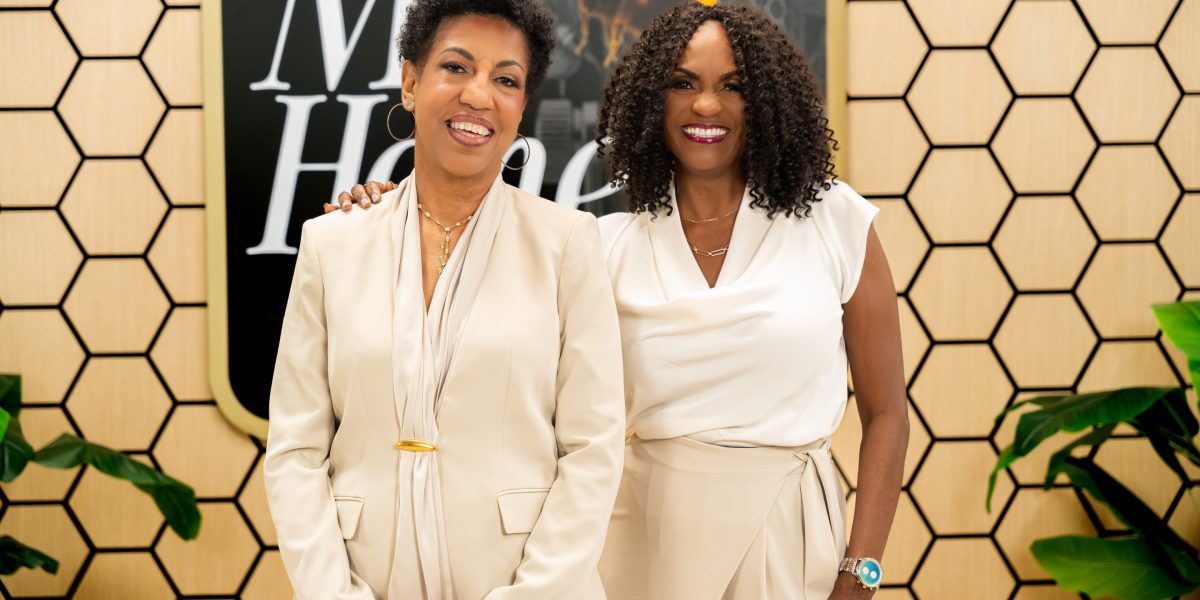
The show is co-hosted by Teri Williams, OneUnited’s President and COO, and Suzan McDowell, President and CEO of Circle of One Marketing, a Miami-based multicultural agency. Williams’ story is the show’s central proof of concept, and it’s one she first shared publicly with Fortune. She grew up in Indiantown, Florida, before earning a full scholarship to Brown University and later for a Harvard MBA, and in navigating that distance, she slowly buried the memory of her great-grandmother, Annie Coachman, known as Ma Honey.
“The reaction to the story was overwhelming,” Williams told Fortune. There were people from Indiantown who remembered “Miss Honey,” but others related to members from their own past. “My ‘ah ha’ moment for deciding to create a show came when I shared the story with a group of women leaders at the Next Narrative Summit in 2025 and they all had an ‘ah ha’ moment and then shared their powerful Ma Honey stories.” She said people are used to answering the question of who inspired you, but this question of “Who’s your Ma Honey?” made them reflect, with their answers surprising even themselves.
Ma Honey was an entrepreneur: she owned a penny candy store, a juke joint, a BBQ pit, and rental properties in the segregated South, generations before those opportunities were supposed to be available to women who looked like her. When Williams opened up to Fortune about that buried chapter of her life, it marked the first time she had spoken about Ma Honey publicly, a disclosure that ultimately became the seed of the show itself.
Williams said that when she began in financial services in the early 80’s, it was one of the least diverse industries. Her decision to acquire four Black-owned banks—all started in the 1960s when segregation prevented Black people from accessing other banks—and rolling them into one, changing the name to OneUnited Bank, reflects what she called “the community builder in me, which was greatly influenced by Ma Honey.”
Season One’s guest lineup underscores the show’s ambitions. It includes Sybrina Fulton, mother of Trayvon Martin; Marc Morial, President of the National Urban League; Congresswoman Frederica Wilson; Miami-Dade Mayor Daniella Levine Cava; Sheena Meade, CEO of The Clean Slate Initiative; and Felicia Hatcher, CEO of Pharrell Williams’ Black Ambition Prize, among others.
“Shame can completely derail people from achieving financial success,” Williams said, because it can stop them from asking questions to become more financially savvy, or it can reduce their expectations of what they can accomplish. “They feel they do not deserve to succeed. I hope we can make the feeling of shame taboo.”
For OneUnited, the show is a bet that the path to generational wealth runs not just through financial literacy, but through the stories people have been taught to be ashamed of. Ma Honey—a Black woman building business equity in the Jim Crow South—was always the blueprint. The bank wants her descendants to stop forgetting it.
Who’s Your Ma Honey? premieres May 7, 2026, at www.oneunited.com/honey.
[This report has been updated to correct the launch date to May 7, not May 5.]
Credit: Source link