Technology Reporter
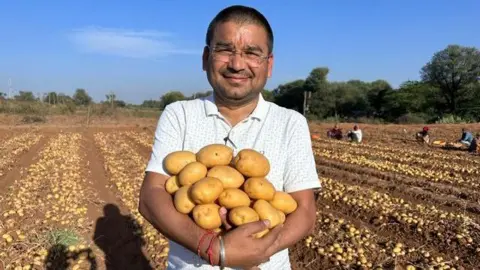 Jitesh Patel
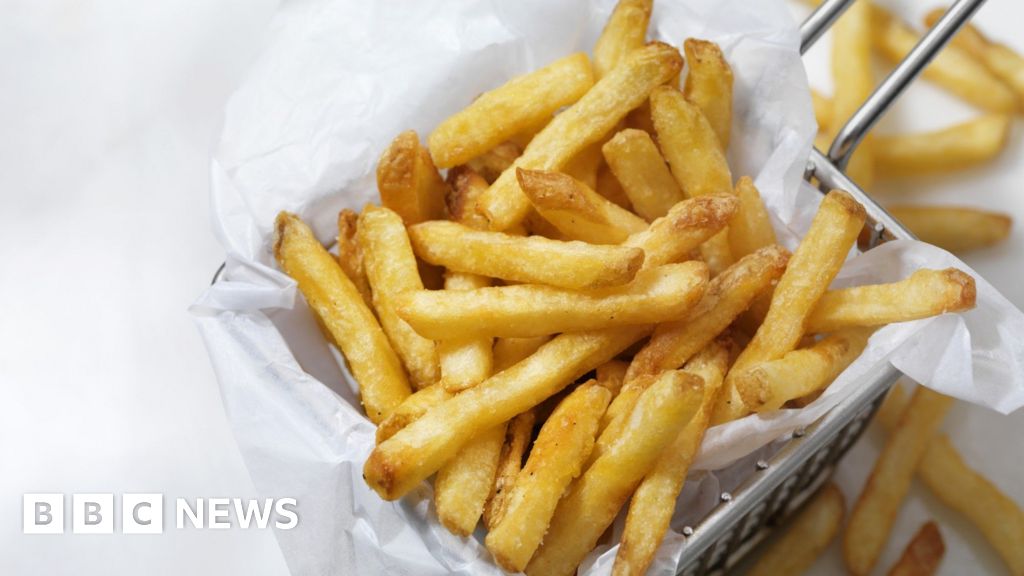
French fries turned around the fortunes of Jitesh Patel.
He comes from a family of farmers in Gujarat in the northwest of India. Traditionally they grew cotton, but the returns were poor.
Droughts in 2001 and 2002 made the situation worse and the Patels knew things had to change.
“We realised that we had to start growing something that does not require lot of water,” Mr Patel says.
So, they experimented with potatoes. Initially they tried table potatoes; the kind available in local markets and cooked at home, but the returns weren’t much better than cotton.
Spurred by the arrival of french fry makers in their state, in 2007 they started growing the varieties of potato used by the food industry. It turned out to be a winning strategy.
“Since then, no looking back,” says Mr Patel.
Mr Patel is part of India’s rise to potato superpower status. It is already the world’s second biggest spud producer.
But it’s the export market, particularly of french fries, that’s really flying.
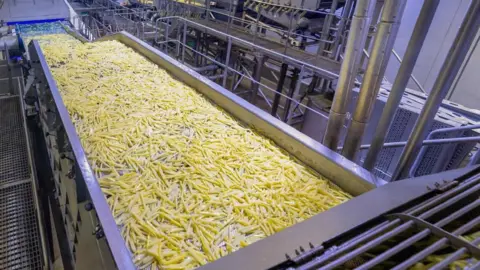
Gujarat has become India’s capital of french fry production, home to huge factories churning out chips, including facilities belonging to Canadian giant McCain Foods and India’s biggest maker of French Fries, HyFun Foods.
From Gujarat fries are sent all over over the world. But the most important markets at the moment are in Asia, including the Philippines, Thailand and Indonesia, according to Devendra K, who has been studying the potato market for many years.
In February of this year, monthly exports of Indian frozen fries broke the 20,000 tonnes barrier for the first time. In the year to February, India’s fry exports totalled 181,773 tonnes, a 45% increase compared with the previous year.
The success is partly down to price.
“Indian frozen fries are noted for being competitively priced in the international market,” says Devendra.
He says that in 2024, the average price of Indian fries was even cheaper than those from China.
For the french fry makers, it’s boom time.
“India has emerged as a significant player and exporter due to its abundant agricultural produce, cost-effective manufacturing, and growing focus on quality standards,” says Haresh Karamchandani, CEO of HyFun Foods.
HyFun has seven plants processing potatoes in Gujarat with another two coming online by 2026.
“Urbanisation, increasing disposable incomes and changing lifestyles have promoted the consumption of frozen foods, not only in the household but also in food service establishments,” says Mr Karamchandani.

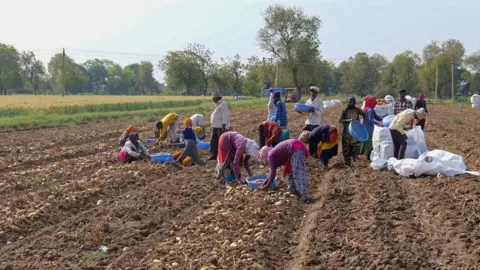 HyFun Foods
Meeting that demand has required decades of innovation from farmers.
Jitesh Patel studied agriculture at university and has been applying science to farming ever since.
Along with friends and family they are continuously trying to improve their potato yield.
“We are a well educated bunch of farmers, so we keep trying new methods,” he says.
One of their first innovations, back in 2003, was to switch to a drip system of irrigation, rather than flooding fields with water.
To keep the soil productive the fields are rested over the summer, and fertilised with cow manure.
Their focus now is finding the perfect potato plant.
“We are in the process of experimenting with seeds and soon we will have a new variety,” he says.
Jain Irrigation Systems is a large agricultural technology company. As well as selling irrigation equipment, it has teams of technicians developing seeds for agriculture, including potato plants.
They use a set of techniques known as tissue culture. It’s a way of cloning plants, with desirable traits and eliminating disease.
It involves growing small pieces of plant tissue in a controlled laboratory environment to create virus-free plantlets. These plantlets can then be used to produce more seed potatoes through methods like taking cuttings.
“Potato seeds destined for future seed production undergo meticulous breeding practices under the supervision of breeders,” says Vijay Singh, vice president of marketing at the company.
One issue they are tackling at the moment concerns a variety of potatoes used to make chips. Farmers found that by November the potato crop starts to go brown because of its sugar content.
“Companies like us who are into tissue culture are trying to come up with a new variety to overcome the challenges that the industry is facing,” says Mr Singh.
 HyFun Foods
While Indian farmers are working on improving their yields, investment is needed elsewhere in the frozen food industry.
In particular, firms need to be able to store and transport goods at sub-zero temperatures.
Modern cold storage facilities have been built, but more are needed.
“Only about 10–15% of India’s cold storage facilities are suitable for storing frozen foods,” says Vijay Kumar Nayak, co-founder of Indo Agri Foods, an exporter of Indian food.
“These facilities are unevenly distributed, heavily concentrated in a few states, leaving rural and remote regions severely underserved.
Transportation is a problem as well.
“There is a notable shortage of specialised refrigerated trucks and containers, making temperature-controlled transportation extremely difficult and increasing the risk of spoilage,” he says.
A reliable electricity supply is also essential.
“Frequent power outages in many parts of the country increase the chances of spoilage and make running a reliable frozen food supply chain a daunting task,” says Mr Nayak.
“Indian companies face intense competition in export markets from countries like China, Thailand and Brazil. These nations benefit from more advanced logistics, infrastructure, and production systems,” he points out.
Back at his Gujarat farm Mr Patel is happy that the chip makers moved in.
“Gujarat has become a food processing hub. Most of the farmers, including me, have become contract farmers which gives us security and good money for our yield,” he says.
Credit: Source link