Business reporter, BBC News
 Getty Images
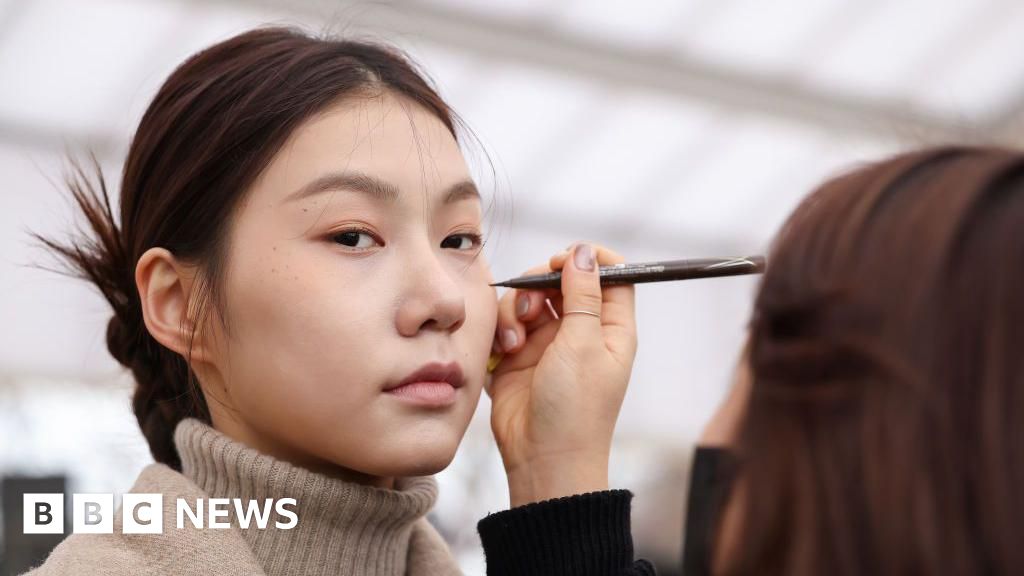
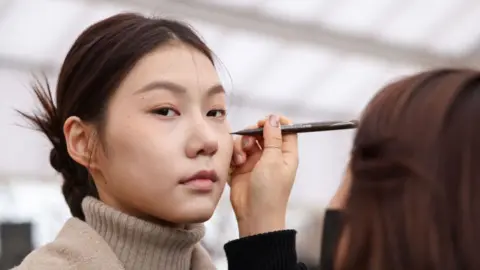
Cars and smartphones may rank among South Korea’s biggest exports to the US, but few goods inspire a more devoted following than the Asian country’s beauty products.
K-beauty – a term that covers a wide range of skincare, makeup and cosmetics from South Korea – is lauded for its quality and value, driving soaring demand in recent years.
The global appeal of South Korean culture has also helped propel the popularity of its cosmetics.
US-based Pearl Mak tells the BBC that she was introduced to K-beauty products by her friends. South Korean serums are better-suited for her skin compared to some Western brands that tend to be more harsh, the 27-year-old graphic designer says.
Now “95% of my skincare is made up of K-beauty products”, she adds.
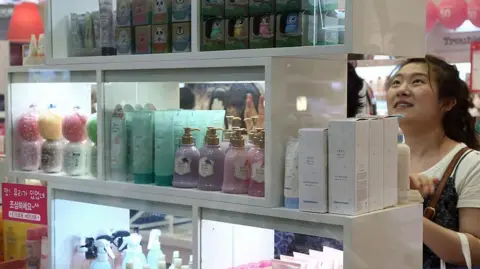
Ms Mak is not alone in her preference for South Korean skincare brands. Americans spent as much $1.7bn (£1.3bn) on K-beauty products in 2024, according to industry estimates. That marks a more than 50% rise compared to the previous year.
K-beauty products are often more attractively priced than their Western counterparts – but also feature ingredients that are not as commonly found in the West – from heartleaf to snail mucin.
US President Donald Trump has now imposed a 15% import tax on South Korean goods traded between Seoul and Washington.
It’s less than the 25% levy that Trump had threatened, but many consumers are not taking any chances.
US K-beauty retailer Santé Brand saw orders spike by nearly 30% in April, right after Trump unveiled sweeping US import taxes on most of the world.
“When the tariff announcements hit, customers got strategic with how they were going to weather the storm,” Santé Brand’s founder Cheyenne Ware told the BBC.
“Consumers are preparing against the uncertainty.”
Another K-beauty retailer, Senti Senti, has been ordering more products since Trump started his tariff threats, says manager Winnie Zhong.
This week, she received alerts from suppliers urging retailers to “stock up before tariffs”.
Both retailers said prices of K-beauty products are likely to increase as the levies push up costs across the industry.
“Anyone telling you prices will stay flat through the next two years is naive,” says Ms Ware.
Prices are bound to rise, especially for smaller sellers of beauty products on platforms like Amazon, who operate with slim profit margins, economist Munseob Lee from the University of California San Diego says.
Despite higher prices, the global popularity of South Korean culture means K-beauty products are likely to remain in demand in the US, he says.
“Casual buyers might be turned off by the higher price, but fans won’t find an easy substitute.”
Ms Zhong agrees. She thinks customers will still want to buy K-beauty products but price rises may mean they purchase fewer items than before.
Higher prices are unlikely to stop Ms Mak buying her favourite products.
“It depends on how much the price shoots up, but as of now, I am willing to pay more to purchase the same products,” she says.
‘No easy substitute’
Big K-beauty brands are in a much better position to absorb the cost of tariffs than their smaller rivals, says South Korea-based business consultant Eyal Victor Mamou.
These larger companies will be able to avoid major price rises for their customers as they have higher profit margins, he says.
But smaller K-beauty firms that make their products in South Korea will struggle to keep a lid on costs, Mr Mamou adds.
“It will take some time to take effect since most goods being sold in the short-run have already been commissioned at current prices, but we’ll see it play out soon.”

 Getty Images
In recent days, President Trump has struck deals with Japan and the European Union that will see their exports to the US subject to the same 15% tariffs as South Korea.
That means countries that are home to some of the world’s biggest cosmetics brands face the same levies as the K-beauty industry.
Central to Trump’s trade policies is his ambition to see more goods being made in America.
But it’s yet to be seen whether or not this will mean US buyers switch to American beauty products.
Ms Mak says she doesn’t see US-made products as attractive alternatives.
“I do search for American-made alternatives often, but I have yet to find any that are as effective as the ones I use. So I wouldn’t go for American products yet.”
Credit: Source link