Joe FayTechnology Reporter
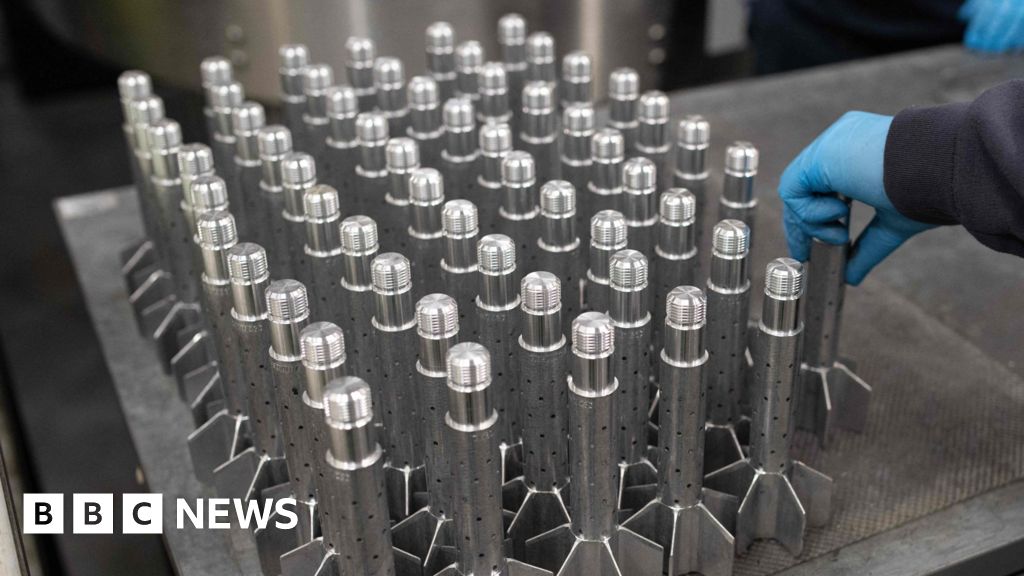
 Getty Images
When Caleb was nearing the end of his computer science degree and looking for his first job, one of few sectors actively recruiting graduates was defence.
Salary, career path, and job security all looked good, but ultimately a defence sector career “didn’t sit well” with him. “It’s one of those jobs where you don’t want anything you work on to be used.”
That unease about working on lethal technology is just one of many factors contributing to an ongoing skills gap in the defence sector. And that gap could widen as the UK government – like many of its allies – looks to boost defence spending while facing an increasingly volatile geopolitical environment.
Earlier this year, the Ministry of Defence announced it would invest £1bn in AI-powered battlefield systems and announced a new Cyber and Electromagnetic Command. But the military and its suppliers face fierce competition from technology firms and business in general for specialists across these areas.
This summer, the government highlighted how the sector has a “strong requirement for Stem skills”, with “concerns expressed about a shortage of these skills coming from the school system.” Gaps range from craft skills, such as electrical engineers and welders, to “new skills like digital, cyber or green”.
The skills gap could also hamper the government’s plan to make the defence sector a growth engine for the broader economy.

 Reed Talent Solutions
Ethical concerns about the military and lethal technology are nothing new.
Phil Bearpark specializes in defence jobs at recruitment firm Reed Talent Solutions. To him, support for the military does not seem as strong now as it did in the past. “Does that leak into the defence industry? I’d say yes, it’s intrinsically linked.”
But that is just the starting point.
“Gen Z have got a different mindset when it comes to what they want from work, and morals, ethics, come into it,” adds Louise Reed, solutions director at Reed.
“They want to work for very green companies that give back and have a purpose.”
This is something the sector recognises and is working to counter.
“If you look at what the defence sector does, a very small proportion is making a kinetic thing that blows up,” says Colin Hillier CEO of Mission Decisions, which develops AI and machine-learning technology for the defence sector.
The same helicopters that the Royal Navy uses for operations are also used for rescues or disaster relief, he says.
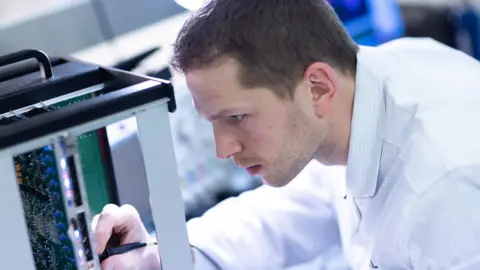 Julien Lutt / CAPA Pictures
French technology giant Thales, has a substantial defence business, but also works across cybersecurity and critical national infrastructure more broadly.
“We also create a huge amount of technology that protects people through every facet of their life,” says Thales UK HR Director, Lindsey Beer.
So, the firm does a lot of outreach, right down to primary school level to explain its work, and to encourage the development of Stem (science, technology, engineering, and mathematics) and digital skills more broadly.
But the branding issue is not the only problem the industry knows it must address before it can attract young technologists.
It is also perceived as rigid and conservative compared to other industries.
 Alex Bethell
Alex Bethell, a final-year student in computer systems engineering at Bath, did his year in industry at a defence-related firm. He enjoyed the work and wants to pursue a career in the sector.
But he is concerned about ending up working on “slightly older systems”, which may have to be maintained for 40 years.
His cohort of students, he said, wants to work at the cutting edge, doing design, “or at least verification testing, things like that”.
This means smaller firms, which tend to be more focused on innovation and have a younger workforce, may be more attractive to younger entrants than traditional “prime” contractors.
The defence sector’s historic over-reliance on ex-military people reduces the pool of possible candidates, and may also be off-putting to younger recruits. “They’re essentially the subject matter experts,” Mr Hillier explains. “So, we need them to understand how our customer thinks, to support what we’re developing.”
But when it comes to engineers, he continues, it makes sense to cast the net wider. “In fact, sometimes it’s better that you’re not [ex-forces], because you’re more likely to have other skills that we might use.”
 Julien Lutt / CAPA Pictures
Thales encourages people to upskill and move between roles, such as procurement to program management to digital skills.
At the same time, beyond its graduate and apprenticeship intakes, Thales is looking to bring in more career switchers, from civilian tech companies and outside the sector altogether. One recent recruitment drive brought in former teachers and a chef, Mr Guy says.
Thales also looks to work with universities and colleges to ensure the skills it needs are on the curriculum.
But Mrs Reed says defence firms should look beyond the university sector, not least as “university isn’t particularly open to all anymore”. One company she is working with realised its graduate-only policy was a “door closer”, and it was now looking to recruit non graduates who might have other skills, and can be trained.
These efforts may be making some headway. Mr Bethell says that around half of his cohort spent their year in industry with defence or defence-adjacent companies.
As for Caleb, he expects many of his cohort will eventually join the defence sector, even if they’d never have considered it a few years ago.
“When everybody turns up at uni, they’re like, ‘I’m going to make video games in my basement, come up with this amazing idea and sell it for millions’,” he says.
“Then they start to realize that actually that might not happen. And they might just need to get a job.”
Credit: Source link