Unlock the White House Watch newsletter for free
Your guide to what Trump’s second term means for Washington, business and the world
Mercedes-Benz risks being barred from selling cars in the US under legislation that will be voted on in a powerful US Senate committee on Wednesday, underscoring the rising scrutiny of China-backed groups.
Mercedes, a German automaker that is 20 per cent owned by Chinese groups, has been lobbying the Senate commerce committee to dilute the Connected Vehicle Security Act, which would also in effect ban the import of battery systems from China’s CATL, the world’s biggest battery maker.
The panel will vote after debating amendments to the bill. The measure bars automakers from selling connected vehicles — that use hardware and software for communications — in the US if they are more than 15 per cent owned by Chinese groups.
The bill comes amid mounting concern in Detroit that the entry of Chinese EVs could decimate the US car industry. It is also the latest sign of how Washington is cracking down on Chinese technology on security grounds amid mounting rivalry between the world’s two biggest economies.
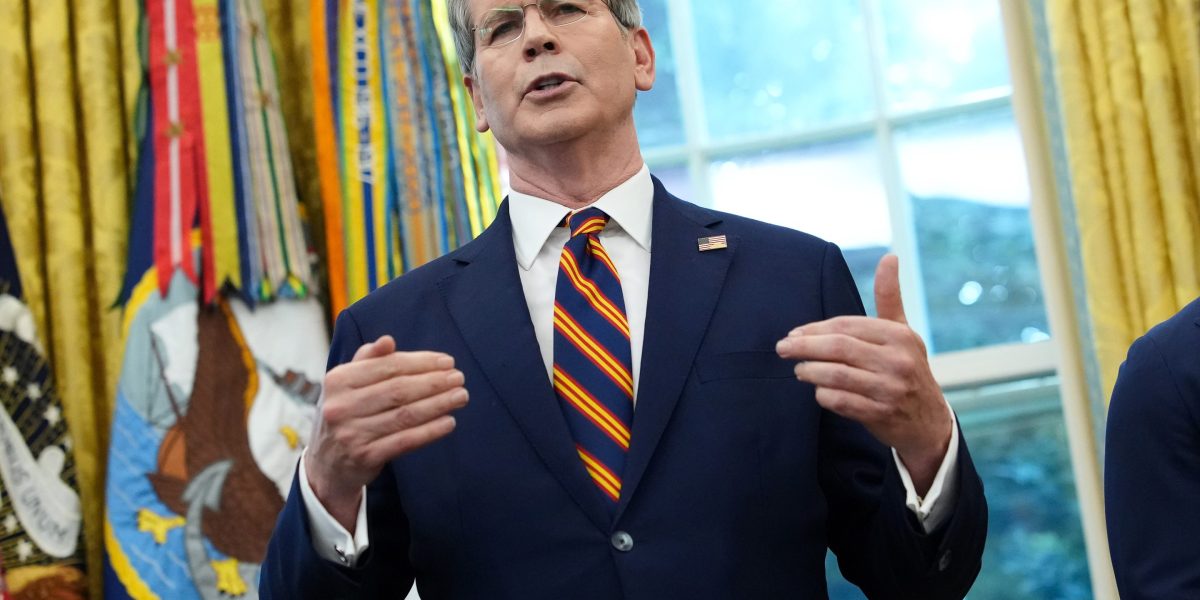
Introduced by Republican Bernie Moreno of Ohio — a former Mercedes car dealer — and Democrat Elissa Slotkin of Michigan, the US auto capital, the bill says giving adversaries access, control or influence over communication systems in connected vehicles creates risks that include “surveillance, espionage, cyber intrusion and disruption of critical infrastructure”.
The recent entry of Chinese cars into Canada has provoked anxiety among American automakers. Moreno has said the goal of the legislation is to “hermetically seal” the US auto market from Chinese entrants.
The bill would still require approval by the full Senate before being reconciled with any version of the measure that passed in the House.
In lobbying for the bill to be watered down, Mercedes has highlighted its big footprint in the US, where it supports 160,000 jobs across factories, suppliers and dealers. It said it supported legislation “designed to protect US national security” but “remains committed to ensuring that any legislation does not impact our operations”.
Entities linked to Chinese carmakers Geely and BAIC combined own roughly a fifth of shares in Mercedes. The German company said “no shareholder holds more than 10 per cent of our stock, and our major shareholders are not directly represented on the supervisory board or have any control or decision-making authority”.
Several supporters of the bill expressed concern that Mercedes had convinced some senators to water it down and that other pressure would weaken the language designed to prohibit the import of Chinese battery systems that include electronics banned under the legislation.
The Republican majority and a top Democrat on the China committee in the House of Representatives have criticised Mercedes for lobbying against a bill that they say is designed to protect American workers and US national security.
“Mercedes has raised the ire of the left and right and of major unions and venture capitalists alike. This is usually a hard thing to do,” said Rush Doshi, a China expert at Georgetown University and former White House official.
Chris McGuire, another former White House official at the Council on Foreign Relations, said he was very concerned about efforts to weaken the language on battery management systems, which he said posed a big security threat.
“The electronics inside modern batteries decide when it charges, how hot it gets, and whether the safety limits hold. If a foreign adversary controls those electronics, it could use that access to push the battery past its limits until it catches fire, effectively turning car batteries into car bombs,” he said.
CATL said vehicle manufacturers, rather than the group, maintained access to and control over all battery management system data flows.
“They inherently do not have the capability to transmit data externally, nor do they contain independent channels to access vehicle or user information,” it said.
Some European car industry executives have grown more anxious about the bill after the US recently barred Polestar, majority owned by Geely, from selling new EVs in the US. The ban came after the Swedish carmaker was denied an authorisation required under separate US rules on connected vehicles designed to restrict Chinese technology.
Meanwhile, Volvo Cars, also owned by Geely, was granted approval to continue importing and selling its connected vehicles after it demonstrated to US authorities that data from its vehicles did not go to China. While Volvo Cars already produces vehicles at its plant in South Carolina, Polestar had been in the process of shifting EV production from China to the US.
In a recent interview, Volvo Cars chief executive Håkan Samuelsson said the group was waiting to see the bill’s final details before taking a stance.
“We’re employing probably 10,000 people in America and are they really going to take a decision to put 10,000 people out of work?” Samuelsson said. “I’m not very nervous about it.”
Other manufacturers are scrambling to comply with the Commerce Department’s connected vehicle rules by securing similar exemptions to those obtained by Volvo Cars, or by seeking alternatives to Chinese suppliers.
General Motors has told several thousand suppliers to find alternatives to Chinese inputs by 2027 in anticipation of the hardware restrictions and is moving production of its Buick Envision from China to Kansas in 2028.
Credit: Source link