
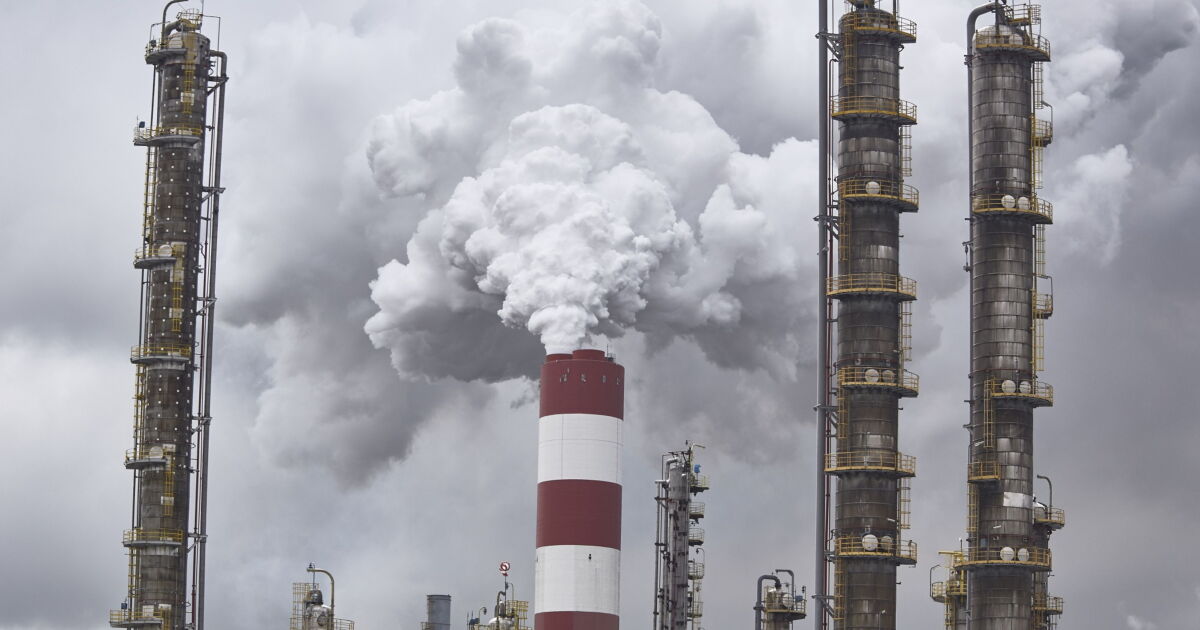
Nations have begun taking actions to shift capital toward technologies to facilitate meeting their climate-related targets as part of their commitment to reduce greenhouse gas emissions. The overall objective is to replace existing “high GHG-emitting” assets with new “low GHG-emitting” assets.
This presents opportunities, but also challenges. Investors must account for the impact of transition risks on existing investments, including potential costs to remediate or decommission assets that would otherwise remain productive.
Guidance needed for impairments of capital expenditures
Forecasting existing assets’ future cash flows requires assessing potential impairment, decommissioning and remediation costs that can have a material impact on the expected value of an investment and, hence, where and how capital gets allocated.
International efforts to reduce GHGs increase the challenges associated with this important exercise. Such efforts expose investors to newfound asset-specific, climate-related risks. As a consequence, investors need to value the potential return on an asset in a manner that takes into account not only the uncertainties created by global warming itself but also the costs of remediation mandated by new and evolving regulatory requirements, such as the International Financial Reporting Standards Foundation’s International Sustainability Standards Board
The need to disclose environmental risks where such risks present a material concern is not new. What is new, however, is that reporting entities are now being mandated to disclose their exposure to the physical risks, both acute and chronic, posed by changing climate patterns; and the transition risks associated with the growing recognition for the need to enact policies that serve to mitigate systemic changes in global environmental conditions. In short, such risks are now recognized as being material to investors’ and other stakeholders’ capital allocation decisions.
S1, which addresses sustainability-related financial information, focuses on a company’s continued ability to access the resources upon which it depends to generate the returns required to attract capital, such as water or highly skilled labor. S2 speaks more directly to the potential impact on a firm’s operations as regards the emissions of GHGs.
Each, however, requires the reporting entity to assess and disclose those sustainability-related risks and opportunities that could reasonably be expected to materially affect a company’s cash flows over the long term, including asset retirements. In particular, the regulations recognize that climate-related factors, including legal restrictions, technological advancements and changes in consumer preferences, can impact the expected future value of the enterprise’s assets. As such, companies are required to disclose the nature and amount of any change in estimated residual values or expected useful lives.
(ISSB S1 mentions in general terms “that an entity be required to disclose the effects of its sustainability-related risks and opportunities on its financial position, financial performance, and cash flows… It also proposed requiring an entity to disclose the anticipated effects of sustainability-related risks and opportunities on the entity’s financial position, financial performance and cash flows over the short, medium and long term…”)
Yet because valuation is inherently a forward-looking exercise, accounting principles may not offer investors adequate guidance — particularly where impairments (and any related decommissioning and remediation costs) are uncertain.
Currently, regulations allow the estimation of expected losses on certain types of assets in financial statements due to inherent uncertainties and the need to consider climate-related scenarios. The Financial Accounting Standards Board’s Current Expected Credit Losses Topic 326 and IFRS 9, for instance, expect companies to forecast losses, including those arising from impairment. For IFRS 9, companies may forecast future losses for risk assets from available detailed information. For CECL, companies can use their own assumptions during the denominated “reasonable and supportable period” and “reversion to history period.” Neither framework provides guidance on how their future losses are to be determined. Consider for example that two different institutions can have two measures of the impact on the same underlying asset, but two different risk and losses outcomes.
Herein resides the lack of consistency as to rules governing how these costs or losses are reported. The expected cost of remediation, for example, is a function of the jurisdiction in which the asset resides and the regulatory framework governing its operations.
Different legal, regulatory and accounting regimes determine the timing in which productive assets are decommissioned or declared to be impaired, as well as required remediation actions.
As the legal framework and financial reporting of decommissioned and/or impaired assets evolves to align with climate-related goals, investors, lenders and other market participants should familiarize themselves with the rules and regulations that may impact the magnitude and timing of these costs.
In many industries, the cost of remediation depends on the relevant jurisdiction and regulatory framework, and current financial and accounting principles may address these varying costs inadequately. At this point, however, market participants need to recognize that there will be a difference between an assessment of capital expenditures based on existing financial and accounting principles and one based on changing economic and environmental frameworks.
Credit: Source link



