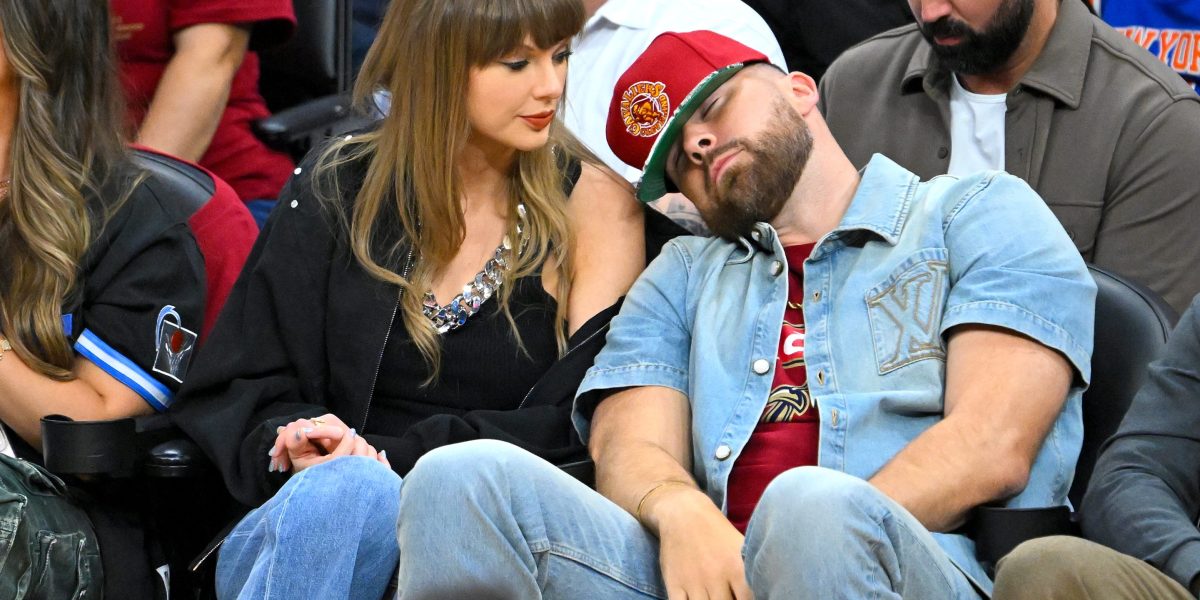
As one of the most popular celebrities in the world, Taylor Swift has already endured her share of AI-related abuse.
Fake nudes of the singer have spread widely online. Her voice and likeness have also been used to create fabricated political messages and bogus product endorsements.
In April 2026, Swift pushed back. Her intellectual property and brand management company, TAS Rights Management, filed trademark applications covering short audio clips of her voice and her visual likeness.
As a law professor, I was struck by Swift’s filings because they highlight a new legal frontier in artificial intelligence.
Most AI-related litigation has centered on copyright law, which protects creative works such as songs, books, photographs and recordings from being copied, distributed, adapted or publicly performed without permission.
But TAS Rights Management’s recent move involves trademark law, not copyright. The filings aren’t really about protecting Swift’s lyrics or albums. Instead, they’re about preventing AI-generated voices and images from misleading people into believing she has endorsed a product, political message or cause.
Copyright is about creative works
Most AI-related lawsuits have been tied to whether copyright violations have taken place – specifically, whether AI companies used copyrighted works to train their systems, or whether their chatbots have produced outputs that too closely resemble protected material.
For example, The New York Times sued OpenAI and Microsoft in 2023, alleging that the companies used the outlet’s journalism to train their AI systems, which then went on to generate outputs that have competed with or reproduced New York Times articles. Authors, publishers, photo agencies and music publishers have sued other AI companies for the same reason.
But copyright violations are only one part of the legal issues raised by generative AI.
Copyright doesn’t necessarily protect a person’s identity. It does not give Swift a general right to control anything that sounds like her, looks like her or evokes her in the minds of audiences.
If an AI-generated voice imitates Swift without copying a particular recording, song or lyric, copyright may not address the real issue, which is that people are being led to believe she said, sang or endorsed something she never approved.
Trademarks are about trust
Trademark law starts from a different concern. It protects names, images, sounds and other markers that help consumers identify who or what is behind a product or service.
A trademark can be a word, phrase, symbol, design or combination of these things. Familiar examples include brand names such as Coca-Cola, logos like the Nike swoosh, slogans like Subway’s “Eat Fresh” and even distinctive sounds, such as the MGM lion roar.
A trademark is not a general ownership right over a word, phrase, voice or image. It is a way of helping consumers know who stands behind what they are buying, hearing or seeing. That difference becomes crucial once AI can mimic a person’s voice or face. Suppose a company uses an AI-generated Swift-like voice to sell perfume or cryptocurrency. The concern is that listeners may think Swift approved of the product or message. That is a trademark problem. Trademark law asks whether the use misleads consumers about whether a company or person has produced or endorsed something. Swift’s filings appear aimed at that danger. They suggest a concern beyond copied songs: fake endorsements, fake appearances and fake signals of approval. Swift’s concerns also bleed into what are known as “publicity rights,” which generally protect against unauthorized commercial use of a person’s identity, such as a name, image, likeness or voice. A classic publicity rights case involves a company using a celebrity’s face in an advertisement without permission to mislead consumers into believing the celebrity endorses the product. AI’s ability to clone voices and images makes publicity law especially relevant. But in the United States, publicity rights are mostly governed by state law, and the rules vary widely from one state to another. That patchwork helped inspire the bipartisan NO FAKES Act, introduced in 2025, which would create a national standard that would prohibit unauthorized AI-generated replicas of a person’s voice or visual likeness. The bill, still in its early stages, has been referred to the Senate Judiciary Committee for consideration. Swift is not alone: Actor Matthew McConaughey trademarked “alright alright alright,” his memorable line from “Dazed and Confused,” to protect it from being used in AI-generated content. The courts have already affirmed that sounds can function as trademarks. But it isn’t clear whether trademark law can police AI-generated replicas of a person’s voice or image when the issue is not counterfeiting but a manufactured endorsement. A person’s voice or likeness is not automatically a trademark. In order to qualify as one, it must be used help consumers identify who is behind a product or service. One existing limit on trademark protection is especially important. Federal law protects certain uses of a celebrity’s image and likeness in cases involving parody, criticism, commentary and news reporting. Not every imitation is a form of deception. Courts will have to draw that line on a case-by-case basis. A fake ad that makes consumers think Swift endorsed a product is different from a parody that comments on celebrity culture. A scam using her voice is different from a news story about AI deepfakes. That said, Swift’s filings reflect a real problem: AI has allowed fake endorsements to look and sound real enough to spread before anyone has time to set the record straight. Major AI copyright cases will continue to focus on copied works. But when AI is used to manufacture identity, endorsement or trust, copyright alone is no longer enough. Swift’s filings suggest that AI law will increasingly focus not only on protecting the work of musicians, writers, journalists and artists, but also on protecting the signals that tell audiences who is really speaking. Daryl Lim, Associate Dean for Research and Strategic Partnerships, Penn State This article is republished from The Conversation under a Creative Commons license. Read the original article.The untested part

Credit: Source link