Want unlimited access to top ideas and insights?
On Sunday, August 2, Acting Attorney General Todd Blanche rescinded a controversial payout fund tied to a prior settlement of President Trump’s lawsuit against the IRS. That will be the headline. It is not the part of the order tax professionals should be studying.
Processing Content
Buried in the same order is a narrower, more consequential change: the tax audit immunity language from the original settlement got rewritten.
The revised order clarifies that the immunity provision applies only retroactively to claims that were open at the time of settlement. It does not shield future tax filings from examination. A provision that looked, on its face, like it closed the door on IRS scrutiny going forward
This is not a political story with no relevance to your practice. It is a live case study in a mistake tax attorneys and CPAs make often, and one that carries real exposure for clients and for the professionals who advise them.
The principle practitioners keep getting wrong
Audit protection language is not self-executing. It never has been. Scope, timing and retroactivity terms control the outcome, not the general impression a settlement, closing agreement or engagement letter leaves with the client.
Practitioners routinely treat the fact of a settlement as the end of the analysis. A client says, “we settled this with the IRS,” or “we have a closing agreement covering this issue,” and the assumption is the matter is closed permanently. It is not. A settlement agreement, a closing agreement under Section 7121, an IRS Appeals resolution or a Department of Justice Tax Division agreement all have defined boundaries. Those boundaries are set by the actual text of the document, not by what the client believes it accomplished or what your firm’s file memo said five years ago.
The Blanche order is instructive precisely because it shows this dynamic playing out at the highest level of government. If the DOJ can revisit and narrow immunity language in one of the highest-profile tax settlements in recent memory, clarifying it applied only to claims open at the time of settlement and not to future filings, then no closing agreement your client is holding is immune from the same scrutiny. Governments reinterpret their own prior commitments when circumstances change. Assume the same is possible for any agreement your client signed.

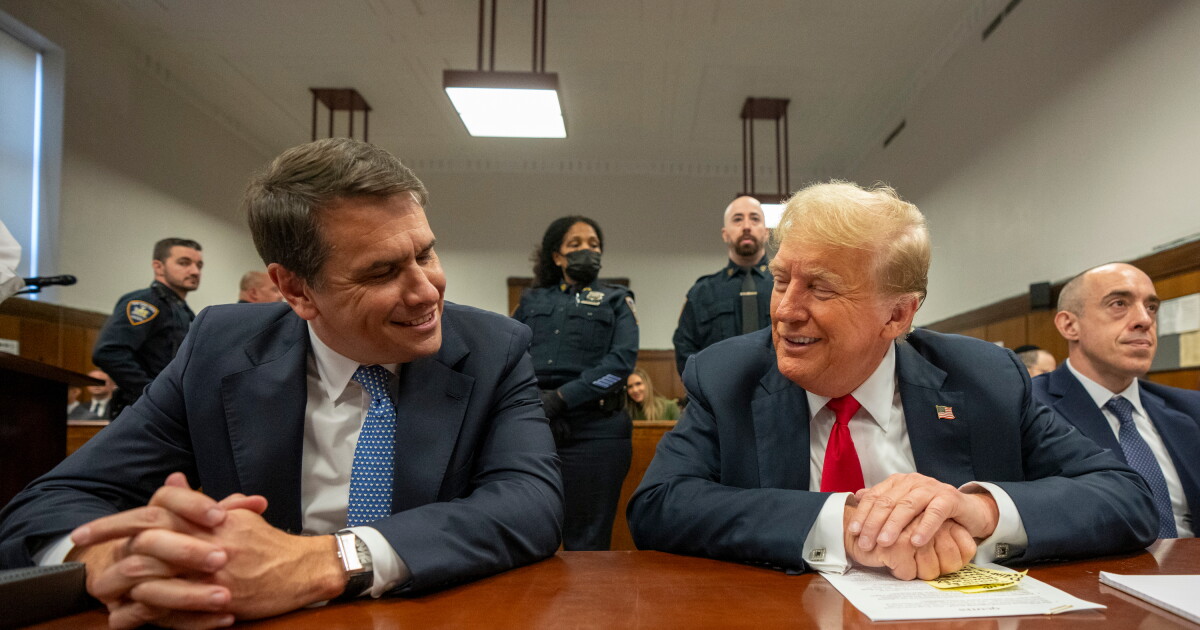
Steven Hirsch/New York Post
Why this matters now
Enforcement priorities shift with administrations. IRS examination resources have expanded and contracted repeatedly over the past decade, and the current environment includes renewed emphasis on high-income taxpayers, pass-through entities and syndicated arrangements. Clients who believe a past resolution insulates them from future inquiry are operating on a false premise if that belief is not grounded in the actual scope of the document they signed.
This is also where malpractice should be considered. If a client relied on your advice that a settlement or closing agreement protected future years, and that protection turns out to have been retroactive only, or limited to specific issues, or silent on prospective years altogether, the client’s loss becomes your liability question.
What this requires of you
1. Audit your own work product. Review every engagement letter, settlement agreement and closing agreement you have drafted or advised on for audit protection language. Do not rely on boilerplate you have reused across files for years without rereading it against the specific facts.
2. Confirm retroactive versus prospective scope. Determine, in writing, whether the protection covers claims open at the time of the agreement, future tax years or both. Confirm the specific tax years, issues and entities covered. Vague or general protection language will be construed narrowly against the taxpayer whenever the government has an incentive to revisit it. Courts and agencies do not fill gaps in the taxpayer’s favor.
3. Advise clients in writing, not just verbally. No settlement, order or agreement permanently forecloses future examination absent explicit statutory or regulatory authority. Closing agreements under Section 7121 are the closest thing to finality that exists in this area, and even those are limited to the matters agreed upon. General settlements, consent orders, and informal Appeals resolutions carry far less weight and should never be represented to a client as blanket future protection.
4. Revisit legacy files. Where a client believes a past settlement or agreement protects future years, do not let institutional memory or a prior colleague’s summary substitute for rereading the actual document. Verify the belief against the text. If the authority for permanent protection is not expressly cited in the agreement, it does not exist.
5. Build retroactivity and scope review into your engagement process going forward. Any settlement or closing agreement you negotiate on behalf of a client should explicitly state, in unambiguous terms, whether protection extends prospectively and for how long. If your client’s negotiating position requires prospective protection, that has to be bargained for and written down. It will not be implied.
The forward-looking point
Administrations change. Enforcement priorities change. What does not change is that agreements are read literally, and any gap in that language gets filled later by whoever controls the interpretation, which is rarely the taxpayer. This week it was the DOJ revisiting the scope of its own order in a high-profile settlement. Next time it could be an IRS examiner reading a closing agreement your client has held onto for a decade, applying it far more narrowly than the client, or the practitioner who negotiated it, ever expected.
Get the scope and retroactivity terms right at the drafting stage. Put the limits in writing and make sure the client understands them. That is the only real protection that exists, and it is entirely within the practitioner’s control.
Credit: Source link