Business reporter
 Getty Images
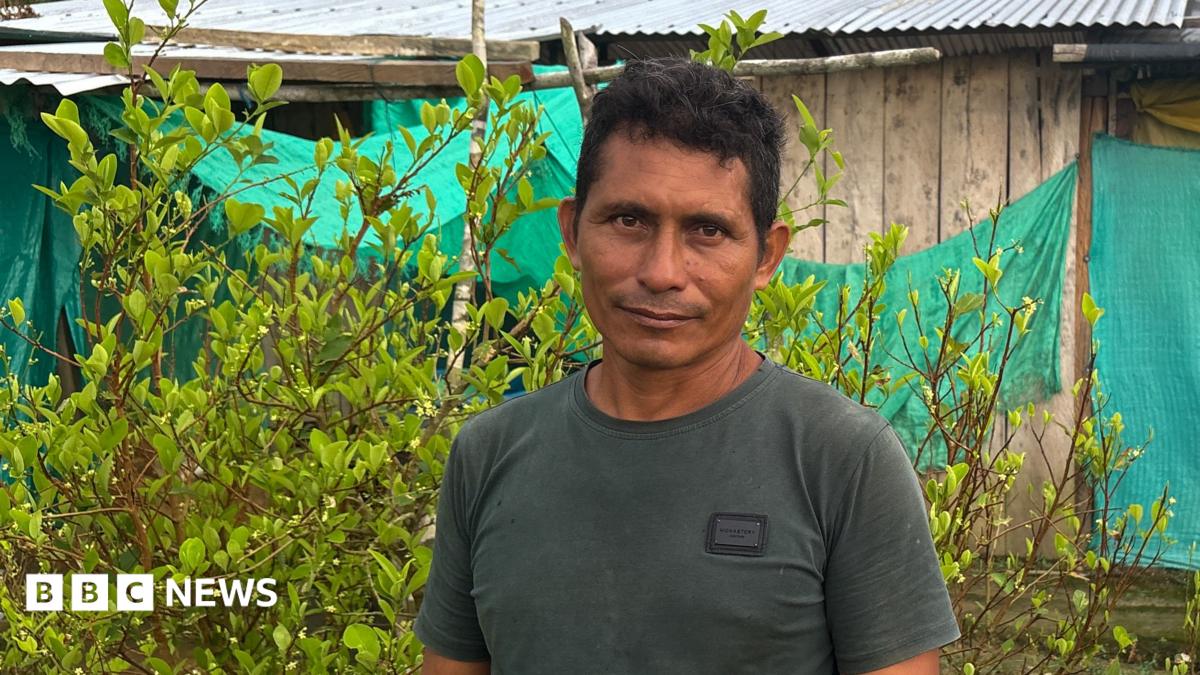
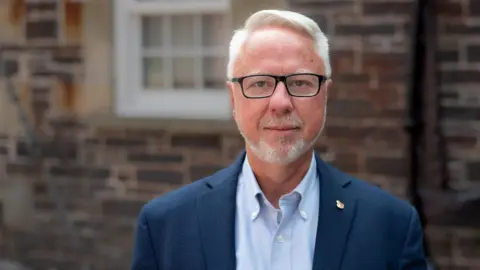
Todd Brayman is no longer buying his favourite red wine, which is from California.
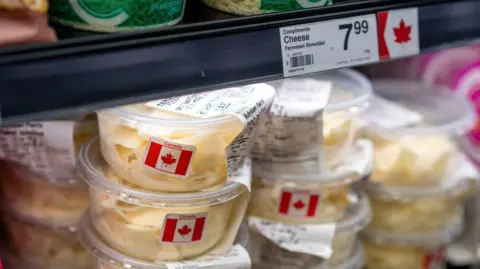
A veteran of the Canadian Armed Forces, he is one of a growing number of people in Canada, Europe, and other parts of the world, who are avoiding buying US products due to President Trump’s tariffs and treatment of US allies.
“I have in my life served alongside American forces. It is just profoundly upsetting and disappointing to see where we are given the historical ties that our two countries have,” says Mr Brayman, who lives in Nova Scotia.
“But I think right now it’s time to stand up and be counted, and in my mind, that means buying local and supporting Canadian business.”
Together with his wife, Mr Brayman has replaced all the American products he used to buy, including his previous wine of choice, with Canadian alternatives.
“Luckett Phone Box Red wine, which is from right here in Nova Scotia, is great,” he says.
Determining which products are Canadian isn’t always easy however. “Sometimes labelling can be misleading,” adds Mr Brayman.
To help, he now uses an app on his phone that can scan a product’s barcode and identify where it’s from. If the product is identified as American, the app suggests Canadian alternatives.
The app, called Maple Scan, is one of numerous emerging in Canada to help people shop local. Others include Buy Canadian, Is This Canadian? and Shop Canadian.
Maple Scan’s founder, Sasha Ivanov, says his app has had 100,000 downloads since it launched last month. He believes the momentum around buying Canadian is here to stay.
“Lots of Canadians have told me, ‘I’m not going back’. It’s important that we support local regardless,” he says.
Canadians like Mr Brayman are boycotting American products in response to a raft of import tariffs introduced by Trump. These included tariffs of 25% on all foreign cars, steel and aluminium, and 25% tariffs on other Canadian and Mexican goods.
Meanwhile, other European Union exports will get tariffs of 20%, while the UK is facing 10%.
Trump says the tariffs will boost US manufacturing, raise tax revenue and reduce the US trade deficit. However, they have spooked global markets, which have fallen sharply over the past month.
Trump has even expressed a desire for Canada to join the US as its 51st state, something the Canadian government was quick to strongly reject.
Ottawa has also responded with C$60bn ($42bn; £32bn) in counter tariffs, as well as additional tariffs on the US auto sector.
And there has been a substantial drop in the number of Canadians travelling to the US.

 Todd Brayman
Groups dedicated to boycotting US goods have also emerged in European countries. Momentum behind the boycott is particularly strong in Denmark, whose territory of Greenland Trump has said he wants to acquire.
Denmark’s largest grocery store operator, Salling Group, recently introduced a symbol, a black star, on pricing labels to denote European brands.
Bo Albertus, a school principal who lives in Skovlunde, a suburb of Copenhagen, says joining the boycott was his way of taking action. “Statements that Trump made about wanting to buy Greenland, that was just too much for me,” he says.
“I can’t do anything about the American political system, but I can vote with my credit card.”
One of Mr Albertus’s first moves was to cancel his subscriptions to US streaming services, including Netflix, Disney Plus and Apple TV. “My 11-year-old daughter is a bit annoyed about it, but that’s the way it is. She understands why I do it,” he says.
Mr Albertus is the administrator for a Danish Facebook group dedicated to helping people boycott US goods. In the group, which has 90,000 members, people share recommendations for local alternatives to US goods, from shoes to lawnmowers.
Mr Albertus says: “It’s a movement that is quite a lot bigger than just our little country, so it all that adds up.”
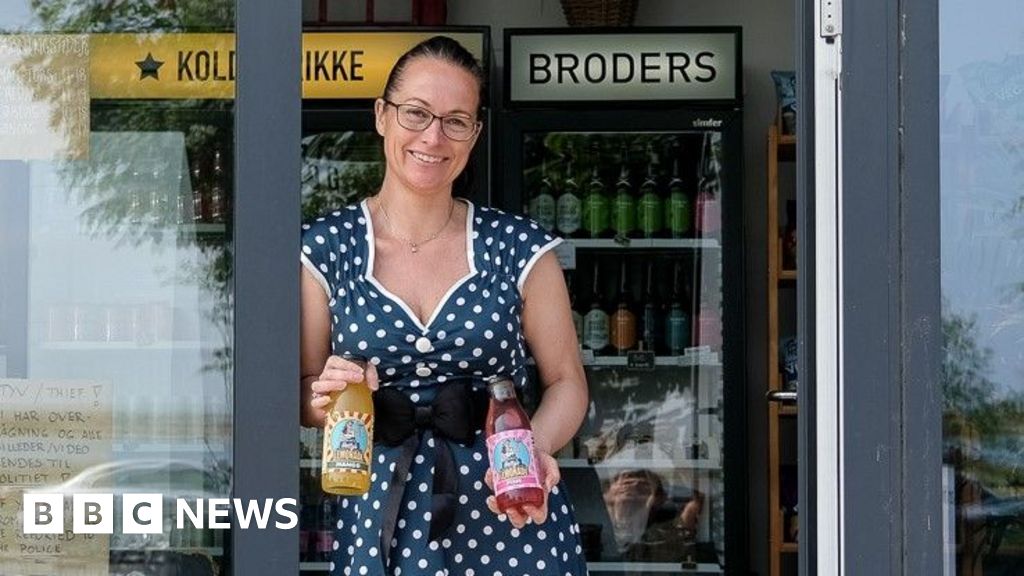
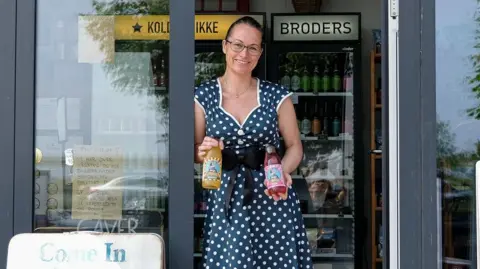
Mette Heerulff Christiansen, the owner of a grocery shop in Copenhagen called Broders has stopped stocking American products, such as Cheetos crisps and Hershey’s chocolate, in her store. She is substituting them with Danish or European products where possible.
Ms Christiansen is also swapping out products she uses at home. She’s finding some easier to replace than others. “Coca-Cola is easy to substitute with Jolly Cola, a Danish brand,” she says. “But technology, like Facebook, that’s totally difficult to avoid.”
She believes the boycott movement in Denmark is helping people to channel their anger at Trump’s policies and rhetoric. “I think it’s more for the Danish people to feel good that they are doing something,” she says.
 Mette Heerulff Christiansen
Douglas Irwin, a professor of economics at Dartmouth College in the US, who specializes in the history of US trade policy, believes the economic impact of the boycott may be limited. “It is hard to judge how economically significant the consumer boycotts will be in terms of reducing trade with the United States,” he says.
“In the past, boycotts have not lasted long and have not achieved much. It starts as a hostile reaction to some US action but tends to fade with time,” he says.
For now though, the rising Buy Canadian sentiment in Canada is boosting sales for many local brands. The CEO of Canadian grocer Loblaw posted on LinkedIn that weekly sales of Canadian products were up by double digits.
Bianca Parsons, from Alberta in Canada, is behind an initiative to promote locally-made goods, called Made In Alberta, which she says has had a surge in interest since the tariffs were introduced. “We’re now getting over 20,000 hits [to the site] every two weeks.”
Ms Parsons, who is the executive director of the Alberta Food Processors Association, adds: “I’ve had producers reach out to us and say: ‘I’m selling out at stores that I would never sell out before, thank you so much’.”
Several Canadian provinces, including Ontario and Nova Scotia, have removed US-made alcoholic beverages from their liquor store shelves in response to tariffs, a move the boss of Jack Daniel’s maker Brown-Forman has said is “worse than tariffs”.
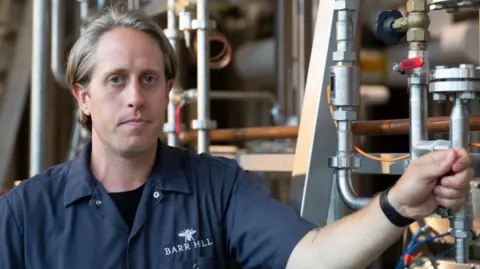
Among the American businesses feeling the impact is Caledonia Spirits, a distiller based in Vermont, near the Canadian border. Ryan Christiansen, Caledonia’s president and head distiller, says his business had an order on track for shipment to Quebec cancelled directly after tariffs were announced.
“My sense is that everyone’s just being a little too aggressive and, unfortunately, I think America started that,” says Mr Christiansen. “I do understand that the action America took needed a counter reaction.
“If it were up to me, I’d be at the table trying to resolve this in a friendly way, and I’m hopeful that the leaders in America take that approach.”
 Ryan Christiansen
Ethan Frisch, the co-founder of Burlap & Barrel, an American spice company based in New York, which also exports to Canada, says he’s more concerned with the impact of the tariffs on his company’s imports and rising inflation in the US than the consumer boycott.
He says: “I think there’s this assumption that, if you boycott an American company, it’s going to have an impact on the economy and maybe change the situation. I think that assumption, unfortunately, is not accurate.
“The [US] economy is crashing all up by itself. Businesses like ours are struggling without boycotts.”
Credit: Source link