Stay informed with free updates
Simply sign up to the US economy myFT Digest — delivered directly to your inbox.
The writer is an FT contributing editor, chief economist at American Compass and writes the Understanding America newsletter
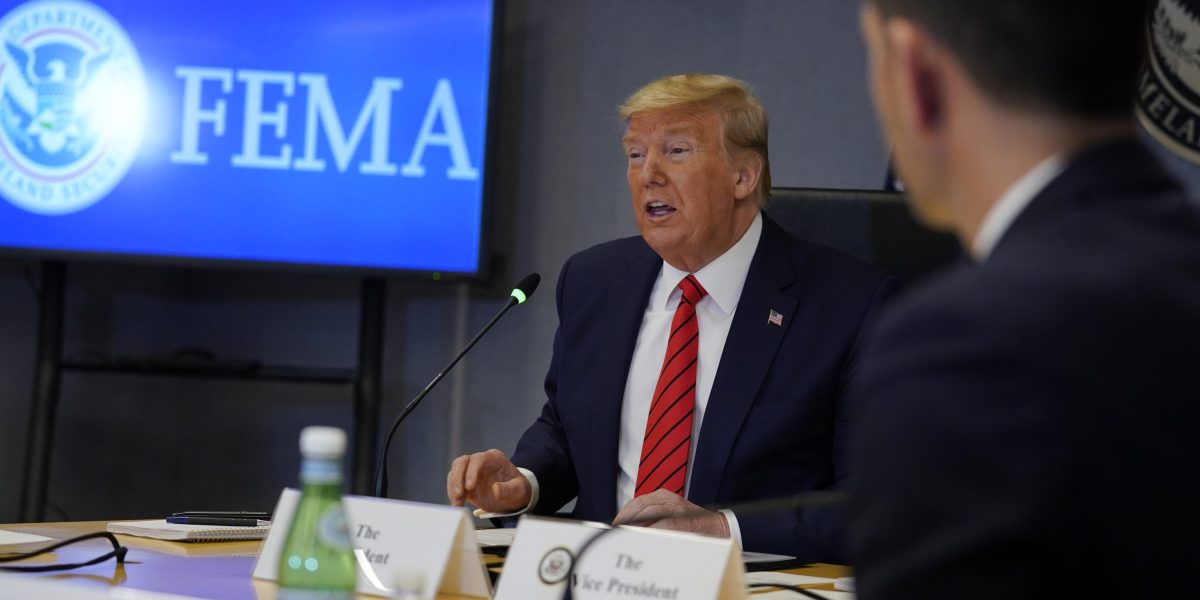
A year has passed since President Donald Trump appeared in the White House Rose Garden to announce sweeping tariffs on US imports. “Liberation day” marked a dramatic turning point for the international economic system and its seemingly inexorable march towards lower trade barriers and global integration. The results have been remarkable.
The past year has also proved as disruptive to the discipline of economics and the overconfidence of its most prominent practitioners as it has been to supply chains. The folly of tariffs was among their most deeply held beliefs, hard-coded into their models, proudly professed in every interview. Tariffs, they insisted, would lead to sharply higher inflation and much slower growth, a likely recession and millions of jobs lost. They would prompt retaliation and lead to appreciation of the dollar, crippling exporters and leading to further deindustrialisation.
But none of this happened. The dollar weakened. Countries came to the table rather than retaliating and reached agreements favourable to the US. Inflation slowed, logging an increase in the price level of 2.4 per cent over the past 12 months, as compared to 2.8 per cent for the previous year. Real GDP growth accelerated, up an annualised 2.9 per cent over the last three quarters of 2025, as compared to 2.5 per cent in 2024.
Tellingly, the response from doomsayers has not been to admit error, but rather to argue that they would have expected strong economic performance given the president’s many revisions to the tariff policy. The retroactive tolerance for robust protectionism underscores the extent to which the old orthodoxy has collapsed and the window for new thinking opened.
The manufacturing sector began to respond as well. Demand for capital equipment grew faster after “liberation day” than in 2024, and faster still over the past three months. Industrial output, which had declined over the past decade and fell 0.3 per cent in 2024, has posted a 1.6 per cent gain. Surveys of purchasing managers by the Institute for Supply Management and S&P Global have found increasing optimism among manufacturers. Anna Wong, chief US economist for Bloomberg, confirmed the overwhelmingly positive data last week, noting that it is “corroborated by a very strong signal from the latest earning transcripts” and also that “tariffs probably played a role”.
To deny that reality, opponents of tariffs have seized on the decline in manufacturing employment as the metric that matters and proof that the project is failing. But they are doubly wrong: First, the trend has in fact improved. As compared to the sector’s 167,000 jobs lost in the 11 months prior to “liberation day”, losses in the comparable period since have been only 93,000.
Second, employment is a lagging indicator of re-industrialisation, a process that will take years. No one should expect producers to respond to tariff announcements by going on a hiring spree. Nor is the workforce in place, after decades of neglect, to fill new positions quickly. At the one-year mark, the question is whether the costs and disruptions have been manageable, whether demand and output are up, whether producers are proceeding with investment plans, not “where are the millions of jobs?”
Meanwhile, manufacturing job openings, which had been plummeting for several years, levelled off after “liberation day” and have since jumped higher, which is how a halt to the sector’s slide and the green shoots of expansion would look. Add together manufacturing jobs and job openings, as a measure of potential employment, and the decline has slowed to less than one-eighth the rate in 2024, and turned to a gain over the past three months.
The importance of focusing on the early indicators in this first year also underscores the long journey ahead. The comical collapse of the anti-tariff case gives the strategy a chance to succeed — apparently President Bill Clinton was wrong when he declared, “protectionism is simply not an option because globalisation is irreversible”. The US can choose another path.
But continuing down that path in year two will require intensive focus on investment and workforce. Capital investment has held steady thus far, but it has not yet surged, and now it must. The Trump administration needs to provide a stable tariff regime and pursue permanent legislation so that producers can invest with confidence, and create an intelligible process for facilitating the enormous foreign investment commitments by Japan and Korea. It also needs to prime the talent pipeline for productive workers, with funding for the schools, unions and employers who can get that job done.
Economists often observe the real world and ask, “but does it work in theory?” Globalisation worked flawlessly in theory, but failed in fact. On this first anniversary of “liberation day”, the alternative is showing greater promise.
Credit: Source link