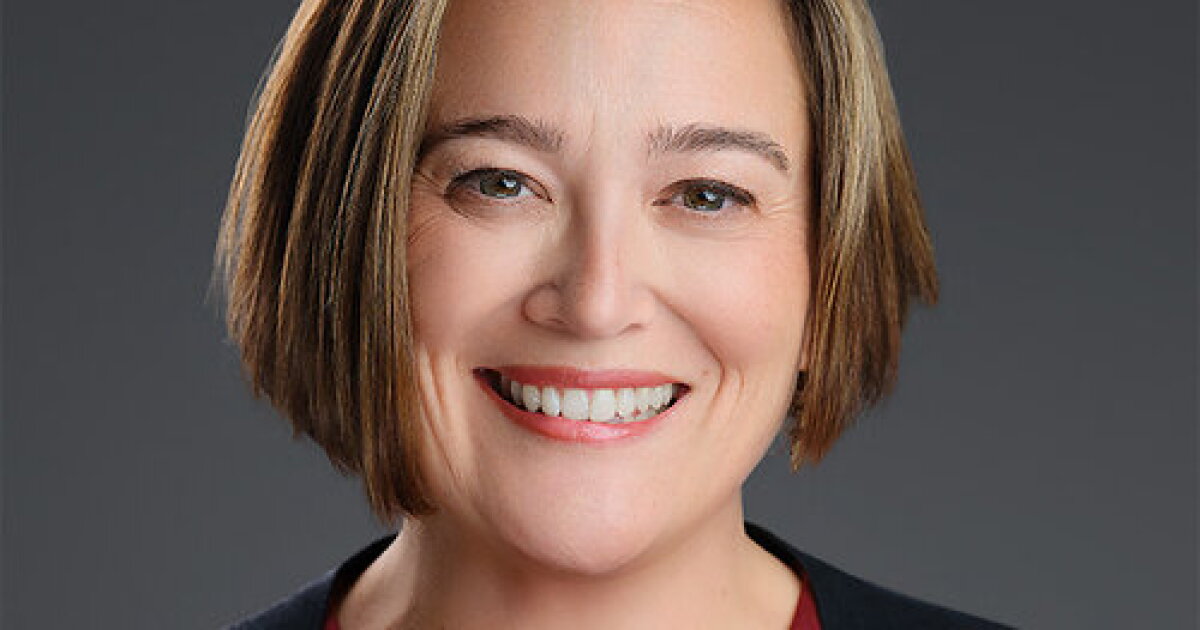
Charles Hoffman, a trailblazer in the field of accounting, has been at the forefront of technological change since the early days of digital transformation. In a recent conversation, Hoffman shared his journey and vision for the future of accounting and auditing, highlighting how the industry is poised for a major shift toward machine-understandable artifacts and semantic knowledge graphs.
Hoffman’s career began in 1982 as an auditor with Price Waterhouse. “Back then, everything was paper based,” he recalled. “But within three months, I was already moving those same working papers and schedules into VisiCalc and then Lotus 1-2-3. I would create them electronically, print them out, and tape them into the audit bundles.” The introduction of the Compaq luggable computer, he noted, made electronic spreadsheets even more compelling.
Fast forward to today. Hoffman points out that while accounting and audit documentation is now 100% digital, it still mirrors its paper origins in fundamental ways. “Most working papers are just digital proxies — Excel spreadsheets, Word documents, PDFs and sometimes HTML. They’re presentation-oriented and not truly understandable by machine-based processes,” he explained.
What are semantic spreadsheets?
A semantic spreadsheet is a revolutionary advancement that combines the familiar structure of a traditional spreadsheet with the power of semantic technology. Unlike conventional spreadsheets, where the data is presented as isolated cells and rows, semantic spreadsheets encode meaning and context directly into the data.
How semantic spreadsheets work
Each cell in a semantic spreadsheet carries metadata that describes the data it contains, such as its type, relationships to other data, and its role within a broader framework. For instance, a cell containing “$1,000” would not only indicate the amount but also specify that it represents “Revenue,” linked to a specific period and financial statement.
Data in semantic spreadsheets is interconnected, forming a graph of relationships rather than isolated rows and columns. This structure mirrors how data is understood in databases and knowledge graphs.
The metadata and relationships are encoded in a machine-readable format, such as XBRL, RDF or JSON-LD. This allows software to understand and process the data intelligently, enabling automation, validation and advanced analytics.
Benefits of semantic spreadsheets
Data from a semantic spreadsheet can seamlessly integrate with other systems, such as databases or ERP systems, without the need for manual reformatting or interpretation. By embedding meaning and rules, semantic spreadsheets can automatically flag inconsistencies or errors in the data, reducing the risk of human error.
Semantic spreadsheets enable advanced querying and analysis. Users can ask complex questions like: “Show me all revenue entries over $10,000 linked to product sales in Q1,” and get immediate answers. Every entry in a semantic spreadsheet is linked to its origin and context, creating a transparent and traceable audit trail.
Imagine an accounting firm using a semantic spreadsheet to prepare a financial report. Instead of manually consolidating data from various sources, the spreadsheet pulls structured data from interconnected systems. Auditors can validate the report by running automated checks that verify compliance with standards like U.S. GAAP or IFRS. The entire process is faster, more accurate and less labor-intensive.
Moving toward machine-readable accounting
Hoffman believes the next major evolution in the field is inevitable: accounting and audit documents will become machine-readable and, more importantly, machine understandable. “These artifacts will no longer just represent static documents. They’ll be dynamic, serving as proxies for databases and knowledge bases,” he said. “Both humans and machines will be able to interrogate these artifacts seamlessly.”
To illustrate, Hoffman pointed to the concept of “semantic spreadsheets” or what he refers to as “knowledge graphs.” These tools aim to integrate accounting, auditing and analytical processes into frameworks that are semantically rich and computationally robust. Hoffman has detailed this approach in works such as
Overcoming the challenges of transformation
Hoffman acknowledged that the shift requires a significant mindset change. “Trying to understand this evolution using today’s mental framework won’t work,” he said. Quoting Microsoft CEO Satya Nadella, he added, “‘The ‘work’ in ‘workflow’ is undergoing a fundamental change.'”
While Hoffman has already developed prototypes using XBRL to demonstrate the potential of semantic-oriented working papers, he likens their current state to the Wright Flyer. “These prototypes may be rudimentary, but they’re a starting point. Over time, they’ll evolve into something as advanced as the SR-71 Blackbird,” he explained.
Why semantic accounting will succeed
When asked why he’s so confident in this vision, Hoffman provided several reasons:
The double-entry foundation: “Double-entry bookkeeping is a mathematical model that’s been globally standardized since Luca Pacioli documented it in 1494,” Hoffman said. “The semantics are universal, and financial reporting standards like U.S. GAAP and IFRS provide a solid foundation.”
Technology options: While XBRL is a leading contender for the required syntax, Hoffman mentioned alternatives like RDF+OWL+SHACL+SPARQL (the semantic web stack), ISO Graph Query Language (GQL), and modern PROLOG. “Each has advantages, but the goal remains the same,” he noted.
Market-driven demand: “Accountants and auditors will adopt tools that help them do their jobs better, faster and cheaper,” Hoffman emphasized. “The key is creating intuitive, effective software—a challenge that will require collaboration across multiple disciplines.”
Expert collaboration: “This isn’t just a technical problem; it’s a communications problem,” he said. “It will take accountants, IT professionals, computer scientists and knowledge engineers working together to create solutions.”
Building the future, one brick at a time
Hoffman described the development process as deliberate and iterative, much like building a brick wall. “It’s not just about having the right bricks and mortar,” he said. “It’s about craftsmanship—having the right experts who know how to assemble the pieces correctly.”
Quoting legendary hockey star Wayne Gretzky, Hoffman concluded, “You must skate to where the puck is going, not to where it has been. The future of accounting lies in creating tools that anticipate and address tomorrow’s needs. The status quo is doomed.”
For Hoffman, the path forward is clear: The industry is on the cusp of a transformation that will redefine how accountants and auditors interact with data. Semantic accounting is no longer a distant vision, it’s a practical reality waiting to unfold.
Credit: Source link