The U.S. and Iran signed a long-awaited “memorandum of understanding” on June 17, pausing a Middle East conflict that upended global oil markets. As part of the deal, Iran agreed to reopen the Strait of Hormuz, the waterway that leads to the Persian Gulf and home to some of the region’s top oil producers. Iran’s decision to close the strait, as well as a U.S. blockade of Iranian oil and Iranian attacks on energy-producing infrastructure, curtailed global fuel supplies.
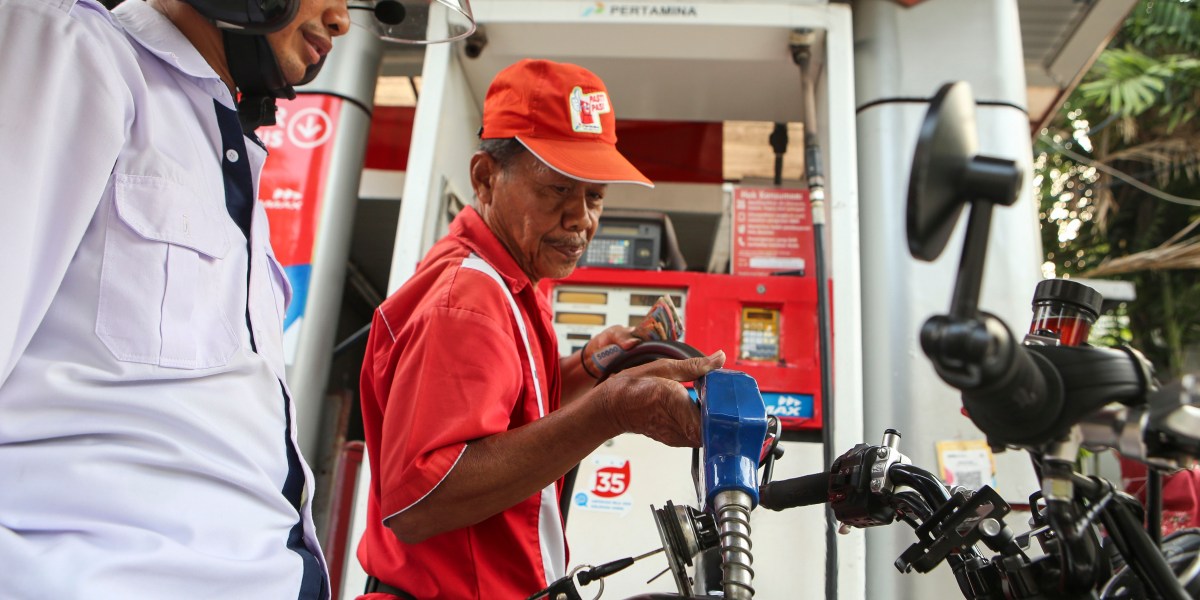
The crisis was particularly hard on emerging markets in Southeast Asia: Governments were forced to put in place four-day work weeks, ration diesel, reactivate coal plants, accelerate ethanol blending programs and curb crude exports. Philippine President Ferdinand Marcos Jr. even declared a state of national energy emergency in late March.
Yet, experts caution that even with the Strait of Hormuz open, it would take months for oil flows and prices to return to pre-war levels.
“The oil supply will not flip right back,” Chen Chien-Ming, an associate professor of operations management at Singapore’s Nanyang Technological University (NTU), tells Fortune. “A tanker’s round trip between Singapore and the GCC can easily take one to two months, while many Asian countries are already facing multi-year-low stockpiles and soaring prices.”
Given the lengthy journey Gulf tankers have to take to reach Asia, analysts like Wood Mackenzie’s Sushant Gupta expect regional crude stockpiles to continue declining into August, before slowly starting to build up again. “In the past three months, fuel stocks have dropped to the bare minimum in many countries, so we don’t expect them to reach anywhere near pre-war levels—at least within this year,” he explains.
Full market recovery may also take time since some processing facilities, including Qatar’s Ras Laffan, the world’s largest LNG terminal, were damaged in the war. Refineries also can’t immediately restore oil and gas production following a shutdown.
Still, Pushan Dutt, a professor of economics at INSEAD, suggests that increasing desperation by both Asian buyers and Middle Eastern producers to get things flowing again could accelerate that timeline. “If the ceasefire holds and is not interrupted by hostilities between Israel and Hezbollah, we should expect a quicker return to normalcy in terms of the resumption of oil flows,” he says.
Resumed oil flows won’t immediately lead to lower energy prices.
The Iran energy crisis has “taught many countries a lesson,” says Wood Mackenzie’s Gupta, who foresees that severely hit geographies like South and Southeast Asia will double down on building up their oil stockpiles, potentially to levels higher than before the Iran war. “China and the U.S. will want to rebuild their oil reserves, while Asia will want to relax rationing, so demand and supply will rise concurrently, limiting the rate of price decline,” Dutt adds.
Oil prices may also decline slowly as investors require evidence of lasting security, mine clearance and clarity on sanctions. Yet, given the start-stop nature of negotiations over the last few months, prices could remain elevated for a while.
“Markets have to realize that the signing of the peace deal is just the first step,” says Gupta. “It’s unrealistic to expect prices to decrease very significantly in the near-term.”
Is the peace deal sustainable?
Given the fragile state of relations between the U.S. and Iran, some pundits also worry that the peace deal–really just a 14-point memorandum of understanding—could fall apart. (Since signing the deal, Trump has already threatened to resume attacks and “bomb the hell out of Iran if they violate the agreement”.)
“While an agreement is clearly positive, we need to see evidence that it holds,” wrote Kim Fustier, HSBC’s senior global oil and gas analyst, in a Tuesday note. “In April, Iran had declared the Strait open then closed it again. In May, Iran established the Persian Gulf Strait Authority (PGSA) to codify its control over Hormuz. The status of the PGSA is not yet clear and if it persists, flows could stabilise below pre-conflict levels.”
On Thursday, the White House said that plans for Vice President JD Vance to travel to Switzerland for a new round of ‘technical’ talks with Iran had been delayed. “The logistics of these negotiations have never been simple or predictable,” the statement read.
“The MoU does not enforce action, which means the negotiators can walk back their promises whenever they want,” says Chen. “Of Iran’s 14 points, war reparations and the unfreezing of Iranian assets are straight up a deal-breaker; the Iranian government also demands that Israel withdraws from Lebanon and ends all military operations—and I don’t expect Israel to comply.”
“It’s a step in the right direction, but I don’t think the MoU will materialize into long-term peace,” he concludes.
Credit: Source link