BusinessPostCorner.com
No Result
View All Result
Friday, July 17, 2026
  • Home
  • Business
  • Finance
  • Accounting
  • Tax
  • Management
  • Marketing
  • Crypto News
  • Human Resources
BusinessPostCorner.com
  • Home
  • Business
  • Finance
  • Accounting
  • Tax
  • Management
  • Marketing
  • Crypto News
  • Human Resources
No Result
View All Result
BusinessPostCorner.com
No Result
View All Result

Trump tax law squeezes poor, boosts wealthy, CBO says

August 11, 2025
in Accounting
Reading Time: 4 mins read
A A
0
Trump tax law squeezes poor, boosts wealthy, CBO says
ShareShareShareShareShare
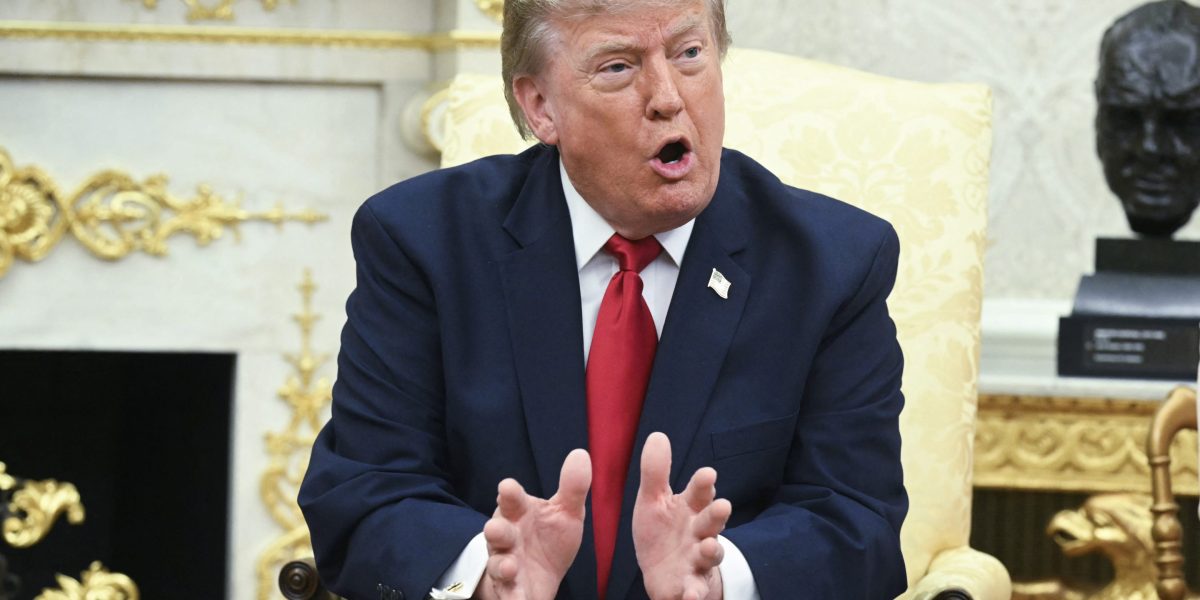
President Donald Trump displays the signed One Big Beautiful Bill Act.

Kent Nishimura/Bloomberg

President Donald Trump’s tax and spending law will deal a financial blow to the poorest Americans while boosting the income of wealthier households, according to a new analysis from the Congressional Budget Office.

The poorest 10% of households will lose an average of about $1,200 in resources per year, amounting to a 3.1% cut in their income, according to the analysis released Monday of the “One Big Beautiful Bill Act.” Households in the highest 10% of incomes will see about a $13,600 boost in resources on average, amounting to a 2.7% increase in their incomes. 

Earners in the middle of the distribution will see their annual resources grow by about $800 to $1,200 on average, according to the analysis. 

(Read more: “Big wins for business in OBBBA.“)

The hit to poorer families will largely result from the loss of benefits from social spending programs, while much of the benefit to the wealthy will come from tax benefits and cash transfers, according to the CBO. 

Trump and his allies have in recent weeks blasted independent agencies for releasing numbers with which the administration disagrees. The nonpartisan CBO, led by Phillip Swagel — who served in Republican President George W. Bush’s administration — has repeatedly come under fire over its growth forecasts.

The tax and spending bill, enacted last month, includes much of Trump’s economic agenda. It extends his 2017 income tax cuts while implementing a number of new and expanded breaks, including a higher cap on federal deductions for state and local taxes, an enhanced Child Tax Credit, and no taxes on tips and overtime pay. To offset some of the cost, the law includes a number of cuts for clean energy initiatives and social spending programs, including Medicaid and food stamps.

Deficit Impact

The CBO last month said the bill would add $3.4 trillion to U.S. deficits over the next 10 years, not accounting for dynamic effects such as the potential growth impact.

Democrats and other critics have denounced the legislation as benefiting wealthier individuals at the cost of low-income families. The scaling back of the social safety net comes alongside an economic slowdown and weakening in the job market that would enhance the importance of those benefits.

Economists have warned price increases due to tariffs would disproportionately impact lower-income Americans who spend a larger share of their income on necessities, such as food.

Recent polls show a majority of voters disapprove of the tax law, with 55% of voters against it in a Quinnipiac University poll and 61% of voters in opposition in a CNN/SSRS poll.

The loss of resources for lower-income families will likely be delayed because Republicans wrote the law so that many of the cuts to social spending programs don’t take effect until after the 2026 midterm elections, while the tax cuts will be noticeable early next year.

The law imposes new work requirements for able-bodied Medicaid recipients, limits states’ ability to tax health care providers to help fund the program and creates new cost-sharing rules for beneficiaries who are covered under the Affordable Care Act expansion. The CBO estimates that 10 million people will be left without health insurance by 2034 due to the law’s changes to Medicaid.

The legislation also creates new work requirements for the Supplemental Nutrition Assistance Program, or food stamps, with exceptions for Alaska and Hawaii. The CBO estimates that those requirements will reduce participation in the program by about 2.4 million people in an average month over the next decade. An additional 300,000 people in an average month will lose benefits due to a separate provision, the analysis found.

Credit: Source link

ShareTweetSendPinShare
Previous Post

Trump says Intel CEO has ‘amazing story,’ sets Cabinet talks

Next Post

Claude Predicts XRP, Dogecoin, Solana Prices by End of 2025

Next Post
Staff fear UK’s Turing AI Institute at risk of collapse

Staff fear UK's Turing AI Institute at risk of collapse

These are the wildest claims in Apple’s lawsuit against OpenAI

These are the wildest claims in Apple’s lawsuit against OpenAI

July 13, 2026
Kevin Ryan’s AlleyCorp raises new 5 million fund, all in on early-stage bets

Kevin Ryan’s AlleyCorp raises new $335 million fund, all in on early-stage bets

July 15, 2026
SoftBank’s Masayoshi Son ridicules AI critics for ‘spitting upwards’

SoftBank’s Masayoshi Son ridicules AI critics for ‘spitting upwards’

July 14, 2026
Trump adviser says leftwing extremism is ‘fatal cancer to civilisation’

Trump adviser says leftwing extremism is ‘fatal cancer to civilisation’

July 16, 2026
Waffle House sued over employee tobacco insurance surcharge

Waffle House sued over employee tobacco insurance surcharge

July 13, 2026
Major car firms found not to have emissions-cheating devices

Major car firms found not to have emissions-cheating devices

July 10, 2026
BusinessPostCorner.com

BusinessPostCorner.com is an online news portal that aims to share the latest news about following topics: Accounting, Tax, Business, Finance, Crypto, Management, Human resources and Marketing. Feel free to get in touch with us!

Recent News

U.S. companies have received  billion in tariff refunds but now must combat Iran war inflation

U.S. companies have received $71 billion in tariff refunds but now must combat Iran war inflation

July 17, 2026
China hits out at British Steel nationalisation

China hits out at British Steel nationalisation

July 17, 2026

Our Newsletter!

Loading
  • Contact Us
  • Privacy Policy
  • Terms of Use
  • DMCA

© 2023 businesspostcorner.com - All Rights Reserved!

No Result
View All Result
  • Home
  • Business
  • Finance
  • Accounting
  • Tax
  • Management
  • Marketing
  • Crypto News
  • Human Resources

© 2023 businesspostcorner.com - All Rights Reserved!