As Javier Milei looks to contain a run on the peso ahead of critical midterm elections, Argentina’s libertarian president has turned to Washington for help.
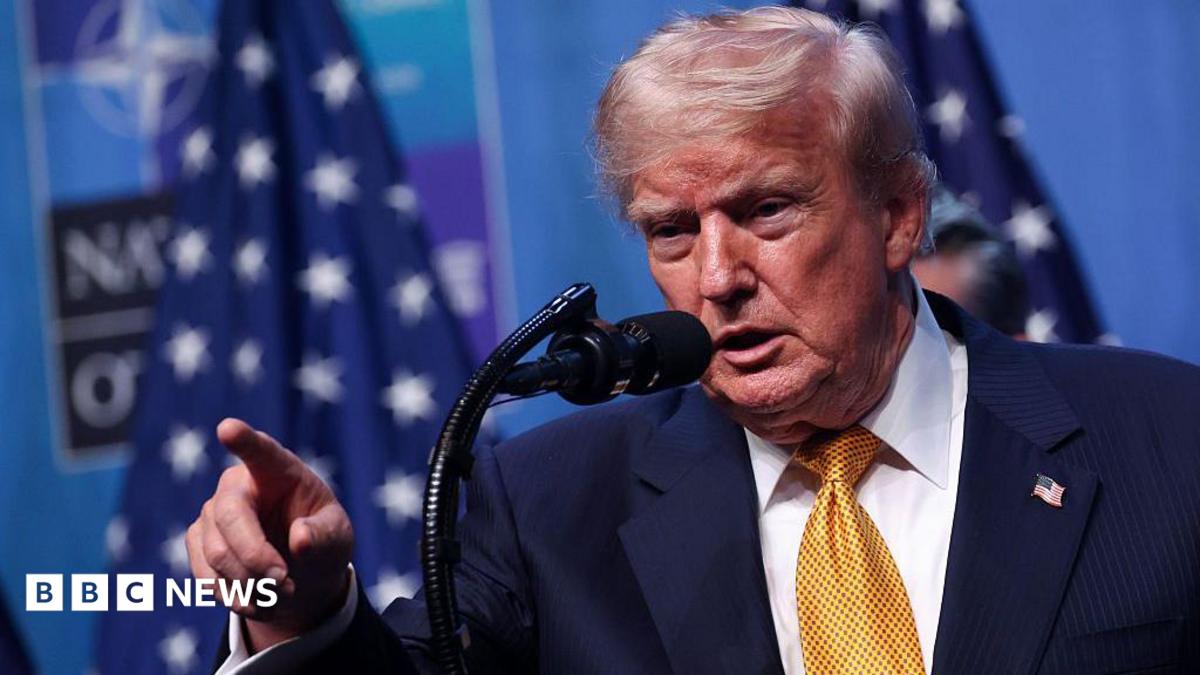
Donald Trump’s administration, eager to support a political ally, has obliged with a series of unusual manoeuvres, led by Treasury secretary Scott Bessent, aimed at supporting the peso and Milei’s troubled government.
“We do not want another failed state in Latin America, and a strong, stable Argentina as a good neighbour is explicitly in the strategic interest of the United States,” Bessent wrote on X on Tuesday.
But the US intervention leaves it exposed to a volatile economic situation and has begun to stir unease among American voters.
What happened to Argentina?
Milei’s government fell into crisis last month after a landslide loss at local elections in Buenos Aires province, where almost 40 per cent of Argentines live, casting doubt on the level of support for his free market reforms.
A run on the peso forced the government to burn through a big chunk of its scarce hard currency reserves, raising expectations that it would have to abandon its exchange rate band.
An abrupt forced devaluation would have endangered Argentina’s macroeconomic stability just before a critical midterm election on October 26, where Milei needs to expand his tiny minority in congress in order to continue his economic agenda.
What has the US done to help so far and why?
In a bid to support what it sees as a politically like-minded ally, the US Treasury has taken the highly unusual step of intervening to prop up the peso and provide financing to the Argentine government.
Since October 9, Washington has made three direct purchases of pesos totalling roughly $400mn, according to Argentine economists’ estimates, although neither government has confirmed the amount.
In addition, Argentina’s central bank said on Monday it had signed a $20bn “exchange rate stabilisation” agreement with the Treasury.
While few specifics have been shared, the arrangement will also see the US tap its Exchange Stabilization Fund to trade dollars for pesos, providing dollar liquidity to the cash-strapped Latin American economy.
Will Washington do more?
Last week Bessent said the Treasury was also in the process of arranging a $20bn loan package with capital from private banks and sovereign wealth funds to help Argentina pay down its debt.
He described the proposal as “a private-sector solution to Argentina’s upcoming debt payments”. But details of the arrangement — and the extent of the US government’s involvement — remain unclear.
“There’s a remarkable lack of transparency about what’s going on,” said Mark Sobel, a former Treasury official and US chair of the Official Monetary and Financial Institutions Forum.
“Part of me thinks that they’re just throwing a lot of big numbers and ideas out there to try and create an announcement effect to get the Argentines past the elections.”
Has it helped Argentina?
The US support has partially calmed Argentina’s market turmoil. Yields on Argentine debt, which move inversely to prices, had reached 14.6 percentage points above comparable US Treasuries before Bessent first proposed the financial lifeline. The spread has since fallen to 10.5 percentage points, as investors see Washington’s support reducing default risk.
But the interventions have failed to halt the run on the peso, which fell to a record low of 1,489 per dollar on Tuesday, close to the lower limit of its exchange rate band of 1,491 pesos per dollar.
Analysts say local investors doubt Milei will be able to keep the peso at its current level after the elections, with or without US support. “The number of dollars deposited in Argentine banks has reached a record high as people and businesses dollarise their savings,” said Nery Persichini, lead researcher at broker GMA Capital.
Trump added to the uncertainty last week, when he said at a press conference that the US “would not be generous with Argentina” if Milei lost the upcoming elections. Bessent later said the US support was contingent on Argentina continuing “robust policies” rather than the poll result.
What could go wrong?
If Milei’s La Libertad Avanza party fares poorly in the midterm elections — winning only about 30 per cent of votes or less than the main leftwing Peronist opposition party for example — pressure on the peso would likely increase, forcing Milei to devalue the currency.
It is unclear how far the peso could fall in that scenario, with investors sceptical of the Milei government’s ability to pass the reforms needed to improve Argentina’s weak and unstable economy.
The country’s sovereign bond prices would also likely continue to drop, making it harder for the government to refinance some $17bn in dollar-denominated debt coming due next year.
Even if the libertarians do well, economists say Milei may have to devalue the peso and introduce a more flexible currency regime that allows Argentina to rebuild its hard currency reserves.
“The current exchange rate scheme is on its last legs,” said Fabio Rodriguez, a director at M&R financial consultancy in Buenos Aires. “The market will not take it well if the government attempts to use US money to sustain an artificially strong peso. Investors want Argentina to use the aid as a base to make swift changes.”
The US, meanwhile, faces exposure to potential losses on its currency purchases and risks being left on the hook providing a long-term credit line to Argentina, which would reduce its flexibility in the case of a US financial crisis.
There is also the risk of a domestic political backlash, with the move already triggering concern among some of Trump’s core voters, who see it as at odds with the president’s America First doctrine.
Credit: Source link