Asia Business Correspondent in Singapore
 Getty Images
Unusual. Quid pro quo. Unprecedented.
That is some of the reaction to news that two of the world’s tech giants will pay the US government 15% of their revenue from selling certain advanced chips to China. Industry watchers, former government advisers, policy makers and trade experts have been giving their views on the deal.
The news comes mere months after the Trump administration banned the sale of these chips to China, citing national security concerns.
That ban was lifted in mid-July. And now it seems the US government will go a step further – becoming a part of these American firms’ business with China.
And critics argue that is both confusing and worrying.
What are these chips – and why do they matter?
These advanced chips are largely used for artificial intelligence (AI) applications at a time when investors are betting that AI will transform the global economy.
Last month, Nvidia – which is the world’s leading chip maker – became the first company ever to hit $4tn (£3tn) in market value.
Nvidia developed the H20 chip, and AMD developed the MI308 chip, especially for the Chinese market.
They are less powerful and therefore cheaper than both companies’ flagship chips.
But developing them was the only option for accessing the significant Chinese market after the previous administration of President Joe Biden banned US companies from exporting the most advanced chips to China because of national security concerns.
Under Trump, even the less powerful, made-for-China chips were banned.
The resumption of sales to China is a boon for both Nvidia and AMD because China is such a big market. China’s investment in AI is expanding so rapidly that analysts expect it to grow to roughly $100bn this year – a nearly 50% jump compared with last year.
How unusual is the deal with Nvidia and AMD?
“Unprecedented… I don’t know what the word is, but it’s bad,” says trade expert Deborah Elms.
Other experts say no US company has ever done anything like this before.
But Trump did do something similar in June when he approved the takeover of US Steel by Japan’s Nippon Steel. That included a so-called “golden share”, a rare practice in which the government takes a stake in a business.
In this case, the White House has not said how the agreement will be implemented – such as where this money would go, or how it would be used.
More importantly, what message does it send to other US companies that see China as a key market or supplier – from Apple and Tesla to the small furniture and toymakers? Is this a tax that firms will now face for doing business with China?

 Getty Images
The 15% cut that Nvidia and AMD have agreed to is likely to hurt their bottom line, even if they earn substantial profits from sales to China.
Chip-makers plan their operations years in advance so this could dampen investor sentiment, which depends heavily on earnings and revenue projections.
But this deal may be a part of Trump’s ongoing tariff negotiations. Just last week, he threatened 100% tariffs on foreign-made chips unless those companies invested in the US.
US Commerce Secretary Howard Lutnick even said chips exports were being used in negotiations with China in return for access to rare-earth elements.
What about national security concerns?
That part is still unclear.
A US official told Reuters that the White House did not believe the sale of H20 and equivalent chips would compromise national security – despite the fact they were previously banned on these grounds.
National security experts and some lawmakers have long voiced concerns about the US selling AI chips to China, saying that Beijing could use them to gain an advantage in AI, as well as in military applications.
But others have argued that restricting chip sales to China does not help because it spurs Chinese innovation and greater competition. Rather, they want China to rely on US tech.
The latter argument seems to have won – for now.
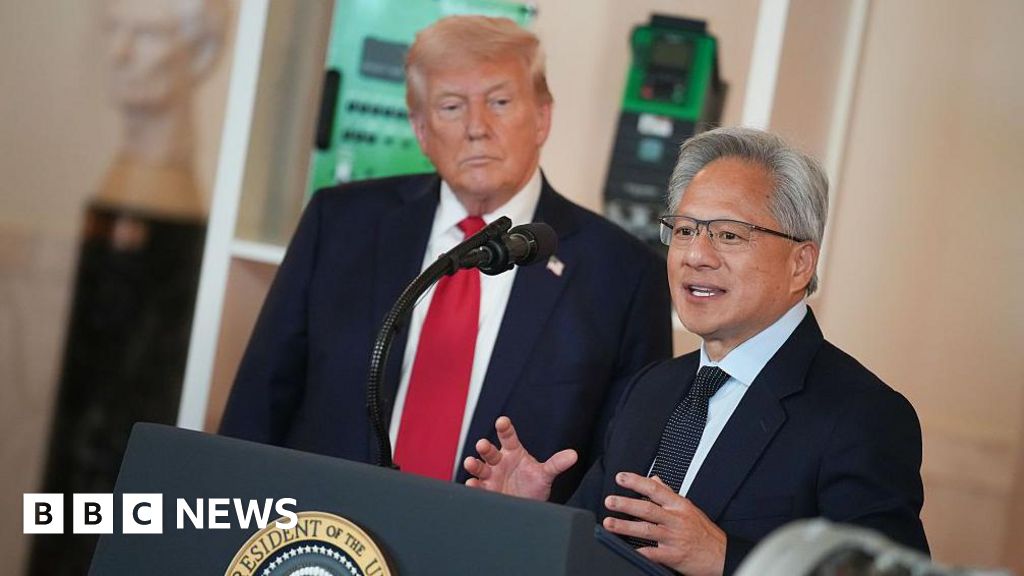
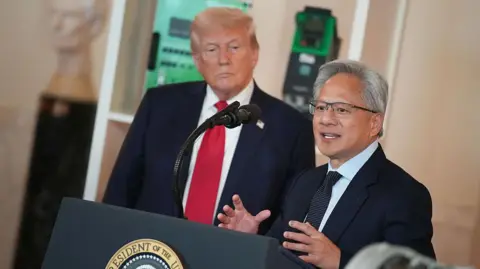
And that may well be the result of intense lobbying from Nvidia’s Chief Executive, Jensen Huang. He met Trump at the White House last Wednesday, and it is thought that is when they agreed to this deal.
It was also Mr Huang’s efforts that led to the reversal of the April ban on H20 sales to China.
Who wins with this deal?
The agreement is something of a win for China because it does want these chips.
Analysts say leading tech companies including ByteDance, Tencent and DeepSeek bought H20s before the US cut off access in April.
And it is a win for the US government, with analysts Bernstein Research telling the BBC it could make up to $2bn from chip sales to China.
There could be a further victory for Washington, if this leads to a deal on rare-earth elements with Beijing, which currently has a monopoly over the critical minerals.
But critics of the deal say they are alarmed about how this reflects on the White House.
This “is a very different US environment from the one that we’ve had in the past,” says Ms Elms, the trade expert.
“I suppose, generously, you could call it the flexibility of the Trump White House in responding to requests.”
Credit: Source link