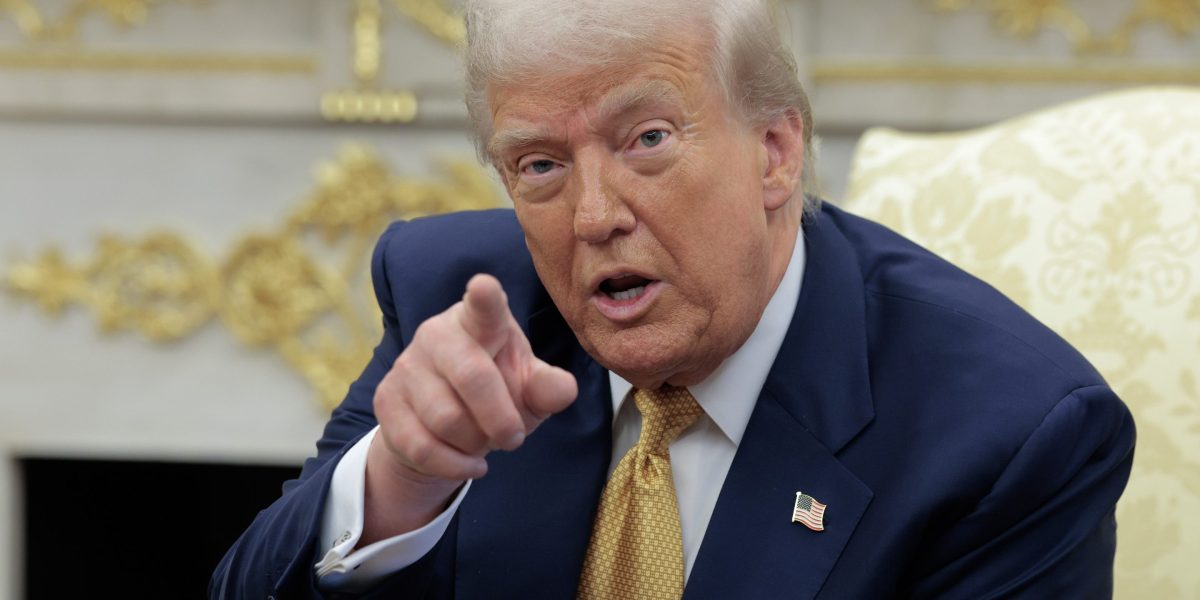
Beijing has slammed Donald Trump’s plan to impose additional 100 per cent tariffs on Chinese exports and threatened new countermeasures as it blamed the US for a rapid deterioration of relations between the world’s two biggest economies.
In a statement the commerce ministry said that since the two countries held trade talks in Madrid last month the US had “continuously introduced a series of new restrictions against China”, including putting Chinese companies on a trade blacklist.
“China’s position on tariff wars has been consistent: we do not want to fight, but we are not afraid to fight,” the ministry said on Sunday.
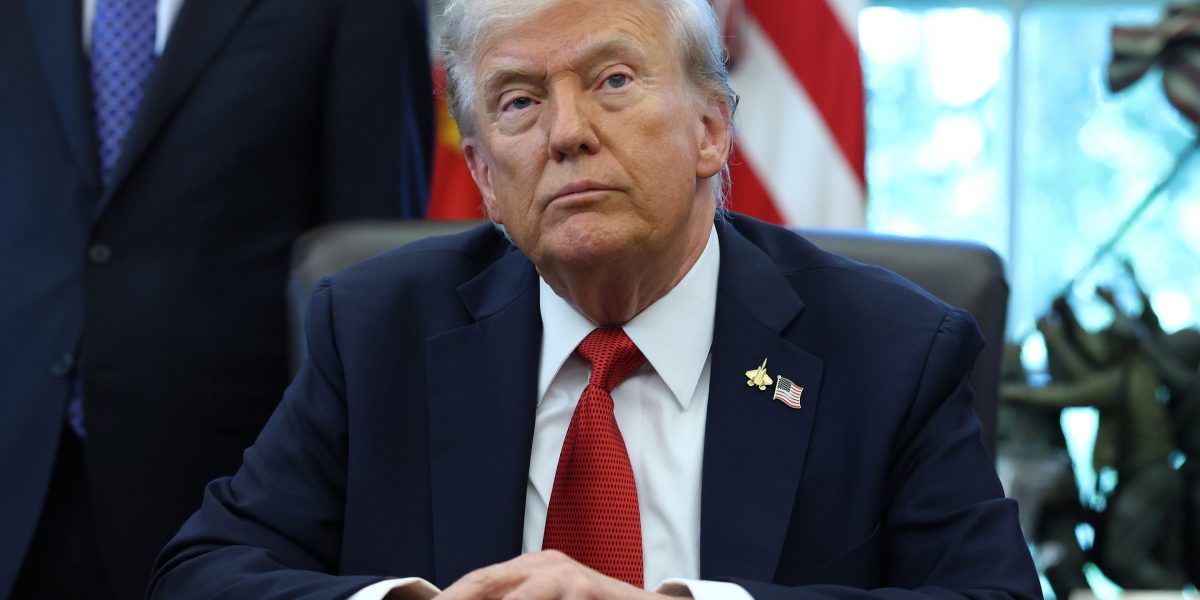
In the latest escalation in the two countries’ trade war, the US president said on Friday that he would impose “large scale” export controls on “virtually every product they make” including “all critical software”, alongside the new tariffs. The new measures will be imposed on or before November 1, according to a social media post by Trump.
“Threatening to impose high tariffs at every turn is not the right way to engage with China,” the commerce ministry said. “Should the US persist in its course, China will resolutely take corresponding measures to safeguard its legitimate rights and interests.”
Trump’s threat followed a volley of trade measures by China over the past two days that expanded its export controls on rare earths and related technologies, as well as equipment and materials for making batteries.
Beijing also launched an antitrust investigation into US chipmaker Qualcomm and imposed fees on American-owned ships docking at Chinese ports.
Beijing’s actions this week appeared to be a strategy to exert leverage ahead of an expected face-to-face meeting between Trump and Xi in South Korea. Trump on Friday cast doubt on whether the meeting would go ahead but later said they would probably meet.
Beijing said on Sunday that the impact on supply chains would be “extremely limited” and insisted companies “need not worry”, saying any applications for civilian use that comply with regulations would be approved.
The commerce ministry added that the US side had for a long time “abused export controls” and overstretched the concept of national security.
Trump’s statement, issued via his Truth Social media platform, raises the prospects of an end to the détente in the US-China trade war since a truce reached in Geneva in May.
Before that a virtual trade embargo loomed between the two countries after Trump hit Beijing with 145 per cent tariffs and Xi retaliated with 125 per cent levies on goods coming from the US.
Feng Chucheng, a Beijing-based founding partner at Hutong Research, an independent advisory, said following the Madrid talks both sides had appeared aligned in avoiding escalation ahead of the proposed Xi-Trump meeting in late October.
However, that changed after the US decision in September to tighten export controls on Chinese companies, to make it harder to circumvent rules designed to slow China’s ability to develop advanced semiconductors.
Beijing has also opposed Washington’s decision to increase fees for China-built vessels visiting US ports.
“From Xi’s perspective, these actions are not only substantive escalations but further confirmation of low credibility of the Trump administration,” Feng said.
He said Beijing was reactivating a playbook used after Trump’s initial tariffs in April, “escalating first to force a negotiation reset, rather than waiting passively for the next talks”.
Wang Dong, executive director of the Institute for Global Cooperation and Understanding at Peking University, said Trump’s “surprise” at being hit with the new controls reflected the previous US mentality that it could impose tariffs on China with impunity.
“At the minimum, there is a deep-rooted sense of arrogance and self-righteousness on the US side,” Wang said. He said China was turning the tables and creating a more level field for “great power bargaining”.
Wang Yiwei, an international relations scholar at Renmin University in Beijing, said China’s trade with the US was diminishing and being partly replaced with markets in the global south and countries participating in the Belt and Road Initiative infrastructure scheme.
China’s retaliatory measures were aimed at telling the US to return “to stable trade relations and not play a game any more”, he said.
The White House, US Trade Representative and Treasury did not immediately respond to requests for comment.
Yanmei Xie, a senior associate fellow with the Mercator Institute for China Studies, said while the US had leverage on trade, and both countries were exposed to the others’ export controls, China might have the “upper hand” when it came to vulnerabilities in the corporate sector.
“There are way more American companies producing in China than the other way around, and some of them, like Apple and Tesla, are the crown jewel of corporate America,” she said.
Cory Combs, associate director of Beijing-based consultancy Trivium China, said Trump’s latest escalation, including threatening to walk away from talks with Xi, might spark a recalibration from Beijing.
“Realistically I think Beijing is rapidly adjusting the approach — and perhaps the leadership does not even know exactly what is next,” he said.
Additional contributions by Wang Xueqiao in Shanghai
Credit: Source link