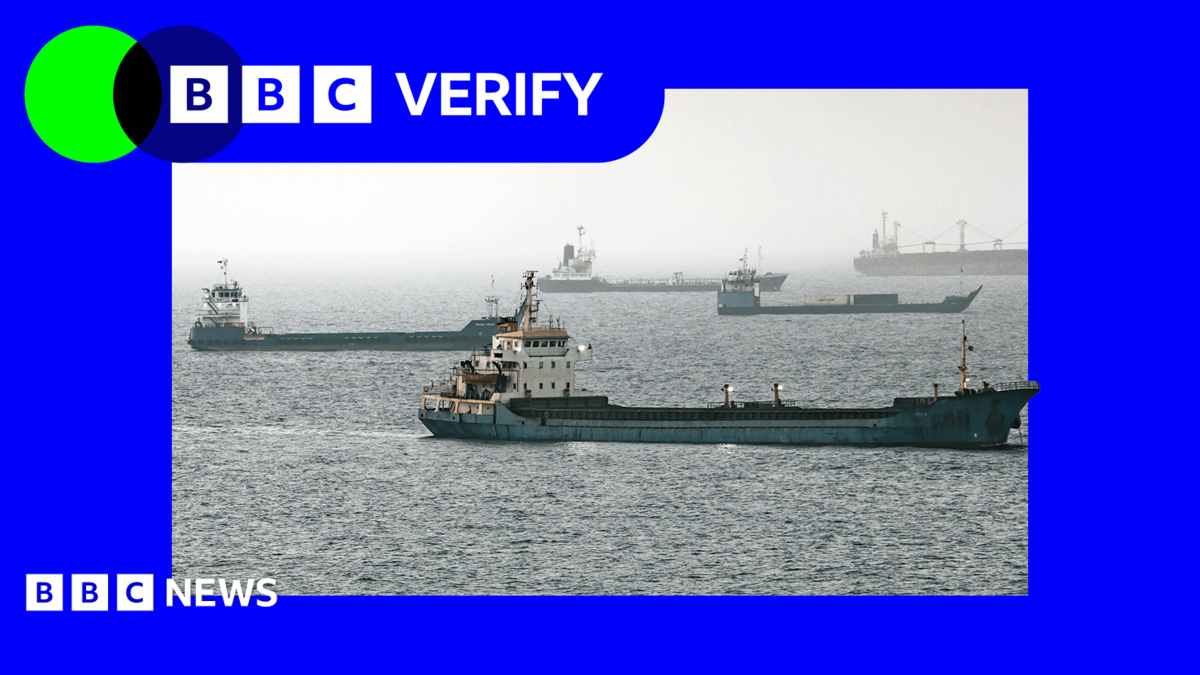
Iran is signaling that the Strait of Hormuz isn’t totally closed and that it will choose who may pass, as the U.S. military has yet to re-establish free navigation through the narrow waterway.
Oil prices have soared as Iran’s attacks on shipping in the Persian Gulf have created a de facto blockade over the strait, through which one-fifth of the world’s oil and liquid natural gas flow, with Wall Street warning crude could even hit $150 a barrel in a prolonged conflict.
On Sunday evening, U.S. crude prices rose 2.2% to $100.83 a barrel, and Brent futures jumped 2.7% to $105.96.
But Iranian Foreign Minister Abbas Araghchi said Sunday that vessels from different countries have already been allowed to transit the strait and that a number of governments have approached Tehran about securing safe passage for their ships.
“I cannot mention any country in particular,” he told on CBS News. “And this is up to our military to decide.”
Reports have indicated that Iran is getting its oil shipments out to top customer China, while hundreds of tankers carrying supplies from other countries remain bottled up in the Gulf.
That keeps critical revenue rolling into Iran. By contrast, Saudi Arabia, Iraq, and other top producers have been forced to pump less with nowhere left to stash their output.
Meanwhile, President Donald Trump ordered an attack on military sites on Kharg Island, Iran’s top oil export node, upping the ante of escalation. He is also trying to assemble a naval coalition to reopen the strait more than two weeks after the U.S. and Israel launched a war on Iran.
Sources told the Wall Street Journal on Sunday that the administration could soon announce an escort mission that involves multiple countries, though it wasn’t clear if operations would begin before or after hostilities end.
Trump earlier called on China, France, Japan, South Korea, Britain and others to send warships to the Middle East, though responses have been non-committal so far. At the same time, the U.K. and the Gulf Cooperation Council said member states “have the right to take all necessary measures to defend their security and stability and protect their territories, citizens and residents.”
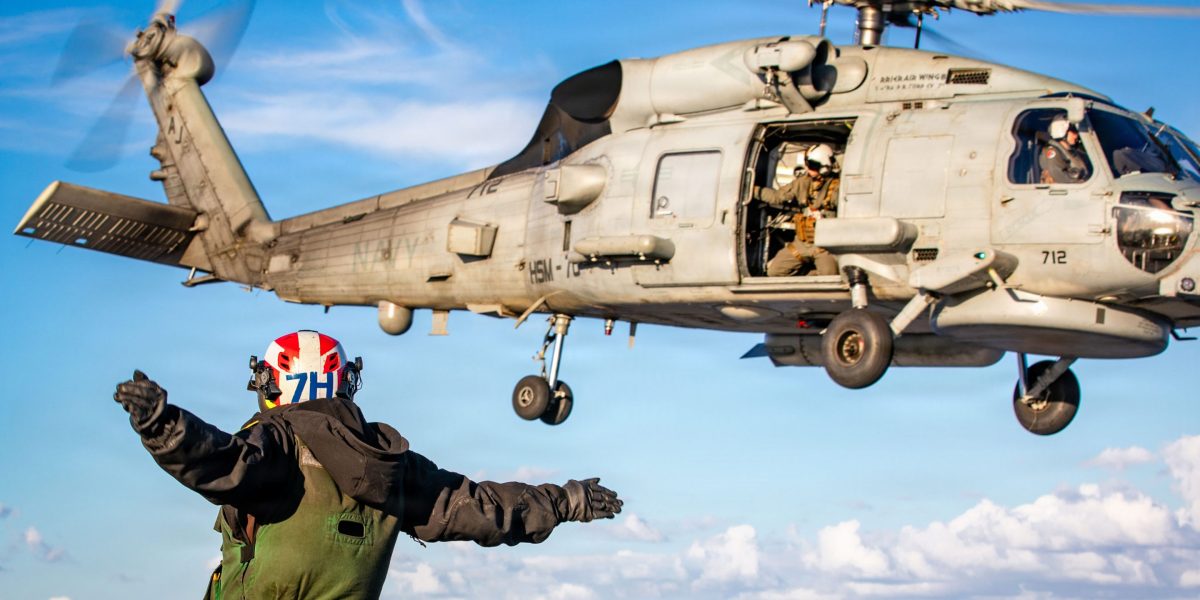
But the Strait of Hormuz remains contested waters, and U.S. Navy officials have called it a “kill box” where Iran missiles, aerial drones, underwater drones, surface drones, mines, and small fast-attack boats pose numerous threats. Given the risks to multibillion-dollar warships, the Navy has turned down requests from shipping companies to provide protection.
European officials are considering a naval mission to the Strait of Hormuz but admit that their current effort to protect shipping in the Red Sea “hasn’t been effective.”
“That’s why I’m very skeptical whether an expansion of Aspides into the Strait of Hormuz could provide more security,” German Foreign Minister Johann Wadephul said, adding that Germany won’t take an active role in the war.
‘All U.S. response options are suboptimal’
Defense experts say a proper naval escort mission would require more ships as well as air power and perhaps ground troops to neutralize Iranian threats.
The Strait of Hormuz is navigationally constrained, and reaction times to attacks from the coast are short, according to Jennifer Parker, founder of Barrier Strategic Advisory and a veteran of the Royal Australian Navy.
As a result, escort operations at scale would require significant numbers of warships, plus combat air patrols that would take aircraft away from other missions, she added in a threat on X on Saturday.
“Responding to coastal launch sites as they emerge would require coordinated strike operations ashore and perhaps marines — the latter a clear escalation risk,” Parker wrote. “Without significantly degrading Iran’s UAV and USV capability, escorts alone are unlikely to enable the safe transit of large numbers of tankers.”
Then there’s the problem of clearing any mines in the strait. Despite the U.S. wiping out Iran’s navy, the Islamic Revolutionary Guard Corps can still use small boats to deploy mines, and not many are needed to scare away commercial traffic.
The U.S. also shrank its minesweeping fleet, and its remaining ships are stationed in Asia. A new class of littoral combat ship was designed to handle minesweeping missions, but it has yet to be used in combat.
“Historically, mine clearance has been slow, and it is almost impossible to do under fire,” MIT political science professor Caitlin Talmadge wrote in Foreign Affairs on Friday.
Like Parker, she said defending the strait in the middle of a shooting war may require the U.S. to take control of the Iranian coast by inserting Marines or special operations forces.
In fact, the U.S. is deploying a Marine Expeditionary Unit to the Mideast with more than 2,000 troops, though some analysts have raised the possibility of an amphibious attack on Kharg Island.
“In short, if Iran effectively mines the strait, all U.S. response options are suboptimal,” Talmadge warned. “The United States should therefore focus aggressively on preventing Iranian mine-laying in the first place and finding an off-ramp from the larger war. If it does not, Washington should expect that ongoing harassment of traffic in the strait will be but one of a number of responses that Iran has long prepared and will now deploy.”
Credit: Source link