As the United States enters day four of Operation Epic Fury—its sweeping military campaign against Iran, launched in partnership with Israel—the financial toll on American taxpayers is beginning to come into focus for budget watchers on the Beltway and in academia. According to Kent Smetters, director of the Penn Wharton Budget Model (PWBM) and one of the nation’s foremost fiscal analysts, the total economic cost of the strikes could reach as high as $210 billion.
Smetters, whose model is widely used in Washington, D.C., to analyze the fiscal and macroeconomic effects of federal policy, has Beltway policy chops including a stint as an economist at the Congressional Budget Office and as deputy assistant secretary for economic policy at the U.S. Treasury. He has advised Congress on dynamic scoring, and consults with policymakers from both parties on major tax and spending legislation. Smetters has described PWBM as a “sandbox” for legislators to workshop economic policy ideas.
The smallest number he gave to Fortune when asked about the cost of Epic Fury to taxpayers was $40 billion, for the smallest estimate of the direct budgetary cost, in a range that goes up to $95 billion. He said PWBM assumes more upside risk in the Epic Fury scenario, so a $65 billion direct hit to taxpayers is the likely cost for direct military operations as well as the replacement of equipment, munitions, and other supplies. “If the war lasts more than two months, then this number goes up,” he added.
On top of direct military expenditures, Smetters projected an additional economic loss to the United States alone of approximately $115 billion, with a wide band of uncertainty stretching from $50 billion all the way to $210 billion. “Again, [there’s] more uncertainty at the top end,” he noted, flagging that the upside risk is greater than the downside. That broader economic impact accounts for disruptions to trade, energy markets, and financial conditions that a sustained conflict in the Middle East typically triggers.
The figures do not include the cost of the administration’s IEEPA tariff regime, which PWBM has pegged at a separate $179 billion. This amount will likely need to be refunded to American companies, if not taxpayers, after the Supreme Court ruling on the legality of IEEPA tariffs.
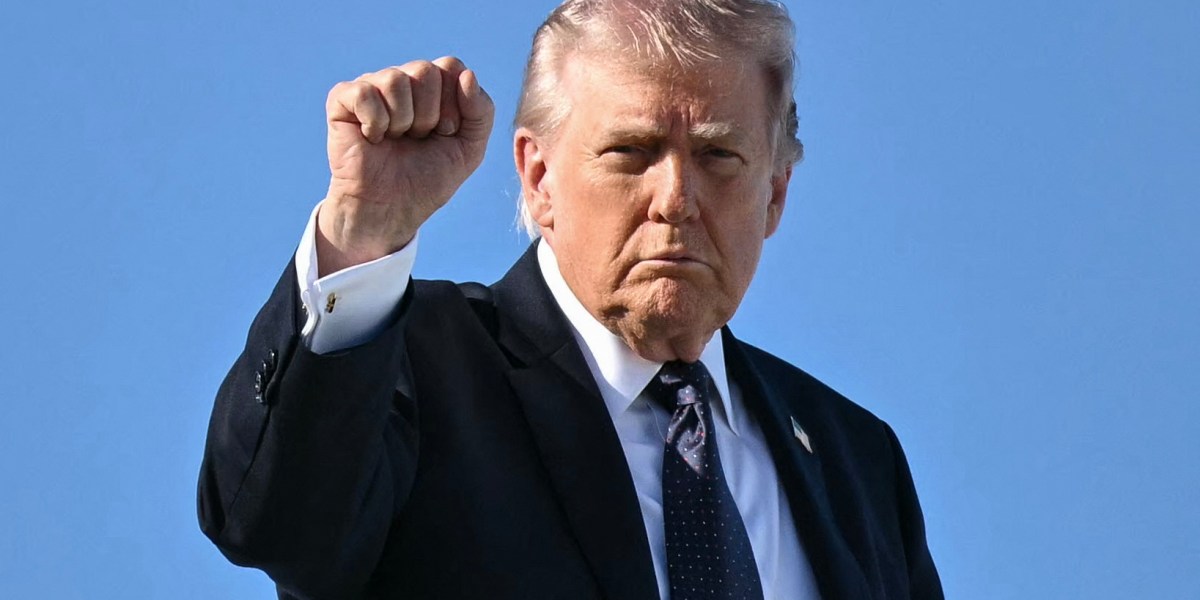
The conflict began on Feb. 28, when President Trump authorized Operation Epic Fury, a joint U.S.-Israeli military campaign targeting Iran’s ballistic missile infrastructure, naval forces, and nuclear program. Iran’s Supreme Leader, Ayatollah Ali Khamenei, was confirmed dead by Iranian state media soon afterward.
Trump framed the operation as a necessary response to what he called Iran’s “imminent nuclear threat,” saying the U.S. had exhausted diplomatic options after Iran “rejected every opportunity to renounce their nuclear ambitions.” The White House described the strikes as “precise” and “overwhelming,” with Trump vowing to “dismantle Iran’s missile capabilities” and ensure Iran would “never acquire a nuclear weapon.”
By day three of the campaign, at least four American troops had been killed, and Trump said Monday the operation could last “four to five weeks”—though he acknowledged it could run longer and declined to rule out the deployment of ground forces. The prospect of a protracted conflict heightens the financial stakes considerably, as Smetters’s models assume costs escalate sharply beyond the two-month mark. Fortune previously reported that the U.S. may rapidly run out of munitions, as previous war games indicate as little as a week’s worth of supplies, although the exact number is classified.
Even before the first bombs fell, the Pentagon’s pre-strike military buildup had already cost taxpayers an estimated $630 million, Elaine McCusker, a former senior Pentagon budget official now at the American Enterprise Institute, previously told the Wall Street Journal. The repositioning of more than a dozen naval vessels and over 100 aircraft to the Middle East drove the bulk of that spending, though McCusker said those costs are likely to be absorbed within the Pentagon’s existing $839 billion fiscal year 2026 budget.
The war’s price tag is already drawing scrutiny on Capitol Hill. A Reuters/Ipsos poll conducted over the weekend found that only one in four Americans say they support the U.S. strikes on Iran—including just one in four Republicans who believe Trump has been too willing to use military force. With public opinion divided and fiscal conservatives increasingly focused on the federal deficit, the economic estimates from Penn Wharton are likely to fuel an intensifying political debate over who ultimately bears the cost of a conflict with no clear end date in sight.
Smetters offered one note of caution about how war costs are typically framed. “One problem I have with cost-of-war calculations is that they really do ignore the counterfactual,” he said in a bit of an understatement. “If Iran really did get a nuclear weapon, then we might have spent a lot more on military and even repair of cities later on.”
Credit: Source link