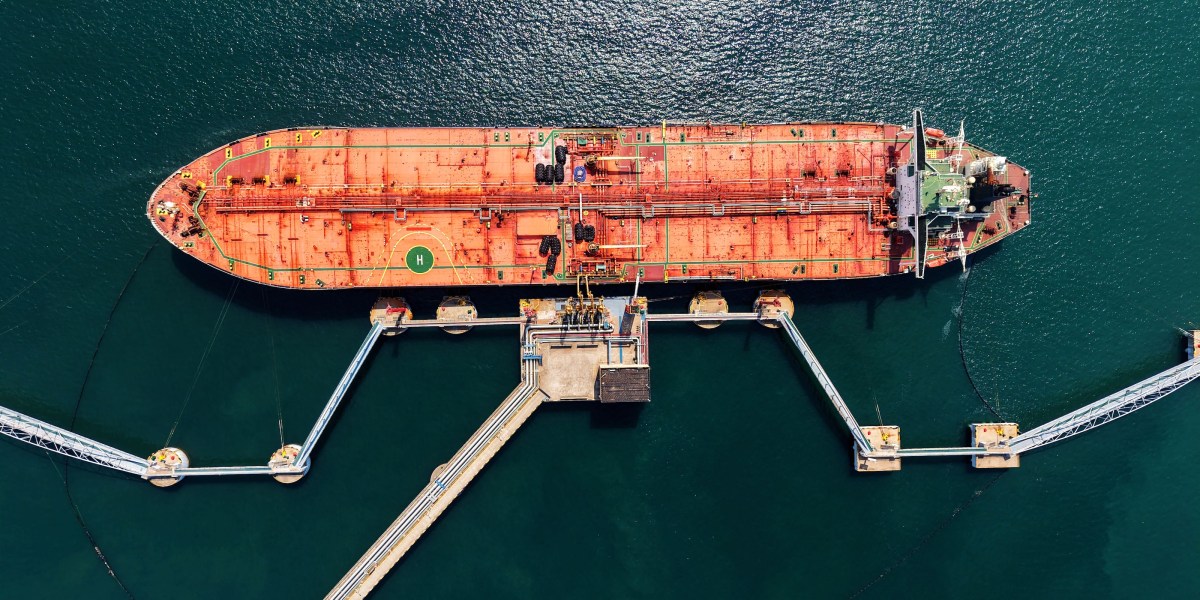
The nation’s emergency reserve for oil and fuel supplies is slipping below Biden-era lows to its most exhausted level since the Reagan era—when the nearly 50-year-old U.S. Strategic Petroleum Reserve was still being filled up. The SPR will hit its lowest volumes since 1983 any day now—if not already—and continue sinking lower as the Trump administration keeps oil exports flowing to the rest of the world and tries to stop domestic prices from rocketing further, Fortune’s Jordan Blum reports.
The Strait of Hormuz remains effectively closed and the fear is it’s just a matter of time before energy markets begin to “panic” and fuel prices soar more uncontrollably, possibly in July or August, said Patrick De Haan, head of petroleum analysis at GasBuddy. “The longer this goes on the fewer tools the administration has in dealing with it and the more risk there is to a slingshot for costs,” De Haan told Fortune.
The administration has drained 66 million barrels—as of June 5—and counting from the SPR since the war in Iran began, according to the U.S. Department of Energy. Trump has authorized the overall release of 172 million barrels over several months.
THE MARKETS
The global selloff continues but the pace of the damage has slowed
- S&P 500 futures were down 0.9% this morning. The index sank 0.26% yesterday.
- In Europe, the Stoxx 600 was down 0.31% in early trading and the U.K.’s FTSE 100 was down 0.52% before lunch.
- Asia: South Korea’s KOSPI was down 4.52%. Japan’s Nikkei 225 was down 1.89%. India’s Nifty 50 was flat. China’s CSI 300 was down 1.11%.
- Brent crude was $91 per barrel this morning.
- Bitcoin was $60.9K.
A massive amount of new stock is about to hit the markets, thanks to the SpaceX, Anthropic, and OpenAI IPOs. It sets up a potential supply and demand issue: investors are being asked to pay for a gargantuan volume of new assets this year. If you add in all the new debt coming to the market it brings “total issuance to around $1.53 trillion. Against a $32.9 trillion U.S. nominal GDP baseline, that equates to 4.7% of GDP,” KKR’s Henry McVey said in his latest global macro outlook:
Heads up: New CPI number coming today. The expectation is that inflation will have risen again, piling pressure on the Fed to raise rates. Those expectations are probably one reason traders are selling stocks today.
AI
The AI trade’s biggest threat? Customers reading the bill
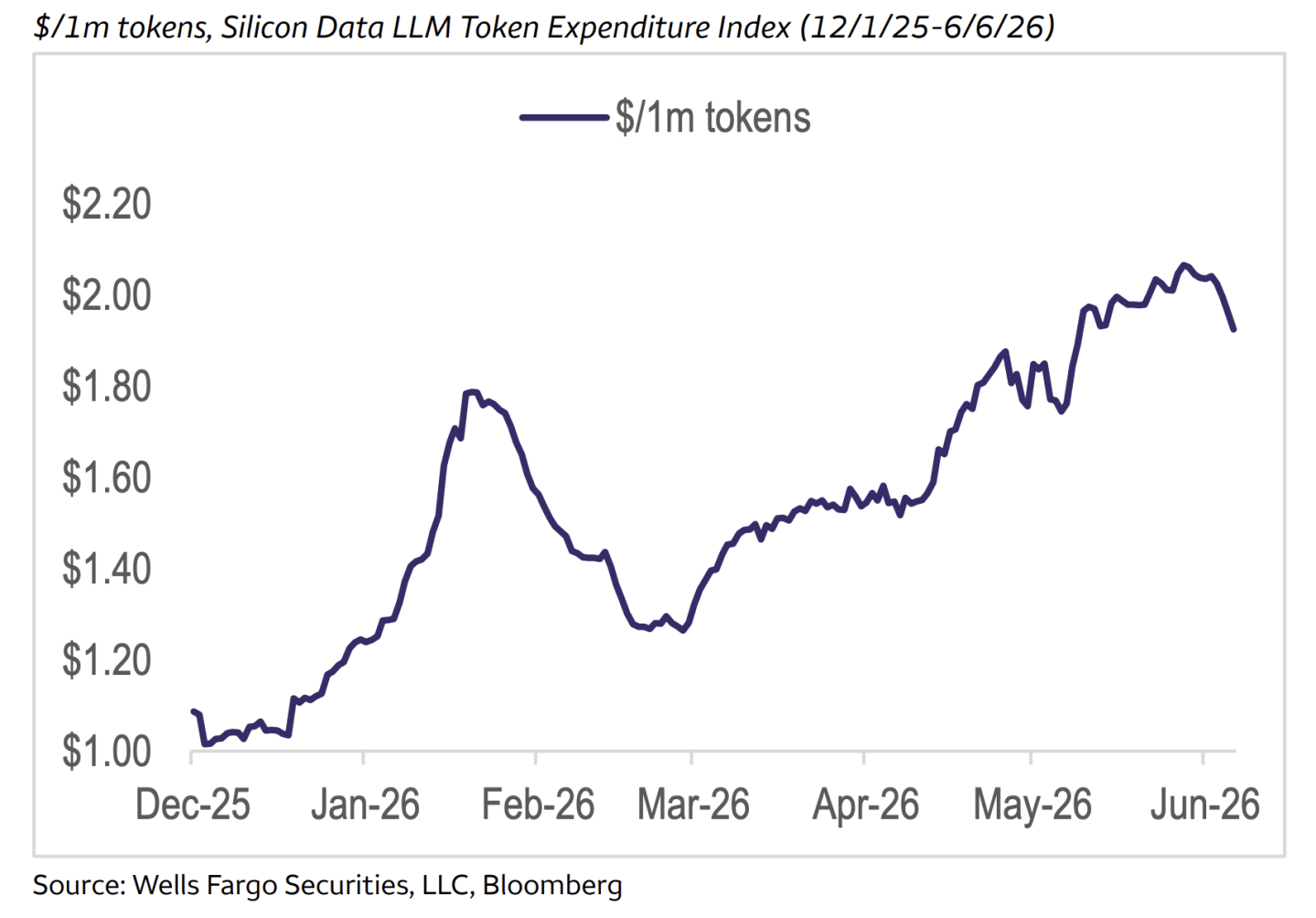
There’s a conflict building in the AI business between model providers’ need to generate profits and the increasing cost to clients of using those services. Until recently, labs like OpenAI and Anthropic subsidized their customers’ use of AI in order to hook them on the service. But with both AI companies about to go public, they will need to start maximizing revenue and, eventually, showing they can do that profitably.
The problem is that corporate clients currently think AI is cheap, according to Ohsung Kwon and his team at Wells Fargo. It’s not. Companies have started to complain about increasing costs for AI tokens—the basic units they are charged for when using AI—and their lack of ROI. At an OpenAI event recently, OpenAI’s Sam Altman said, “People are really saying …‘My company spent my entire 2026 budget in Q1. Can you make this more efficient?’ … But that went from, at the beginning of this year, an issue that never came up to … a huge issue.”
Earlier this year, Uber COO Andrew Macdonald said it’s hard to connect the company’s use of Claude Code to actual results. “That link is not there yet,” he said. “Maybe implicitly there’s more that is getting shipped, but it’s very hard to draw a line between one of those stats and ‘Okay now we’re actually producing like 25% more useful consumer features.’”
“We believe the biggest near-term risk to AI is companies tightening token consumption,” Kwon advised clients. “A new Bain & Co. global survey of large companies suggests cost savings from automation are broadly falling short of projections.”
In the meantime, AI is doing very well indeed. Maybe too well!
Kwon admits that “the same [Bain] survey shows that 90% of companies are increasing their AI budgets,” so it looks like AI company revenues will continue to rise for a while.
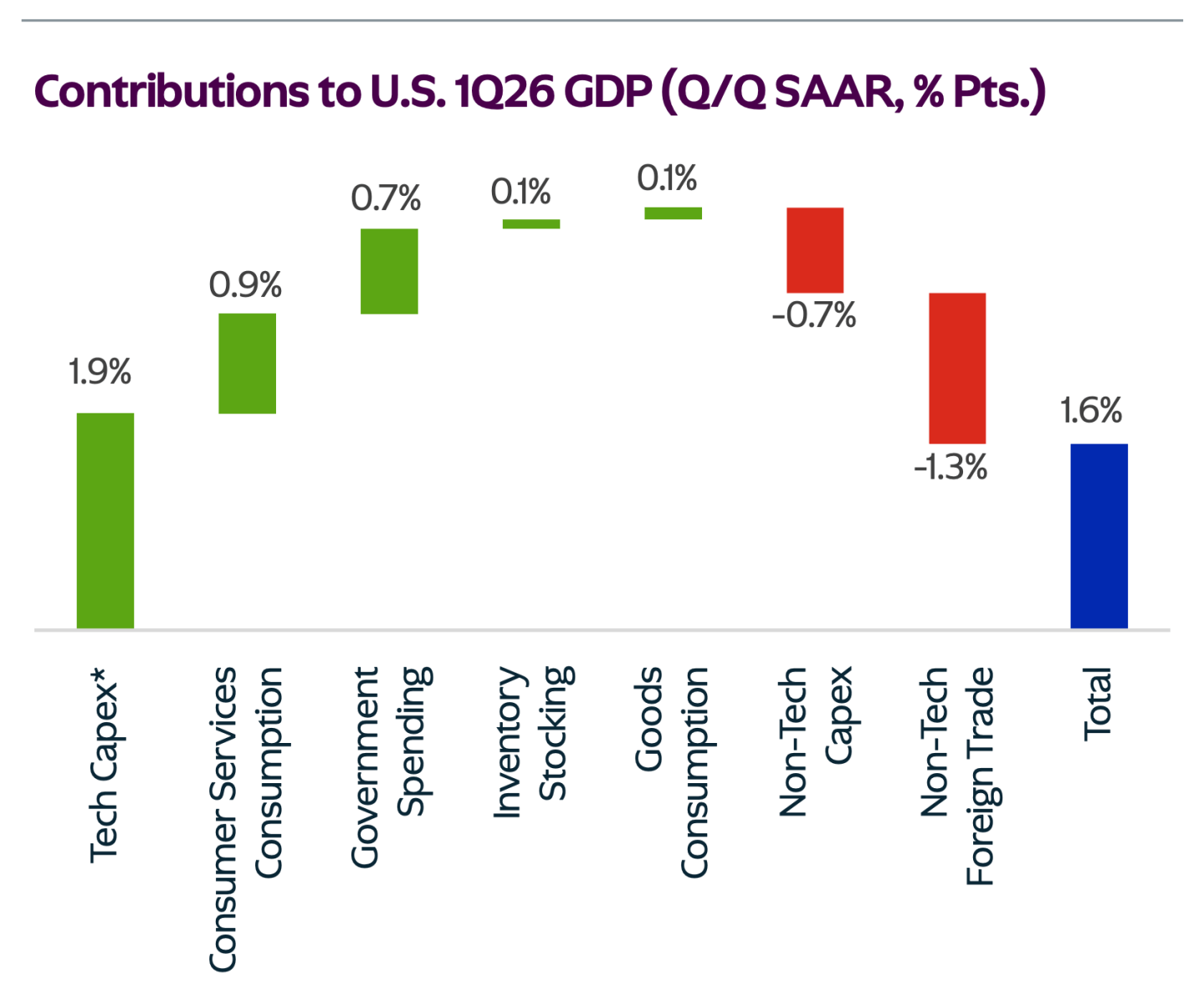
In fact, AI is so hot that it’s driving a huge chunk of U.S. GDP growth. “Tech capex accounted for more than 100% of GDP growth in the first quarter,” KKR’s Henry McVey says. “By comparison, the ‘old economy’ of goods capex and trade contracted” (which is why it is possible for tech capex to be more than 100% of growth).
Negative GDP without AI? In other words, without AI capital investment in the U.S. would be negative, and—on KKR’s numbers—GDP growth would be close to zero:
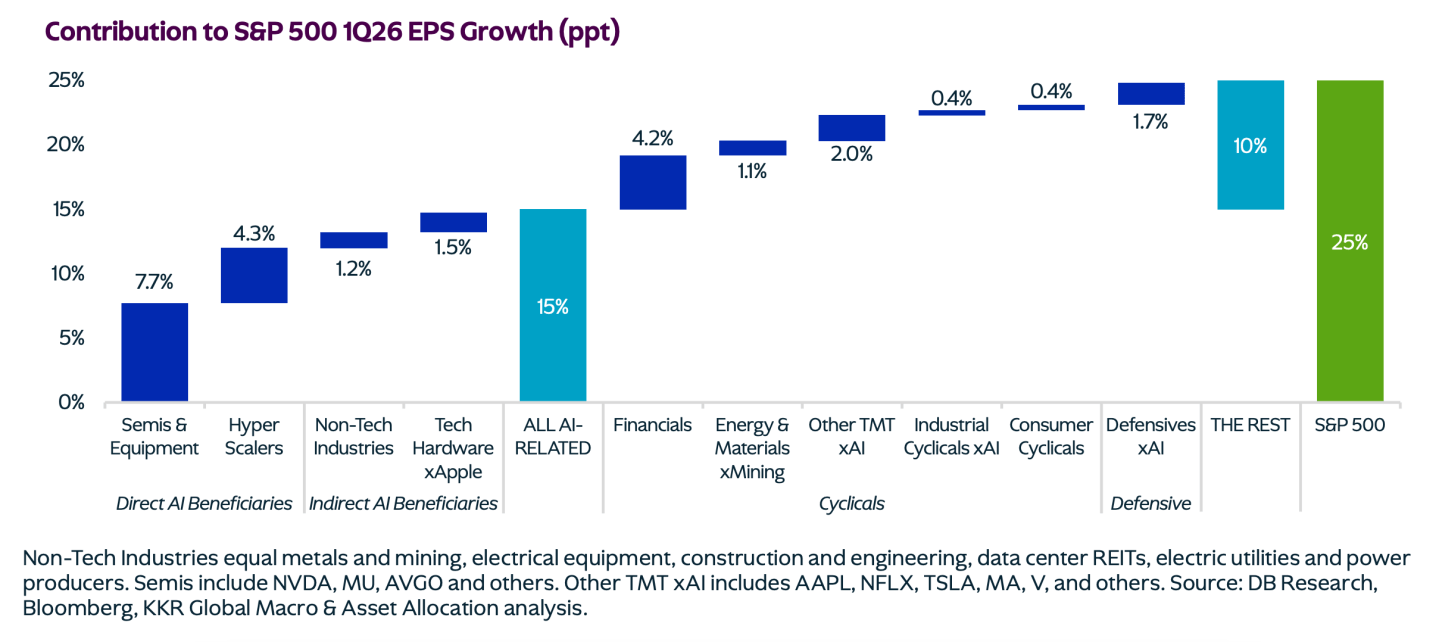
AI-related stocks drove 60% of earnings growth in Q1 2026
All the other stocks—hundreds of them—only made up 40% of that growth, per KKR:
Clearly, both the U.S. economy and the stock market have a lot of eggs in a single basket. But don’t panic yet! “Thus far, the evidence for continued growth is still supportive as 1Q26 earnings were very strong, margins have expanded, productivity is improving, and the AI capex cycle is increasingly backed by usage and enterprise ROI,” McVey says.
IRAN
U.S., Iran trade strikes
The U.S. carried out a series of strikes on Iranian military positions in response to Iran downing a U.S. Apache helicopter. Iran struck back by launching missiles at 21 targets including U.S. bases in Bahrain, Jordan and Kuwait, according to the BBC.
What Trump said: “I have just been informed by our Great Military that last night the Iranians shot down one of our highly sophisticated Apache Helicopters while patrolling over the Strait of Hormuz. There were two pilots involved, both are safe and uninjured. Nevertheless, the United States must, of necessity, respond to this attack. Thank you for your attention to this matter!”
MORE FROM FORTUNE
Health care’s AI dividend is real. The fight now is over who reaps the gains – Diane Brady
A $7 billion horse race: Goldman Sachs and Morgan Stanley battle for ‘lead left’ position ahead of OpenAI and Anthropic IPOs – Shawn Tully
Visa’s CFO downplays the importance of stablecoin and agentic commerce to the U.S. payments giant—at least in the short term – Angelica Ang
Marc Lore’s robots make 500 burrito bowls an hour. A human can make 45 – Amanda Gerut
Sam Bankman-Fried formally files for pardon—but White House reiterates that FTX cofounder’s odds are slim – Camila Grigera Naon
AI isn’t replacing Hyatt’s salespeople—it’s freeing up a full day of work every week, according to the CEO – Sharon Goldman
CHART OF THE DAY
The numbers OpenAI and Anthropic haven’t shown us yet
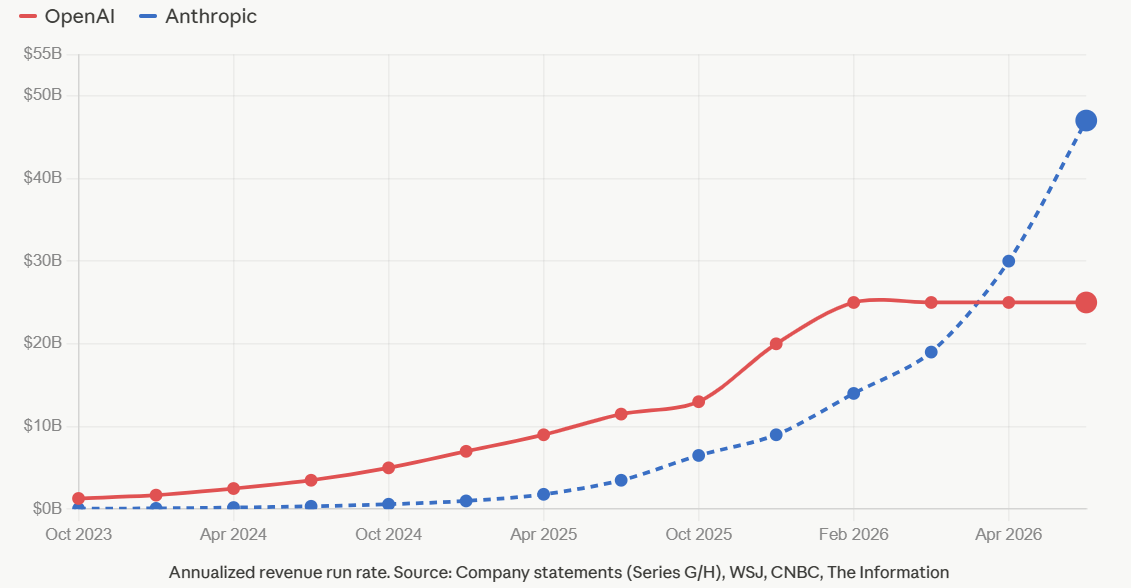
Both companies have occasionally released revenue figures to the media for various periods. But we won’t really know their actual annual and quarterly results until their S-1 filings are published by the SEC. Ben Carlson, a portfolio manager at Ritholtz Wealth Management, has charted what we know so far. “Anthropic has gone from an annual revenue run rate of $9 billion just a year ago to $47 billion and counting. The growth is unreal,” he said in his very good blog.
NUMBER OF THE DAY
5x
The multiple by which China files patents on humanoid robot technology over the U.S., as noted by Henry McVey, Head of Global Macro and Asset Allocation at KKR, in his latest mid-year global macro outlook.
THE FRONT PAGES TODAY
SpaceX IPO explained: The price is set, but retail allocation still up in the air – CNBC
Musk Looks to an Army of Loyalists to Help Make Him a Trillionaire – WSJ
Bitcoin’s Worst Week Since FTX Crash Signals More Pain Ahead – Bloomberg
Trump’s Sharp Turn on China: Embracing It as a Peer Power – NYT
CBS News boss Bari Weiss poised to oversee CNN editorial operations: report – NY Post
ONE MORE THING
CEO keeps thirst-trapping journalists with $200,000 “head of content” jobs

courtesy of Stacker
Every few weeks, a job listing on LinkedIn stops journalists mid-scroll. A fintech company hunting for an editor-in-chief. A tech giant poaching a senior Wall Street Journal editor to run its content operation. A healthcare startup advertising a head of content role at double what most editors make. Noah Greenberg is posting them all—and the engagement is, by his own admission, a marketing ploy.
Greenberg is the CEO of content syndication company Stacker. “The reason I started posting on LinkedIn two years ago was because no one had heard of us,” he told Fortune’s Nick Lichtenberg. “And I found that one cheap trick was posting a list of jobs for those types of people once a week.”
Finding people who are actually good at content syndication is a real thing. Greenberg’s business has grown from a $3 million run rate to north of $10 million in under two years, all without raising a dollar of venture capital.
“The tech editor at The Wall Street Journal is now the managing editor at NVIDIA,” he said, by way of an example of how his cottage industry is now bending media career paths.
Credit: Source link